To enhance the renewable energy capacity of the national capital in the future, the Master Plan of Delhi for 2047 (MPD-2047) proposes utilising existing canals and drains to generate renewable energy.
Approved by the Delhi Development Authority (DDA) last week, the draft plan has been sent to the Centre for further approval. It also proposes the use of more greenfield areas under the ‘agriculture-cum-solar farm scheme’, and that bus depots and metro stations should meet their power requirements through renewable energy sources.
“Delhi has a number of canals and drains that can be utilised for harnessing solar and hydro energy as per feasibility. The concerned agencies are to leverage this potential for generation of energy as per feasibility,” the draft reads.
Last year, Chief Minister Rekha Gupta announced a ‘green budget’, promising a renewed push for solar power generation in the national capital, and a separate budget was also allocated to create supporting infrastructure.
The MPD suggestions are in line with the Delhi government’s earlier announcement to install solar panels along the Najafgarh drain to generate power.
According to officials, one of the projects that the Delhi government is currently exploring is the installation of solar panels along the Najafgarh drain over a six-kilometre stretch from the Dhansa Border to Ghummanhera.
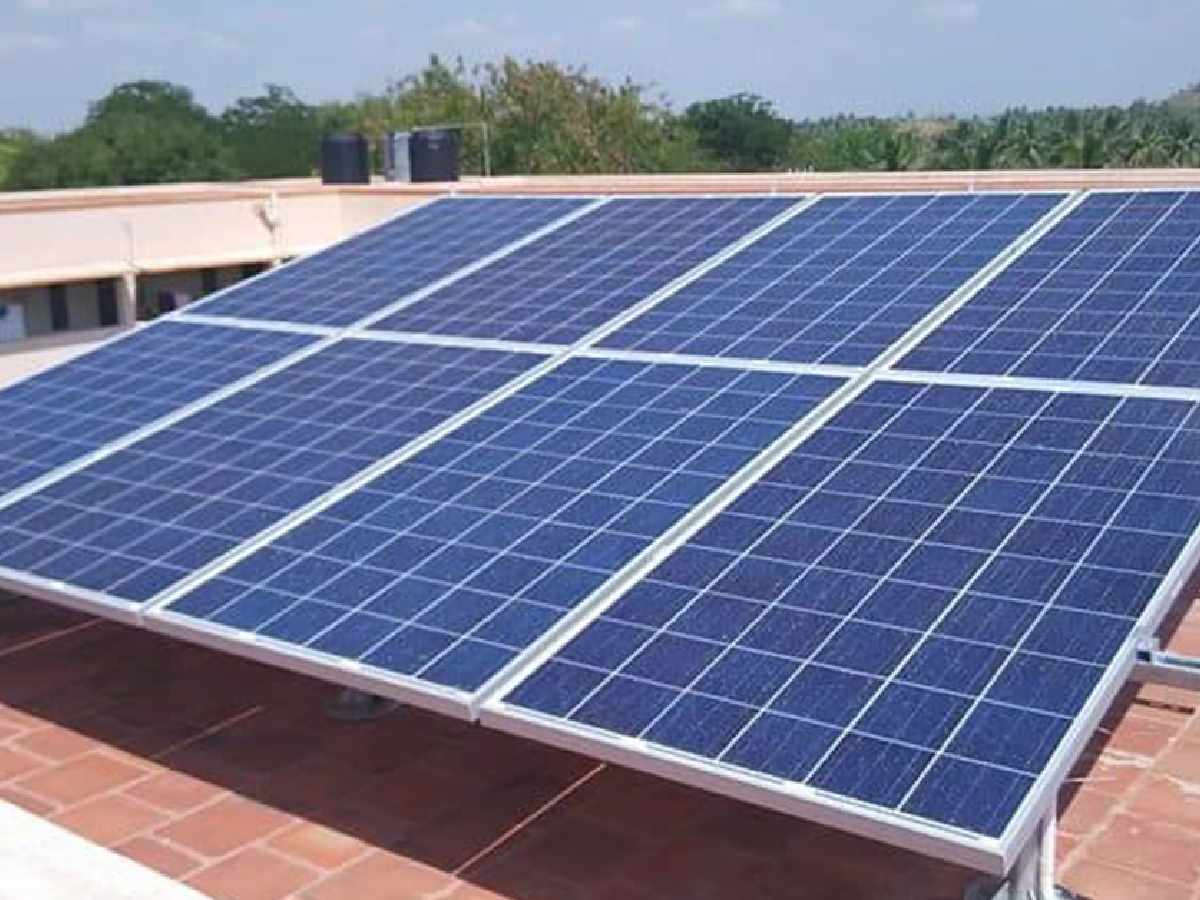
“Government buildings and institutional campuses with a rooftop area above 500 sqm to install solar panels as per Delhi Solar Policy,” the draft states.
Recently, power minister Ashish Sood said that under the Delhi Solar Policy, the government is considering reducing the upfront cost through subsidies and advance payment of generation-based incentive to consumers.
Generation-based incentive is a way to reward power producers for generating clean energy.
Under the existing policy, there is a combined subsidy of Rs 1.08 lakh (Rs 78,000 from the central government and Rs 30,000 by the Delhi government) on installing a 3-KW capacity rooftop plant. According to officials, the cost of installation of a 3-KW plant comes to around Rs 2.25 lakh.
The MPD also suggests public facilities such as airports, metro stations, railway stations, inter-state and bus depots, stadiums, etc, may progressively meet their power requirements through solar and other renewable energy sources as per feasibility.
To improve power transmission across the city, the MPD further suggests laying down an underground transmission network within the road cross sections in the whole city in a phased manner, with land pooling areas as the priority phase.
CTI chairman Brijesh Goyal said the Rahul Gandhi rally could affect wholesale and retail markets…
Established to mark the university’s 25 years, Jubilee Hall has witnessed generations of student life.…
Delhi inaugurates the 70th National School Games, hosting over 14,000 participants in 14 sports across…
Delhi High Court asked "Doosra" filmmakers to respond to Sourav Ganguly's plea over alleged violation…
Delhi L-G appointed Paralympian Suvarna Raj as State Commissioner for PwDs following her gold win…
DDA is planning Delhi's longest 24-km cycling track along the Yamuna floodplain, linking key eco-projects…
