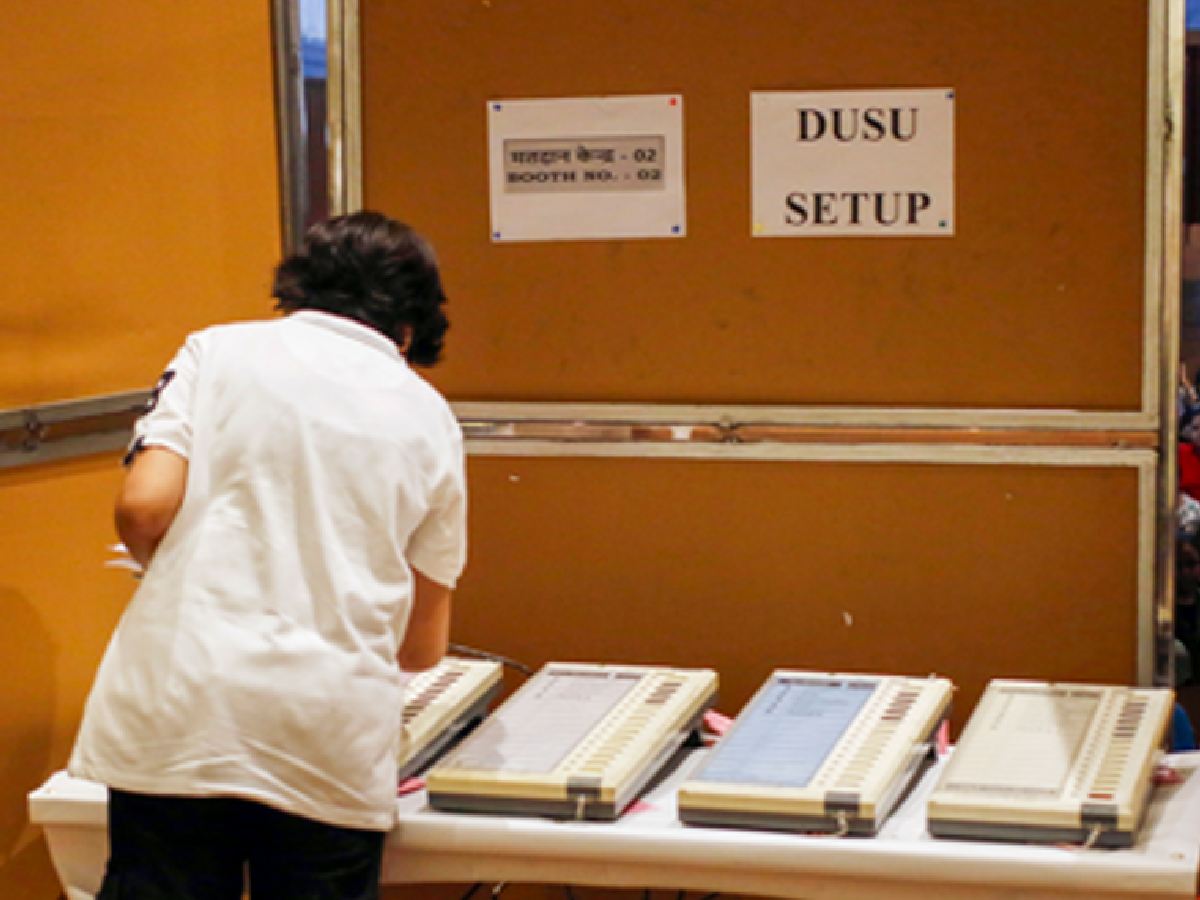
Behind the fluttering campaign pamphlets and long queues outside colleges across North Campus, the issues that followed voters into the DUSU polling booths were quite basic — a room they could afford, a placement after graduation or the right to stay home when menstrual cramps make attending class difficult.
As Delhi University students voted on Friday, conversations with students of several North Campus colleges, including Ramjas College, Hindu College, Hansraj College, Kirori Mal College and the Faculty of Law showed that accommodation, hygiene, menstrual leave, fees, placements, internships and basic student facilities were among the issues informing their choices.
For students coming to Delhi from outside the city, accommodation was not merely a question of convenience.
“Hostel and accommodation are major concerns because not everyone can afford to stay in a private PG. Students come from different backgrounds, and many have to spend a substantial part of their family income just to live near college,” a student said.
The concern has acquired greater urgency this year following the Satya Niketan building collapse, which killed seven people, including five students. Student accommodation and the safety of private paying-guest facilities have since become a prominent issue in the DUSU campaign.
For women students, basic campus facilities and menstrual leave were among the more immediate concerns. Students raised issues ranging from clean drinking water and hygienic washrooms to female hygiene facilities and the need for menstrual leave.
“Menstrual issues are not a gimmick. Cramps are not a gimmick.
“If a student is in severe pain, she may genuinely not be able to attend class. If menstrual leave can be provided, there is no reason to make an issue out of something so basic,” a third-year student of Hindu College said.
Another student pointed to the gap between what students are charged and what they can actually use.
Gargi, a student of Hansraj College, said fee hikes had become a concern, particularly when students felt the additional money was not reflected in campus facilities.
“The year before last, the BA Programme fee was around Rs 29,000, and this year it is Rs 32,000. We are getting essentially the same facilities, so I do not understand the need for the hike,” she said.
For first-year students, the concerns extended beyond basic facilities to what college life offered outside the classroom.
“Fests never happen in Hansraj (College). Placements are also a major concern because, especially in a college like Hansraj (College), students want to know what opportunities they will have after graduation,” Anshi, a BA (Honours) Economics student of the college, said.
Internships, placements and exposure to opportunities appeared to carry particular weight among newer voters, several students said. Those voting for the first time were more likely to look at what candidates promised on fests, placements and internships, rather than their work on campus over several years.
Metro concessions also figured in discussions, particularly among students who commute long distances. Some students also raised concerns over attendance rules and the academic workload.
For students from outside Delhi and from smaller towns, the transition can be particularly difficult, with accommodation, commuting and navigating university procedures becoming additional burdens alongside academics.
A student of the Faculty of Law said students should not be treated as “subordinates” within educational institutions and argued that administrative processes needed to become simpler and more accessible.
“Every student does not come from the same background. Some come from urban areas, while others come from the countryside and may take time to understand the systems and environment here. The administration needs to be more simple and accessible towards students,” the student said.
The student also said disciplinary action needed to be proportionate, arguing that mistakes made by young students should not automatically result in consequences that could affect their future.
Students also argued that disciplinary action should take into account the nature of the mistake.
“Students are young and mistakes are a part of that. They should not be ignored, but the response should also be proportionate. An FIR for every mistake can leave a student with a criminal record and affect their future,” a student said.
Also Read: Delhi SIR: ‘We’re still here. Why are our names cut?’ Voters question deletions
For some students, the choice of candidates also came down to familiarity. They said they were inclined towards those they had seen working on the ground for two or three years, while first-time voters were more likely to consider promises relating to fests, internships and placements.
With more than 1.51 lakh students eligible to vote in this year’s DUSU election, those questions give a more grounded picture of what is at stake beyond the campaign rhetoric.
The Delhi High Court stayed an order requiring public prosecutors to mark daily attendance via…
Railways cancelled select trains to New Delhi and Nizamuddin on Oct 10, citing road traffic…
Delhi Police registered 25 FIRs regarding SIR protests, naming Rahul and Priyanka Gandhi Vadra over…
Around 200 LHJP protesters gathered in Delhi to condemn abusive language against PM Modi and…
Delhi Police denied permission for the Cockroach Janta Party's Oct 10 protest at Jantar Mantar,…
CTI has urged PM Modi to ban large protests in central Delhi from Navratri to…
