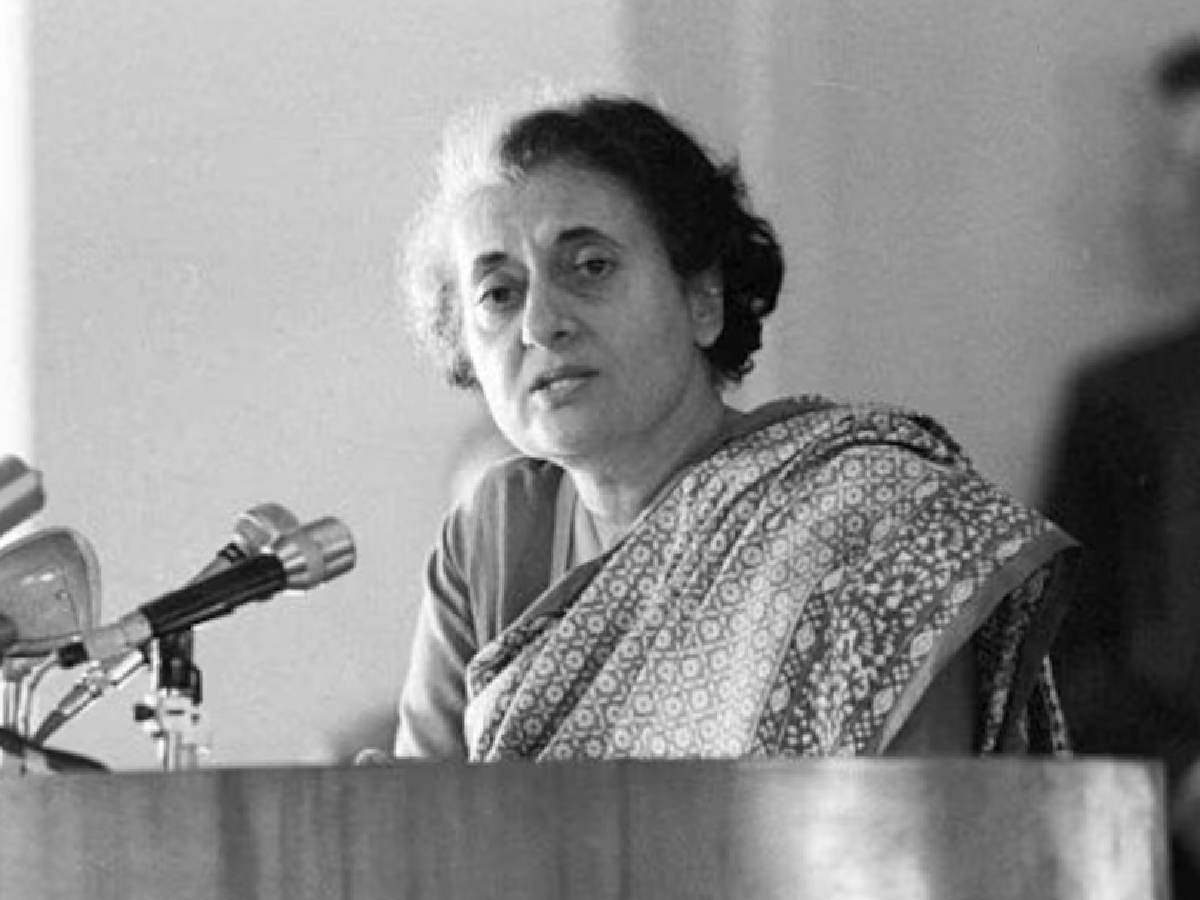
Emergency: Disguised as yoga, badminton and football sessions, the many conversations in custody between jailed leaders such as Nanaji Deshmukh, Vijaya Raje Scindia and Chaudhary Charan Singh laid the groundwork for a political revolt against Indira Gandhi, recalls a retired prison officer.
H C Verma, who was assistant superintendent of Tihar jail, is now 76, his memories of Emergency, imposed 50 years ago today, razor sharp.
“We were told some dangerous people were being brought in but no names or details were given. It was only when Raj Narain, who won the electoral malpractice case against Indira Gandhi, was brought in with a detention warrant under the Maintenance of Internal Security Act (MISA) that we realised these were political leaders being jailed,” Verma told PTI.
A wave of detentions followed over the next 48 hours.
“One after the other, leaders like Lala Hansraj Gupta, Nanaji Deshmukh, Parkash Singh Badal, Arun Jaitley, George Fernandes, Chaudhary Charan Singh, Maharani Vijaya Raje Scindia and Maharani Gayatri Devi were brought in,” he recounted.
The political stature of the inmates posed a unique challenge for the authorities.
Also read: Delhi: 3 dead, 3 injured as fire breaks out at factory in Rithala
“These were not ordinary criminals. They were national figures, many who had never imagined they’d be jailed like this. Initially, many were angry, frustrated and confused. We became the face of the system for them, and bore the brunt of their questions and anguish,” Verma said.
Then just 26, the retired official narrated in detail how the political leaders, once adversaries across party lines, were brought together under incarceration, their discussions in Tihar paving the way for the formation of a united political front that would eventually dethrone Indira Gandhi’s Congress government in 1977.
“Nanaji told us he wanted to speak to Vijaya Raje Scindia but we told him he couldn’t talk to her as she was lodged in a women’s prison. Then came a request from Scindia saying she wants to learn yoga from Nanaji. Thinking that they weren’t criminals, we allowed it and would escort him to her.”
Prison officials later realised that the leaders were holding discussions on forming a new political party. “Those discussions were the beginning of what later became the Janata Party,” Verma said.
As the days passed, the political leaders started settling down. Jail authorities provided them with badminton, ludo, football and other diversions.
“Arun Jaitley was a good badminton player. I used to play with him. Chaudhary Charan Singh used to note down scores,” he said.
Verma said the jail staff accorded them as much dignity as possible within the rules. “They were innocent people detained without trial. We tried to ensure clean living conditions, proper food and some mental engagement,” he said.
While protocol forbade the jail staff from discussing politics or sympathising openly, Verma admitted there was deep empathy internally. “We were bound by rules, but in our hearts we knew many of them didn’t deserve to be there. We did what little we could to treat them with respect,” he said.
Going back in memory, Verma narrated an emotional encounter with his former school teacher, Master Somraj, who was among the detainees.
“I instinctively touched his feet when I saw him. He stopped me and warned, ‘Don’t do this in jail. It could go against you’,” Verma, who went on to become the superintendent of prisons, said.
He also recounted how each person behaved. “Maharani Gayatri Devi wanted her own badminton court, insisted on her routine. On the other hand, Vijaya Raje Scindia was saint-like. She prayed, taught, and guided other female inmates.”
At its peak, India’s largest prison complex housed around 1,900 detainees, including 350-400 political prisoners under MISA and others under the Defence of India Rules (DIR). “Managing such a mix of hardened criminals and high-profile political detainees was a massive responsibility I was given,” Verma said.
Also read: Delhi Weather: City to witness light rain, says IMD
There was a sense of relief among both staff and inmates when the leaders were released.
“We were happy they were going back to their families. Many of them later rose to top positions. Some like Madan Lal Khurana, I met later when he became Delhi’s chief minister,” Verma said.
On June 25, 1975, Indira Gandhi announced the imposition of the Emergency in a broadcast on All India Radio, shortly after the Supreme Court granted a conditional stay to an Allahabad High Court verdict declaring her election to the Lok Sabha null and void. It was lifted on March 21, 1977.
From amusement rides and water slides to adventure activities and interactive play zones, these destinations…
Delhi government has notified voluntary Aadhaar authentication for its Unified Citizen Data Platform, making it…
Manzil Mystics takes structured music classes and Kabir’s poetry to government schools to encourage self-expression…
NCRTC will introduce eight additional limited-stop Namo Bharat train services from November 16, reducing travel…
Delhi High Court said subsequent marriage and the minor’s wish to live with the man…
Sixteen fire tenders were rushed to a factory in Mangolpuri after a blaze broke out,…
