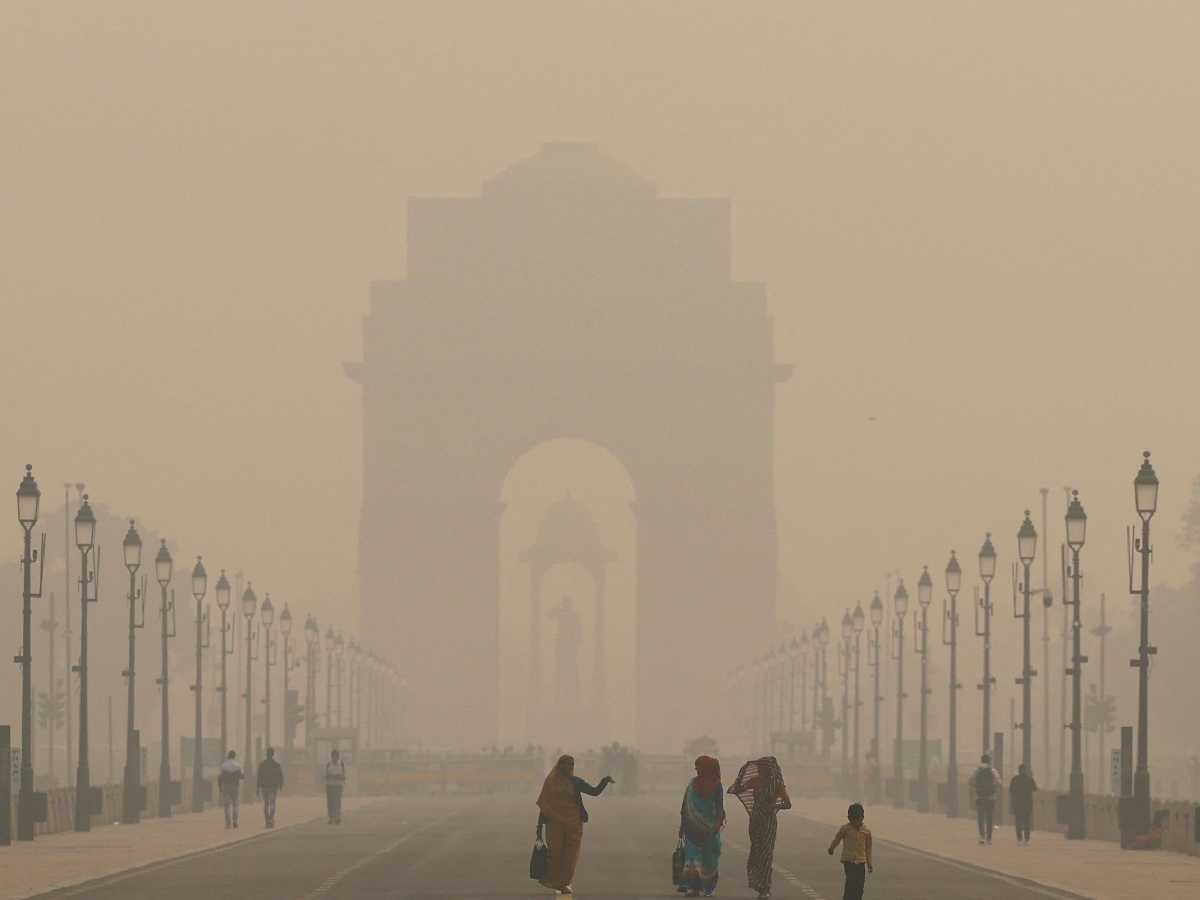
As the Centre invoked stricter anti-pollution measures in Delhi-NCR, the Congress on Tuesday said the emphasis is on “crisis management” and not on “crisis avoidance”, and called for tough multi-sectoral actions with scale and speed round the year and not just in October-November.
The Centre on Tuesday invoked stricter anti-pollution measures under Stage III of the Graded Response Action Plan (GRAP) in Delhi-NCR after the city’s air quality slipped into the ‘severe’ category.
Noting that GRAP-III has just been activated in the national capital, Congress general secretary in-charge communications Jairam Ramesh said responding to the 2014-17 winter pollution crisis, the Supreme Court mandated the Graded Response Action Plan (GRAP) for emergency measures during severe smog episodes. This was notified in January 2017, the former environment minister pointed out.
“GRAP was expected to become less necessary over time as year-round emission reduction improved. Sadly, it has remained the dominant focus of clean-air action. It was initially implemented only after three consecutive ‘severe’ days but now GRAP responds continuously to fluctuations in air quality” Ramesh said, adding that it is, therefore, essentially reactive.
“The emphasis is on crisis management and not on crisis avoidance. We need tough multi-sectoral actions with scale and speed round the year and not just in October-November for change that makes a real difference and mitigates the huge hazards to public health,” the Congress leader said.
Delhi still requires a more than 60% reduction in its annual PM2.5 levels to be able to meet the National Ambient Air Quality Standards, let alone the stricter WHO guidelines, Ramesh said.
The decision to invoke GRAP-III was taken after Delhi’s average Air Quality Index (AQI) rose sharply from 362 on Monday to 425 on Tuesday morning due to calm winds, a stable atmosphere and unfavourable weather conditions that allowed pollutants to accumulate close to the surface, the Commission for Air Quality Management (CAQM) said.
The implementation of Stage III curbs, which include a ban on non-essential construction work and closure of stone crushers and mining activities, is in addition to the actions already enforced under Stages I and II of GRAP.
Classes up to Class 5 are required to shift to hybrid mode under Stage 3. Parents and students have the option to choose online education wherever available.
Under Stage 3, the use of BS-III petrol and BS-IV diesel cars (4-wheelers) is restricted in Delhi and nearby NCR districts. Persons with disabilities are exempt.
Families displaced by the Seemapuri building collapse spend another night on the streets as damaged…
Camera-based enforcement in Delhi generated around 40.6 lakh notices till September, but only about 2…
Delhi government to fast-track Rs 7,000-crore elevated Ring Road project, with two new Yamuna bridges…
Yamuna water quality deteriorated at three locations in Delhi in September, with BOD levels remaining…
Delhi liquor stores will remain shut on October 9 and 10 following police inputs to…
Strike began September 15; ESMA invoked by month-end has barred strikes for six months; drivers…
