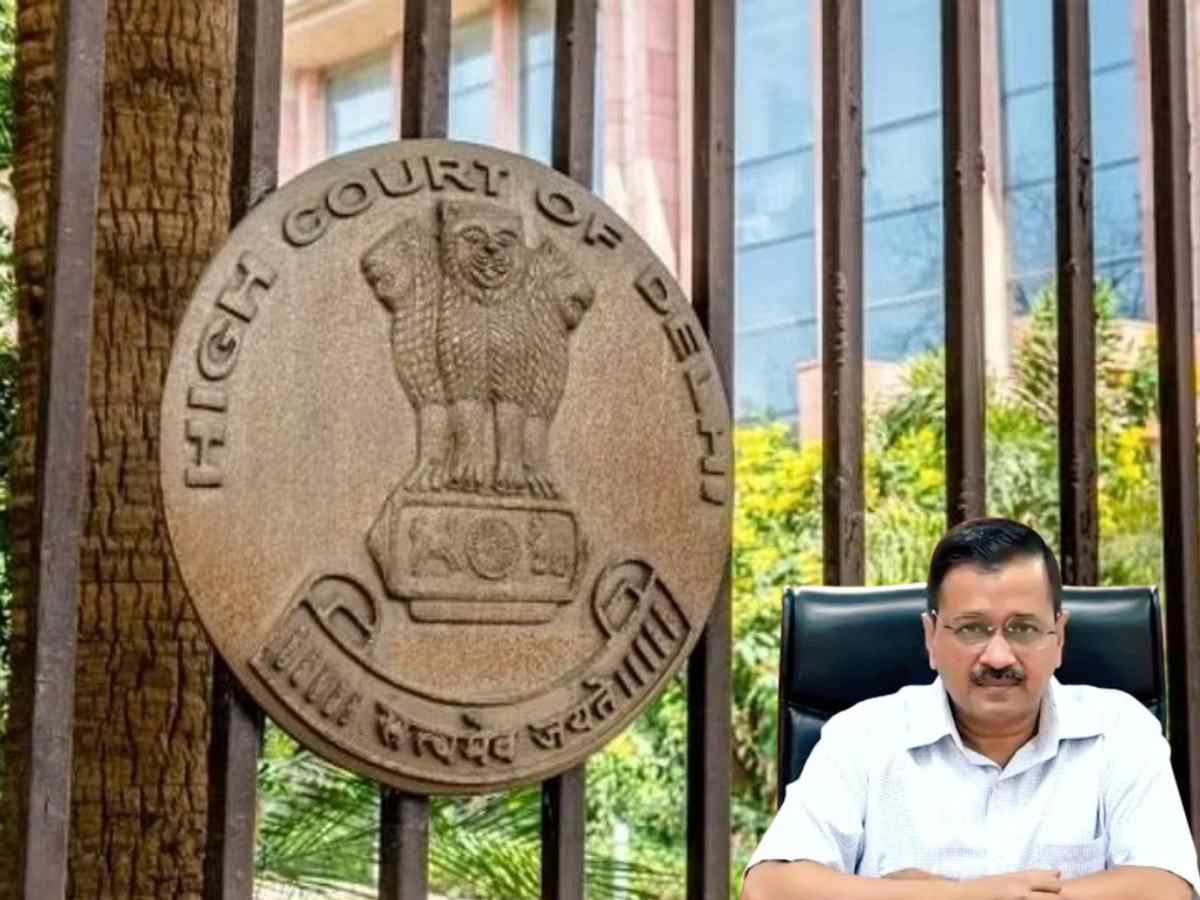
A Delhi court on Tuesday extended the judicial custody of Chief Minister Arvind Kejriwal until August 27 in a corruption case filed by the CBI concerning the alleged excise policy case.
Special Judge Kaveri Baweja extended Kejriwal‘s custody after the Aam Aadmi Party (AAP) leader was presented before the court via video conference, as his previous custody period had expired.
On August 27, the court is expected to review a supplementary chargesheet submitted by the Central Bureau of Investigation (CBI) against Kejriwal.
During a Supreme Court hearing on Wednesday, the top court issued a notice to the CBI in response to Kejriwal’s pleas seeking bail and challenging the Delhi High Court’s decision to uphold his arrest by the CBI in the corruption case related to the alleged excise policy scam.
A bench of Justices Surya Kant and Ujjal Bhuyan requested the CBI’s response by August 23 and denied interim bail to Kejriwal.
Senior advocate Abhishek Manu Singhvi, representing Kejriwal, argued for interim bail on health grounds, but the bench refused, stating, “We are not granting any interim bail. We issue notice”.
Also Read: Excise policy case: SC refuses Delhi CM’s plea for interim bail, issues notice to CBI
Singhvi pointed out that Kejriwal had previously received interim bail three times in the money laundering case, despite the strict requirements of Section 45 of the Prevention of Money Laundering Act. He questioned how Kejriwal could be denied regular bail in the CBI case, given that the Prevention of Corruption Act does not have similarly stringent conditions. Singhvi described Kejriwal’s arrest by the CBI as an “insurance arrest”.
On August 5, the Delhi High Court upheld Kejriwal’s arrest as “legal” and rejected his plea challenging the arrest, stating that the CBI proceeded with further investigation against him only after sufficient evidence was collected and sanction was obtained in April 2024.
The High Court noted that there was no malice in the CBI’s actions, which demonstrated how Kejriwal could influence witnesses, who only came forward after his arrest.
It was mentioned that Kejriwal is not an ordinary citizen but a distinguished recipient of the Magsaysay Award and the convener of the Aam Aadmi Party.
“The control and influence he has over the witnesses is prima facie evident from the fact that they could only muster the courage to testify after the petitioner’s arrest, as highlighted by the special prosecutor,” the court stated in its order.
Kejriwal was arrested by the ED on March 21, 2024, in connection with a money laundering investigation related to alleged irregularities in the now-cancelled Delhi excise policy for 2021-22.
On June 26, 2024, while in the custody of the Enforcement Directorate, the AAP Chief was arrested by the CBI. (With inputs from PTI)
At least 50 cases have already been reported this month; NCPCR guidelines mandate help desks,…
DMRC says zero reduction in train trips, attributes decline to security measures and public apprehension…
A Delhi court denied bail to a former DU professor accused of raping a student,…
Delhi Police charged seven dhaba workers in the fatal beating of a Manipuri musician who…
Seven Delhi STPs failed DPCC standards in September, dumping high levels of faecal coliform and…
AISA chief Neha Bora petitioned the Delhi HC against a police notice requiring a peace…
