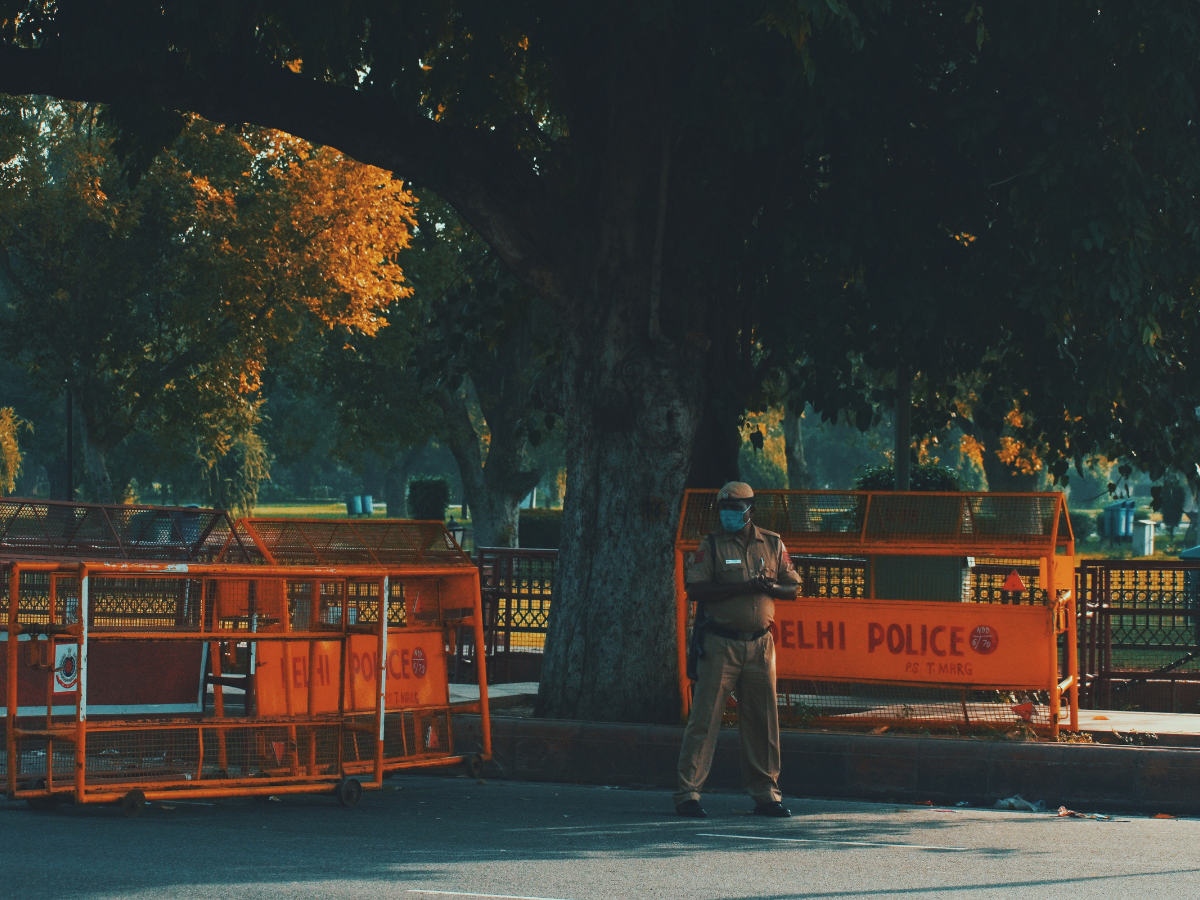
The Delhi Police has announced a comprehensive ban on gatherings, processions, and rallies, along with the entry of tractor trolleys carrying individuals into the national capital.
This decision comes as a precautionary measure in anticipation of potential unrest and tension surrounding the farmers’ ‘Delhi Chalo March’ scheduled for Tuesday.
Under the directive issued by Delhi Police Commissioner Sanjay Arora, Section 144 has been enforced for a month, starting from February 12 and extending until March 12. The order explicitly prohibits any form of rally, procession, or road obstruction.
Of particular concern are tractor rallies attempting to breach the borders of Delhi, with farmers from Punjab, Uttar Pradesh, and Haryana expected to participate in the march.
The order, issued on February 11, highlights the plans of various farmers’ unions, including the Samyukta Kisan Morcha (SKM) and the Kisan Mazdoor Morcha (KMM), to stage a protest outside the Parliament House to address their grievances.
Citing the potential for widespread tension, public nuisance, and social unrest, the order emphasizes the risks associated with the march participants’ mode of transport, including tractors and trolleys, which could pose hazards on the roads and endanger the safety of residents and other commuters.
Furthermore, the order expresses concerns about the possibility of anti-social elements exploiting the situation to disrupt peace and public order in Delhi.
To mitigate these risks and ensure public safety, tranquility, and order, the Delhi Police has deemed it necessary to impose strict restrictions on the activities of the march participants. This decision is informed by past experiences of farmer agitations in 2020 and intelligence inputs regarding potential law and order challenges.
The restrictions outlined by the Delhi Police encompass a wide range of measures, including the prohibition of assemblies, road blockades, processions, and public meetings. Additionally, carrying of weapons or items that could be used as weapons, as well as provocative actions or speech, are strictly forbidden.
Vehicular traffic originating from neighboring districts of Haryana and Uttar Pradesh will undergo thorough inspection, and vehicles found carrying potentially disruptive items will be denied entry into Delhi.
The order also prohibits the use of loudspeakers or amplifiers without authorization and calls for the cooperation of residents, community leaders, and stakeholders in its implementation.
Overall, the imposition of Section 144 underscores the authorities’ commitment to maintaining law and order and safeguarding the well-being of the public during this period of heightened tension and unrest.
(With PTI inputs)