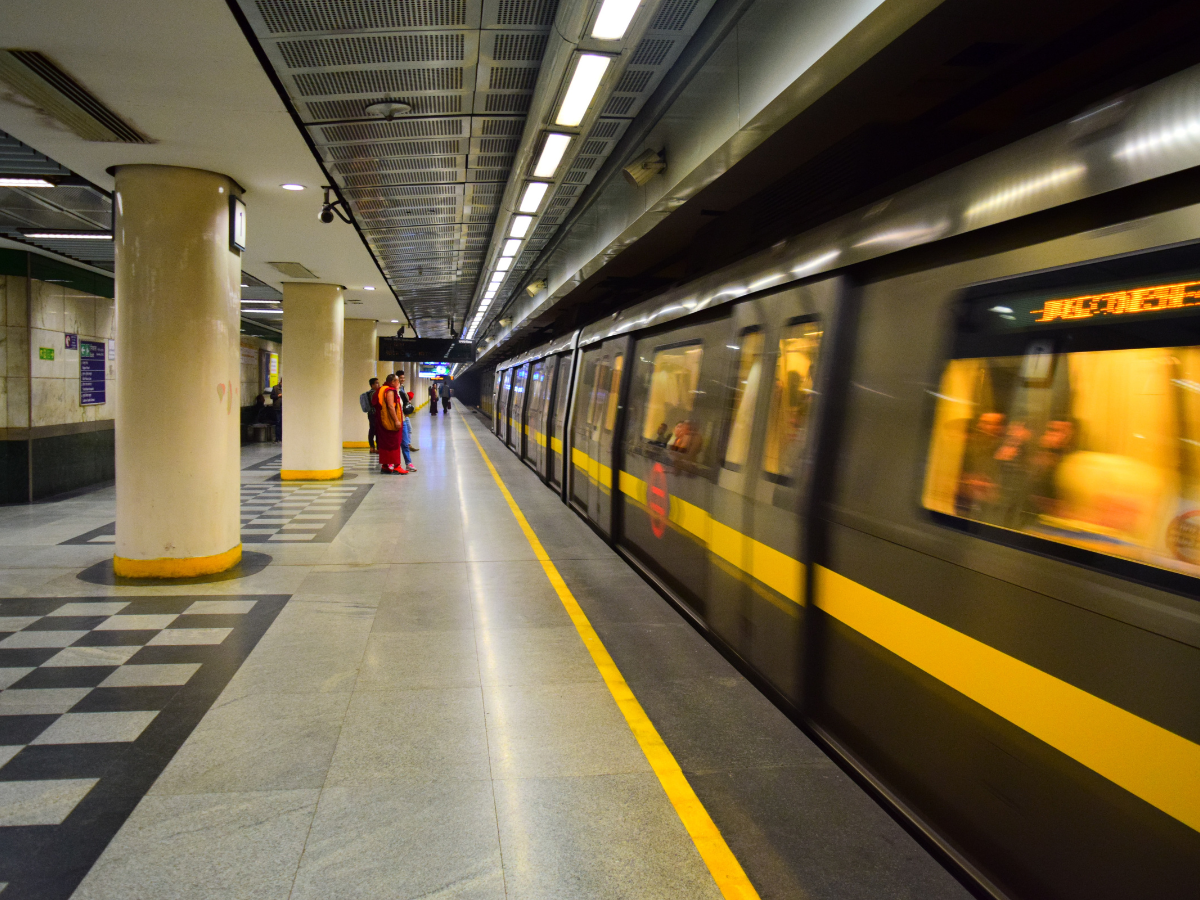
Delhi metro
Due to the G20 Summit scheduled for September 9 and 10, passengers will not be allowed to board or deboard at the Supreme Court metro station, officials said.
Delhi Metro services will commence from 4 AM at terminal stations across all lines from September 8 to 10, in preparation for the G20 Summit.
However, during this period, all metro stations except the Supreme Court Metro Station will remain open to the general public. Security constraints have led to the suspension of passenger activities at the Supreme Court Metro Station on September 9 and 10.
The Supreme Court Metro Station, which is in close proximity to Pragati Maidan, the G20 Summit venue, will be impacted by this temporary restriction.
In addition, certain metro stations in the New Delhi district may have their entry or exit regulated briefly on September 9 and 10 to facilitate the movement of VVIP delegations, as directed by security agencies.
Furthermore, parking facilities at the Supreme Court, Patel Chowk, and R K Ashram Marg metro stations will be closed from 4 AM on September 8 until noon on September 11. This measure is taken to accommodate the general public, police personnel, and supporting agencies involved in ensuring security, maintaining law and order, and managing traffic arrangements for the G20 Summit.
The G20 Summit is scheduled to take place on September 9-10 at the newly-constructed international convention and exhibition center, Bharat Mandapam, located at Pragati Maidan. (With inputs from PTI)
Elected to the Delhi Golf Club general committee, Mansher Singh says he wants to build…
A $780 million market built on pavements, where the pleasure of reading meets the price…
Supreme Court advocate Abhishek Pawar alleges women were denied washroom access for seven to eight…
Each day of closure costs shops in Khan Market and Connaught Place between Rs 60,000…
Delhi generates nearly 15,000 tonnes of waste daily, prompting the government to deploy 1,000 mechanical…
Delhi Police has issued an NOC for the Congress rally at Ramlila Maidan on November…
