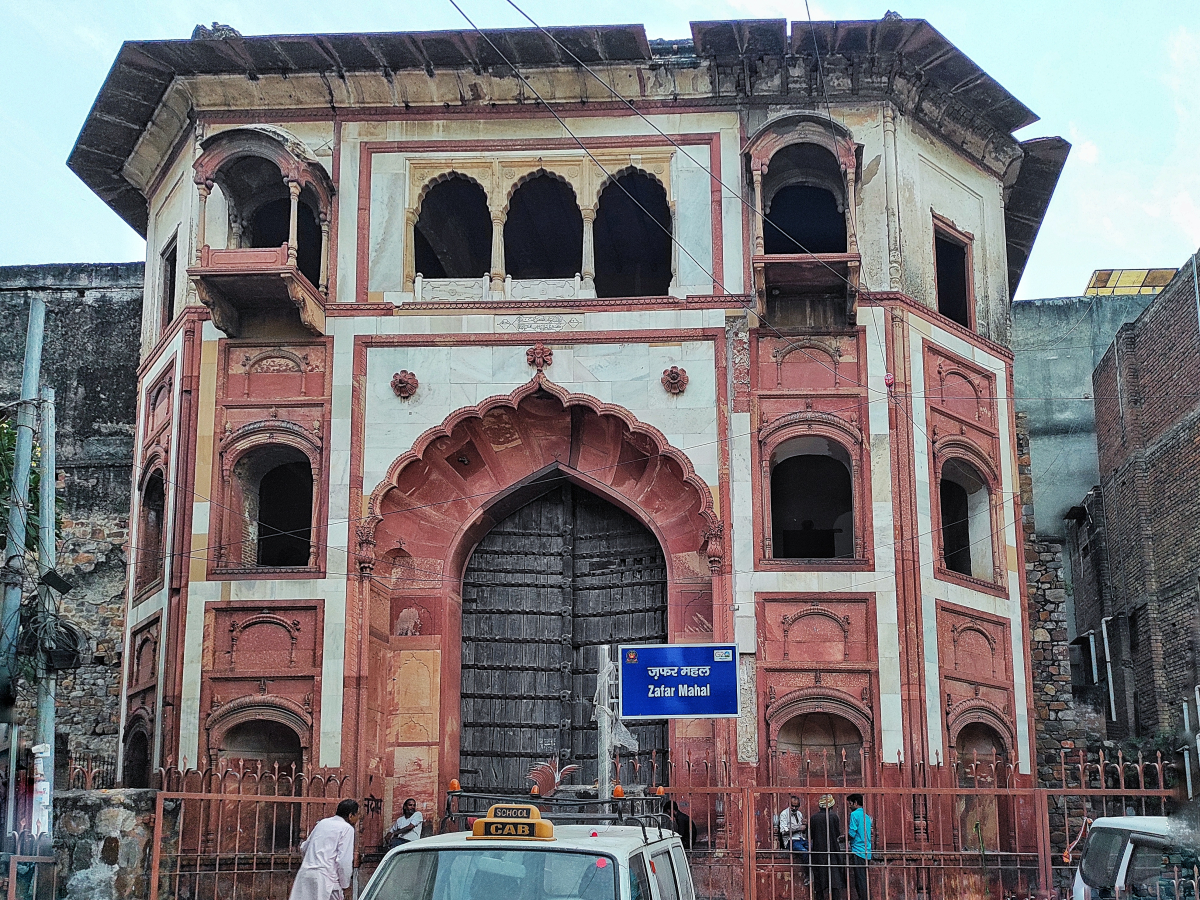
Zafar Mahal, Mehrauli, was the abode for Mughals
Centuries ago, Delhi rains meant more than relief from the summer heat. During the later Mughal period, the arrival of the rains marked the beginning of the court’s annual journey from Shahjahanabad to Mehrauli.
Every monsoon, the emperor moved to Mehrauli for several weeks, accompanied by members of the royal family, nobles, soldiers and attendants. The move was not merely an escape from the heat of the Red Fort. With its gardens, water bodies, religious sites and open spaces, Mehrauli allowed official duties to continue alongside worship, recreation and seasonal festivities.
Long before the Mughal era, Mehrauli had developed around an extensive network of water bodies. At its centre was Hauz-i-Shamsi, a reservoir built by Sultan Iltutmish in 1229–30.
According to tradition, the Sultan dreamt of Prophet Muhammad, who showed him the spot where his celestial steed, Buraq, had left a footprint. The reservoir was subsequently built there and became both an important source of water and a sacred site.
Over the centuries, the area developed into one of Delhi’s greenest landscapes. During the monsoon, the reservoir filled with rainwater, while nearby baolis, orchards and gardens flourished. Unlike the crowded lanes of Shahjahanabad, Mehrauli offered fresh air, rocky hills, shaded pathways and flowing water, making it an ideal retreat during the rainy months.
By the 19th century, the Mughal emperors had made Zafar Mahal in Mehrauli their monsoon residence. Every year, the emperor left the Red Fort in a grand procession accompanied by princes, members of the royal household, attendants and soldiers.
In her book City of My Heart: Tales of Love, Loss and Betrayal in Nineteenth-Century Delhi, historian Rana Safvi describes how the royal procession travelled from Shahjahanabad to Mehrauli in decorated carriages, palanquins and elephant litters.
When the emperor arrived, tents were erected, soldiers guarded the roads and the otherwise quiet settlement filled with visitors, traders and celebrations.
Although the emperor continued to conduct official work from Mehrauli, life there was more relaxed than it was inside the Red Fort. The palace overlooked gardens, open spaces and monuments that became the setting for royal recreation throughout the season.
Mehrauli’s natural surroundings were among its main attractions for the Mughal court. During the monsoon, the rocky landscape turned green, while mango orchards and gardens provided shade.
The royal family frequently visited the Jharna, an artificial waterfall fed by channels carrying water from Hauz-i-Shamsi. During Aurangzeb’s reign, Nawab Ghaziuddin Khan Firoz Jung expanded the water system by building channels, tanks and cascades, transforming the area into a pleasure retreat.
Members of the royal family spent their days walking through the gardens, resting in pavilions and enjoying the changing landscape.
The rains were celebrated across North India, and Mehrauli became one of Delhi’s liveliest festive centres. Swings were tied to mango trees, musicians performed, food was cooked outdoors and families gathered in the gardens.
In City of My Heart, Safvi describes princesses swinging beneath dark monsoon clouds as peacocks called in the distance and musicians played. Large cauldrons of sweets and savouries were also prepared for the royal household.
A verse attributed to Bahadur Shah Zafar captures the celebratory mood:
“Hai barsāt kī bahār, sabhoñ ke hai dil shād,
Raho aish meñ ham-dam, piyo bāda-e-noshād.”
The season’s most important event was Phool Walon Ki Sair, one of Delhi’s oldest cultural festivals, which continues to be celebrated.
The festival began during the reign of Emperor Akbar Shah II and reflected Delhi’s shared religious traditions. Flower sellers presented decorated floral fans, known as pankhas, at both the dargah of Sufi saint Hazrat Khwaja Qutbuddin Bakhtiyar Kaki and the Yogmaya Temple.
The Mughal emperor attended the celebrations. Markets remained open late into the night, musicians performed and food stalls drew visitors. For several days, people from different communities gathered in Mehrauli, turning it into the centre of Delhi’s cultural life.
Mehrauli also held religious significance for the Mughal emperors because it was home to the dargah of Hazrat Khwaja Qutbuddin Bakhtiyar Kaki.
Mughal rulers visited the shrine to seek blessings. Bahadur Shah Zafar was particularly devoted to the saint and regularly offered prayers there during his stay in Mehrauli.
The annual journey combined official duties with religious devotion and seasonal festivities.
Mehrauli remained a favoured monsoon retreat during the later years of Mughal rule, including among British officials. Sir Thomas Metcalfe, the British Resident at the Mughal court, converted the 16th-century tomb of Muhammad Quli Khan into a country retreat called Dilkusha (Heart’s Delight).
He redesigned the structure in the style of a European country house and added gardens, artificial streams, a boating tank and landscaped grounds.
Metcalfe spent the monsoon there, enjoying the milder weather while keeping watch over Bahadur Shah Zafar, whose palace stood nearby. The retreat was also lent to newly married British couples as a honeymoon destination during the rainy season.
The tradition of visiting Mehrauli continued after the end of the Mughal Empire. Well into the 20th century, Delhi families travelled there after the first showers.
The open spaces around Mehrauli became popular picnic spots. Families brought homemade food, gramophones and ropes for hanging swings from trees.
Writer and National Museum Institute Assistant Professor Dr Juhi Sadiya recalled that children played beneath mango trees while elders prepared pakoras, stuffed rotis and seasonal dishes. Families spent the day singing, eating mangoes and enjoying the cooler weather before returning home in the evening.
The tradition continued until Delhi’s rapid expansion led to the gradual disappearance of many of the city’s orchards and gardens.
Today, Mehrauli is best known for the Qutub Minar and the Mehrauli Archaeological Park. Less well known is its history as the Mughal court’s monsoon retreat.
Its reservoirs, baolis, palaces, gardens and shrines once formed a landscape where emperors, nobles, traders and residents gathered to mark the rainy season through music, festivals, worship and recreation. For generations of Delhiites, the monsoon did more than cool the city: It brought Mehrauli’s gardens, palaces and public spaces to life.
Read More: Central Secretariat Library faces uncertain future as Shastri Bhawan set for demolition
Delhi Police transfer second case against Cockroach Janta Party's Saurav Das and Ashutosh Ranka to…
At least 50 cases have already been reported this month; NCPCR guidelines mandate help desks,…
DMRC says zero reduction in train trips, attributes decline to security measures and public apprehension…
A Delhi court denied bail to a former DU professor accused of raping a student,…
Delhi Police charged seven dhaba workers in the fatal beating of a Manipuri musician who…
Seven Delhi STPs failed DPCC standards in September, dumping high levels of faecal coliform and…
