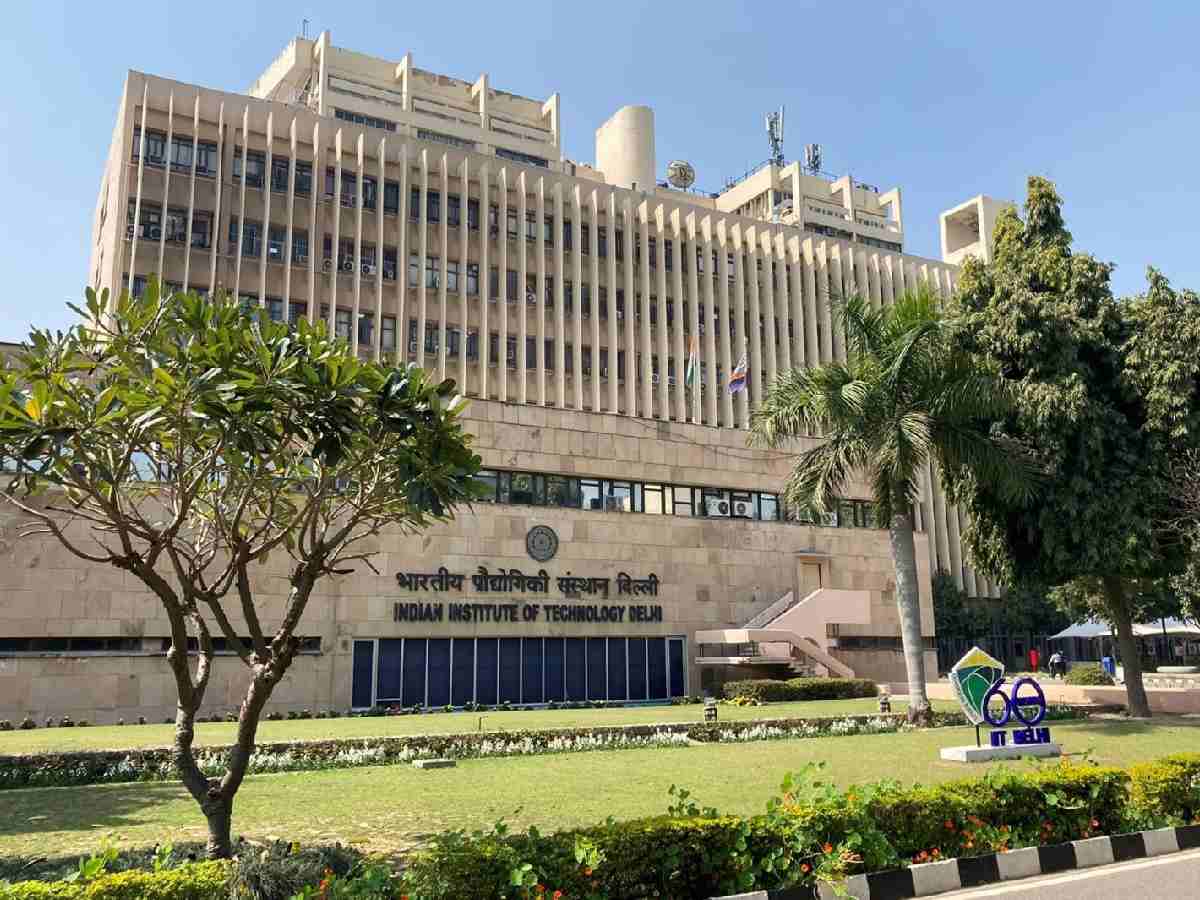
Researchers, led by those at the Indian Institute of Technology (IIT) Delhi, have developed an AI tool that can predict performance of HVAC filters and help design smarter ones, essential for improving indoor air quality.
The COVID-19 pandemic, which necessitated people to stay at home, brought to fore an urgent need to improve indoor air quality, especially through better air filtration in heating, ventilation, and air-conditioning (HVAC) systems, said the team including researchers from Sweden.
The challenge is that filters trapping more harmful particles often block airflow, making systems less efficient and more energy hungry, they said.
Lead researcher Amit Rawal, professor at the department of textile and fibre engineering in IIT Delhi, said, “By training machine learning models on diverse data points collected from studies worldwide, we were able to predict both how well a filter cleans the air and how easily air can pass through it.”
Machine learning is a type of artificial intelligence algorithm which makes a prediction based on data it is trained on.
The team combined experimental data from previously published studies with AI in developing and training the model which can predict the performance of a filter used in HVAC applications.
The AI model, described in a paper published in the journal Separation and Purification Technology, “was tested with industrial data from Elofic Industries Ltd, showing its ability to guide filter designs for real-world applications,” Rawal said.
Also Read: Boating relaunch at Purana Qila draws huge crowds
The Faridabad-based company manufactures and supplies filters, including HVAC ones, for automotive and industrial purposes.
“This strong industry-academia partnership demonstrates how AI can accelerate innovation, paving the way for cleaner indoor air, lower energy costs, and better preparedness against future health crises,” Rawal said.
Harnessing AI can help achieve our goal of making “healthier indoor environments accessible to everyone, from schools and hospitals to workplaces and homes,” he added.
However, using AI comes with a cost, with models often lacking interpretability, requiring vast amounts of training data, and demand significant computational resources, Rawal said.
Delhi HC will rule Oct 23 on AISA chief Neha Bora’s plea against a police…
A CREA analysis shows Delhi's winter AQI has seen no steady gain since 2022, with…
DMRC will plant over 28,000 saplings across 991 MCD parks in 3 months to offset…
Delhi HC quashed an FIR against an SSC aspirant, ruling mere presence at a protest…
CJP leaders Saurav Das and Ashutosh Ranka sought more time to join the Delhi Police…
Delhi Police held 3 more people, including a couple using a minor to sell heroin…
