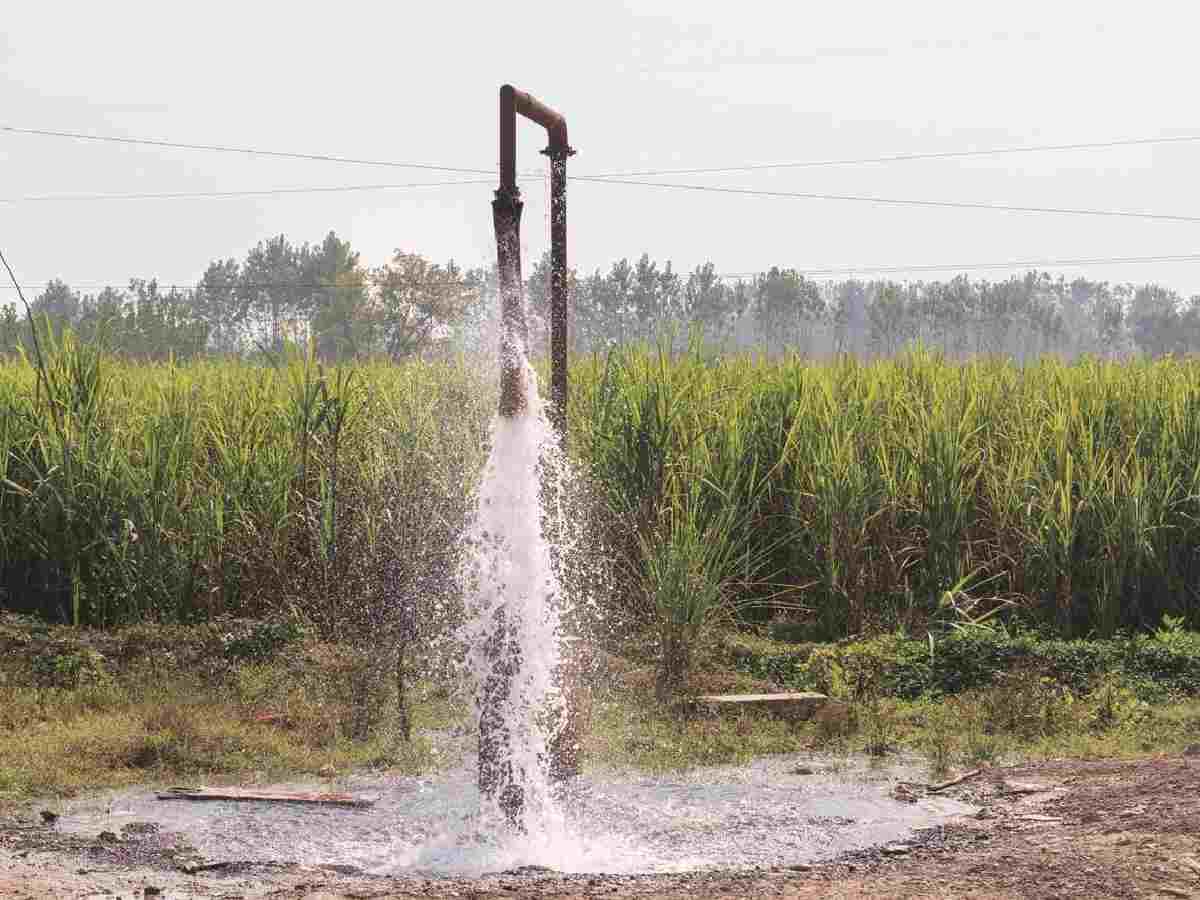
A national assessment of groundwater quality has highlighted a troubling rise in manganese contamination in Delhi’s drinking water sources. The Annual Ground Water Quality Report 2025 by the Central Ground Water Board (CGWB) shows that 18.60% of pre-monsoon groundwater samples in the Capital exceeded the permissible limit of 0.3 mg/l. Specialists say the findings reflect the increasing stress on Delhi’s depleted aquifers.
Contamination levels dipped after the monsoon due to natural dilution, but experts caution that this is temporary and does not indicate recovery. Persistent over-extraction, shrinking recharge zones and aquifer degradation continue to raise long-term risks.
Nationwide trend
Delhi’s results mirror a wider pattern across India. According to CGWB data, 12.02% of samples nationwide in the pre-monsoon period and 10.79% after the monsoon exceeded permissible manganese levels. Bureau of Indian Standards (BIS) (IS 10500) standards allow 0.3 mg/l only when no cleaner source is available.
States such as Assam, Bihar, Odisha, Uttar Pradesh, Karnataka and West Bengal have reported elevated concentrations. Experts attribute the rise to geological release aggravated by rapid groundwater withdrawal and declining aquifer health.
Underlying causes
Manganese occurs naturally in rock formations, but dissolves into groundwater in harmful concentrations when aquifers lose oxygen. Such conditions emerge as water tables fall and recharge slows.
Delhi faces all these pressures. Heavy dependence on borewells, widespread concretisation that restricts percolation and years of unregulated pumping have pushed the groundwater system into distress. Temporary monsoon dilution does not address the core imbalance.
Health risks
Medical specialists warn that prolonged manganese exposure affects the developing brain, particularly in infants and young children who absorb more manganese and excrete less.
Dr Vinit Banga, Director and HOD of Neurology, Fortis Escorts Hospital, Faridabad, notes that “every day, infants and young children are at risk because their nervous systems are still maturing”. He warns that excessive intake can cause learning disabilities, attention disorders, memory lapses and behavioural symptoms resembling ADHD. In severe cases, symptoms may mimic Parkinsonism, including tremors, stiffness and impaired coordination.
He recommends laboratory testing for households using borewell or untreated water, and switching to treated water if contamination is detected. For infants, he stresses using only purified water and cautions that boiling does not remove manganese.
Dr Saurabh Khanna, Director Paediatrics and Neonatology, CK Birla Hospital, Gurugram, also refers to manganese as a neurotoxin. He says prolonged exposure may delay developmental milestones, reduce coordination and trigger tremor-like symptoms. Since no medication removes manganese from the body, he emphasises early testing and the use of certified filtration systems.
Wider contamination
The CGWB reports that manganese is only one of several contaminants affecting groundwater nationwide. Across India, 20.7% of samples exceeded nitrate limits, 8.05% crossed fluoride standards and 7.23% showed high salinity. Specialists say this combination indicates widening hydrochemical stress.
According to the report, in Delhi, detection is harder because manganese does not alter the taste, smell or colour of water. Peripheral regions such as Dwarka, Najafgarh, Burari, Bawana, Shahdara and East Delhi are particularly vulnerable because residents rely heavily on private borewells and rarely test their water.
Large sections of the Capital, especially unauthorised colonies and peri-urban belts, continue to depend on groundwater for drinking and daily use due to unreliable or inaccessible piped supply.
Policy actions
The CGWB recommends aeration, chemical oxidation and filtration systems to remove manganese, along with household-level RO units. Water specialists say these technologies address symptoms rather than the underlying causes.
Environmental groups call for stronger groundwater conservation measures, including regulation of borewell extraction, revival of lakes and wetlands, expansion of recharge zones and compulsory rainwater harvesting. They also urge the government to issue health advisories in neighbourhoods with recurring contamination.
Also Read: Delhi’s groundwater salinity rises sharply, placing the capital in a high-risk category
Himanshi Thakkar, Coordinator, SANDRP, says major land-owning public institutions must take responsibility for large-scale recharge. She notes that if agencies such as defence establishments, the railways, metro authorities, DDA and civic bodies adopt systematic groundwater recharge practices, Delhi could improve water security and reduce pressure on the Yamuna during heavy rainfall.
Future warning
The CGWB findings offer a sobering picture of Delhi’s water trajectory. The 18.60% exceedance recorded in the pre-monsoon season reflects both a public health concern and a failure of groundwater governance. Specialists warn that without coordinated action involving technology, conservation and regulation, Delhi risks long-term neurological impacts and wider social and economic disruption.
Environmentalists and medical professionals agree that manganese contamination must be treated as a public health priority. Without timely intervention, the Capital faces the possibility of a silent but serious neurological crisis driven by contaminated groundwater.
A woman died after being stabbed while trying to save her son during a violent…
Vivek Vihar and Gurugram owners cite rashes and itching; a Noida vet warns of dermatitis,…
A 21-year-old man was critically injured after being stabbed multiple times by unidentified assailants at…
Delhi Police transfer second case against Cockroach Janta Party's Saurav Das and Ashutosh Ranka to…
At least 50 cases have already been reported this month; NCPCR guidelines mandate help desks,…
DMRC says zero reduction in train trips, attributes decline to security measures and public apprehension…
