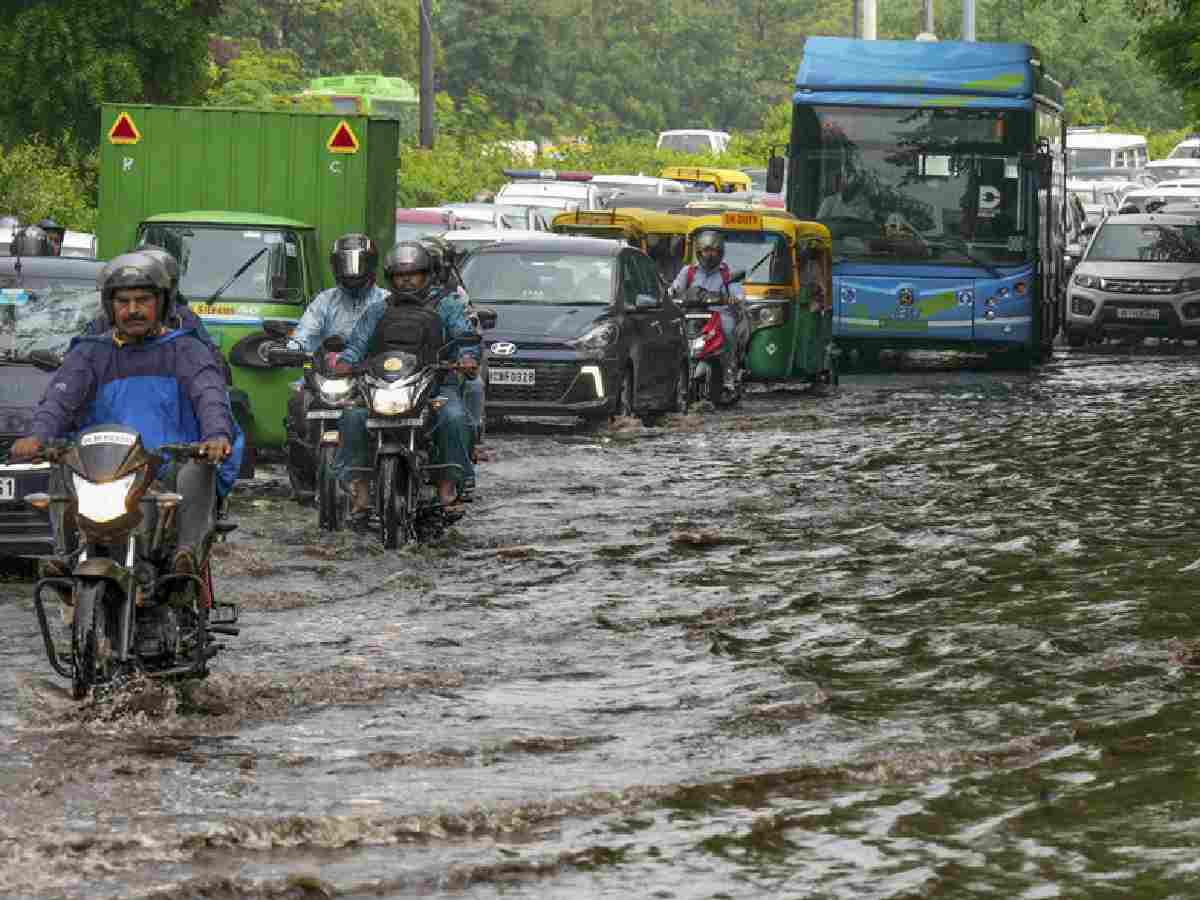
In a bid to enhance water conservation and tackle urban flooding, the New Delhi Municipal Council (NDMC) is set to implement modular pit technology for rainwater harvesting across its jurisdiction.
NDMC Chairman Keshav Chandra and Vice Chairman Kuljeet Singh Chahal participated in a meeting on flood management and the “Jal Sanchay – Jan Bhagidari” initiative, organized by the Ministry of Jal Shakti. The meeting, chaired by Union Minister of Jal Shakti C.R. Paatil, brought together senior officials from the Central Water Commission (CWC), National Water Mission (NWM), Central Ground Water Board (CGWB), and other key stakeholders.
During the meeting, Chandra presented NDMC’s strategic approach to effective flood management and rainwater conservation. He highlighted the council’s initiative to install Modular Rainwater Harvesting (RWH) pits that utilize crosswave technology, a cost-effective and environmentally friendly method for rainwater collection. These pits, designed with polypropylene modules wrapped in geo-textile, minimise construction costs by reducing the use of bricks and cement while enhancing water quality.
According to the official statement, the modular RWH pits offer a 95% water storage capacity due to their high void ratio. Their load-bearing structures allow dual land use, such as parking spaces and parks. The harvested rainwater will be used for groundwater recharge, fountains, beautification projects, and maintaining green spaces in NDMC areas.
Also Read: Delhi: CBSE’s two-exam plan sparks mixed reactions
Vice Chairman Chahal emphasised the significance of public participation in water conservation and urged collective efforts from all stakeholders. He noted that NDMC has already developed 272 RWH pits, including 167 conventional pits and 105 modular pits. Additionally, maintenance work on 182 existing pits is in progress, with full servicing scheduled for completion by May 30, 2025. The council has also constructed 95 new RWH pits, each with a 30-kiloliter capacity, to further strengthen conservation efforts.
To mitigate waterlogging, NDMC has identified 27 critical points, including Purana Quila Road, Golf Link, Lodhi Colony, Africa Avenue, AIIMS Flyover, BKS Marg, Connaught Place, and Vinay Marg, where RWH installations are planned.
As part of its monsoon preparedness strategy, NDMC is conducting regular cleaning of drainage systems, covering 11,867 manholes, 8,704 bellmouths, and 7,177 chambers/gully traps. Major drains are also undergoing desilting. Routine cleaning occurs every 45 days, with an additional round scheduled before June 2025. The council has deployed 10 cleaning machines to ensure timely completion of these tasks.
With these measures, NDMC aims to strengthen urban flood resilience and promote sustainable water management across the city.
(Wth inputs from PTI)
Elected to the Delhi Golf Club general committee, Mansher Singh says he wants to build…
A $780 million market built on pavements, where the pleasure of reading meets the price…
Supreme Court advocate Abhishek Pawar alleges women were denied washroom access for seven to eight…
Each day of closure costs shops in Khan Market and Connaught Place between Rs 60,000…
Delhi generates nearly 15,000 tonnes of waste daily, prompting the government to deploy 1,000 mechanical…
Delhi Police has issued an NOC for the Congress rally at Ramlila Maidan on November…
