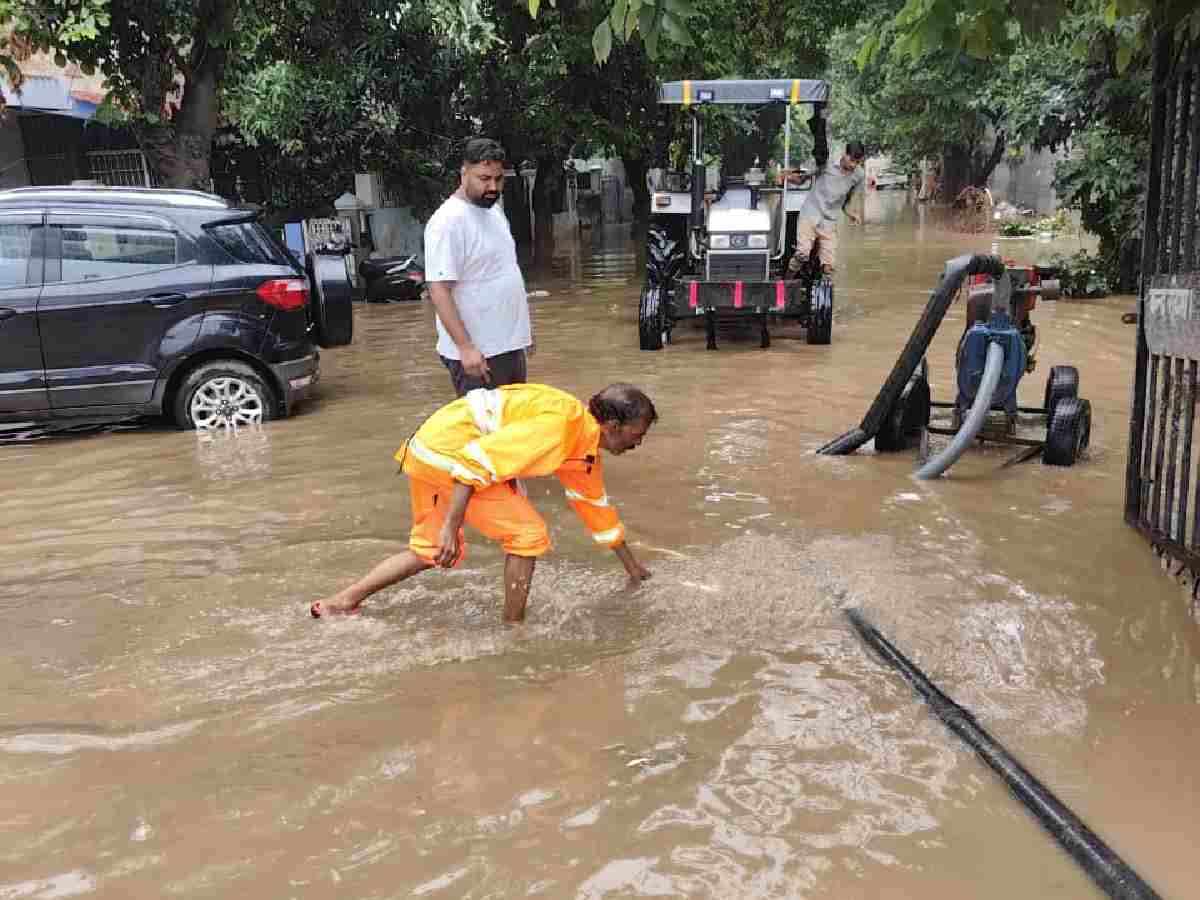
Delhi flooding
Designed to meet the city’s drainage requirements over the next 30 years, the draft of ‘Drainage Master Plan’ aims to address both present challenges and future demands amid rapid urban growth and recurring waterlogging problems, officials said on Wednesday.
To resolve the persistent issue of urban flooding and waterlogging in the national capital, the PWD submitted the draft plan to the Delhi government last week.
“We have received comprehensive reports from all consultants and submitted the compiled draft master plan to the government. The final Detailed Project Report (DPR) will be prepared only after integrating feedback from all civic agencies involved,” a senior PWD official told PTI.
Also Read: Decomposed body of man found hanging from tree in north Delhi
According to officials, at least three high-level presentations have been held to assess the feasibility of the proposed plan, and inter-departmental consultations are currently underway.
The last comprehensive drainage master plan for Delhi was prepared in 1976, when the city’s population was just 60 lakh. With the population now nearing two crores and urbanisation accelerating, authorities say a new strategy is required.
The PWD has divided the city into three basins-Najafgarh Basin, Barapullah Basin and Trans-Yamuna Basin and hired consultants to redesign the drainage network.
“The specialised consultants have analysed factors like slopes, depressions, and the existing old and insufficient infrastructure to improve drainage efficiency. There are a few gaps in the plan, which have been highlighted by other civic bodies. They are being studied,” added the official.
Also read: 82% of human-street dog encounters in India ‘peaceful’: Study
The national capital has approximately 3740.31 km of drainage network under the jurisdiction of eight different civic agencies and departments.
After the DPR is approved by the government, the agency will start the process of inviting tenders from private companies to carry out the work on the ground, said officials.
In 2018, IIT Delhi submitted a drainage master plan, which largely identified that rapid unplanned urbanisation and shallow groundwater level as some of the major reasons resulting in frequent flooding problems in the city. However, this report was rejected by the previous government as “generic” in nature, and a fresh master plan preparation process was commenced.
After 12 years in theatre, the actor makes his international film debut with a role…
Protester alleges Delhi Police assaulted detainees, deleted phone videos, and detained minors during anti-CEC protest…
Shifting protests away from Jantar Mantar weakens democratic visibility and access to political power, an…
CM Rekha Gupta defends SIR and EC integrity, saying democracy can't be held hostage to…
AISA students march to Supreme Court over 'vote chori' claims against CEC, as police barricade…
DMRC extends closure of six central Delhi metro station gates until 5 pm citing security…
