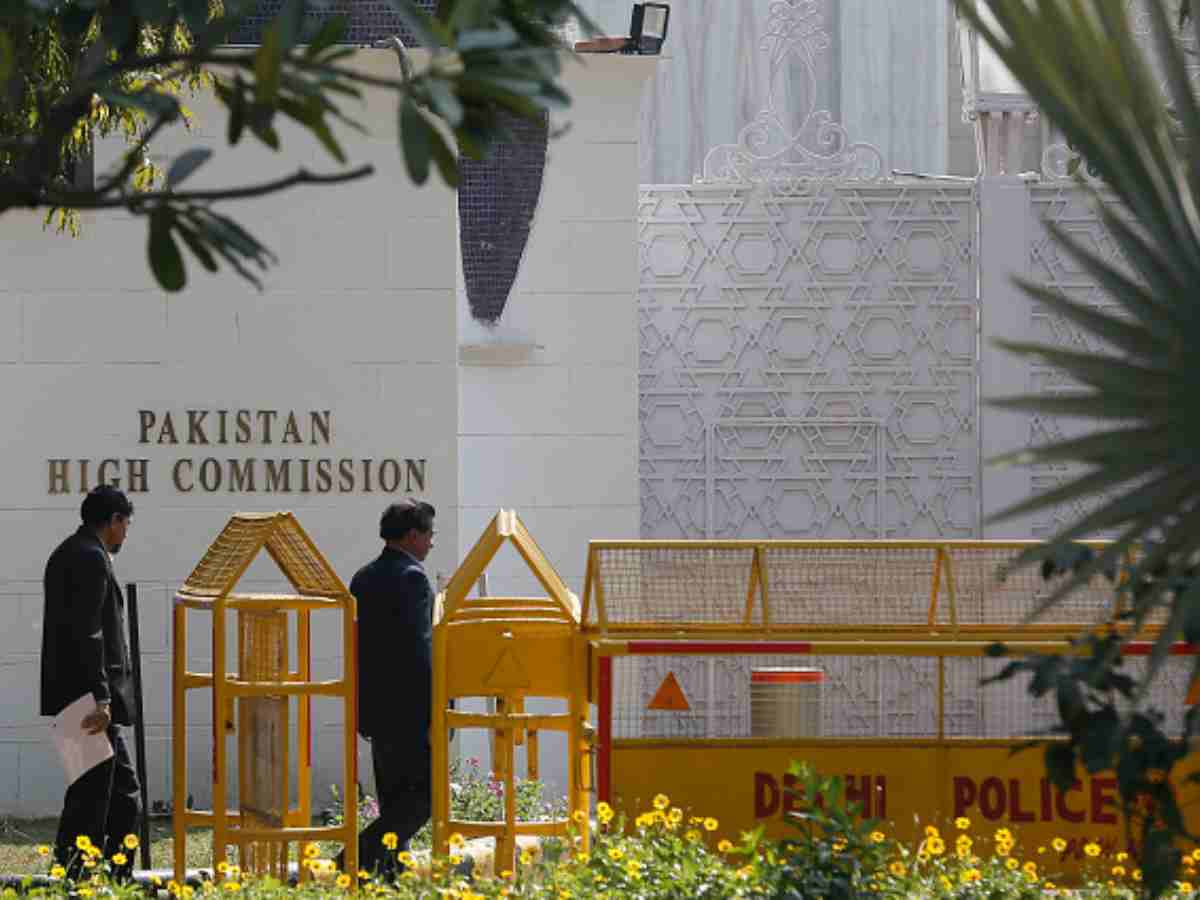
More than 500 people gathered near the Pakistan High Commission in the capital on Monday to protest against the recent terror attack in Pahalgam, which claimed the lives of 26 individuals, most of them tourists.
Demonstrators carried placards and chanted slogans denouncing Pakistan, demanding strong retaliatory action against the neighbouring country, which they accused of sponsoring terrorism in India.
The protest saw participation from the Bharatiya Janata Party (BJP) as well as various civil society groups, including the Anti-Terror Action Forum.
“Previously, the government conducted a surgical strike. We are calling for a similar response to wipe out terrorism. This was a horrific and cowardly attack on innocent travellers,” a representative of the Anti-Terror Action Forum said.
“We believe the government has already formulated a plan,” he added.
In anticipation of the demonstration, the Delhi Police heightened security measures around the high commission. Barricades were erected roughly 500 metres from the premises, and protestors were not permitted to advance beyond this point.
Also Read: Delhi traders hold protest against Pahalgam terror attack
“We received intelligence indicating that multiple organisations were planning a protest at Tri Murti Chowk near the Pakistan High Commission,” said a senior police official. “The area has been cordoned off to ensure law and order is maintained, and appropriate traffic diversions have been implemented.”
A few protestors attempted to scale the barricades but were swiftly intercepted and removed by law enforcement personnel.
(With inputs from PTI)
DMRC says zero reduction in train trips, attributes decline to security measures and public apprehension…
A Delhi court denied bail to a former DU professor accused of raping a student,…
Delhi Police charged seven dhaba workers in the fatal beating of a Manipuri musician who…
Seven Delhi STPs failed DPCC standards in September, dumping high levels of faecal coliform and…
AISA chief Neha Bora petitioned the Delhi HC against a police notice requiring a peace…
Average AQI of 171 in the first week of this month; falling temperatures and stubble…
