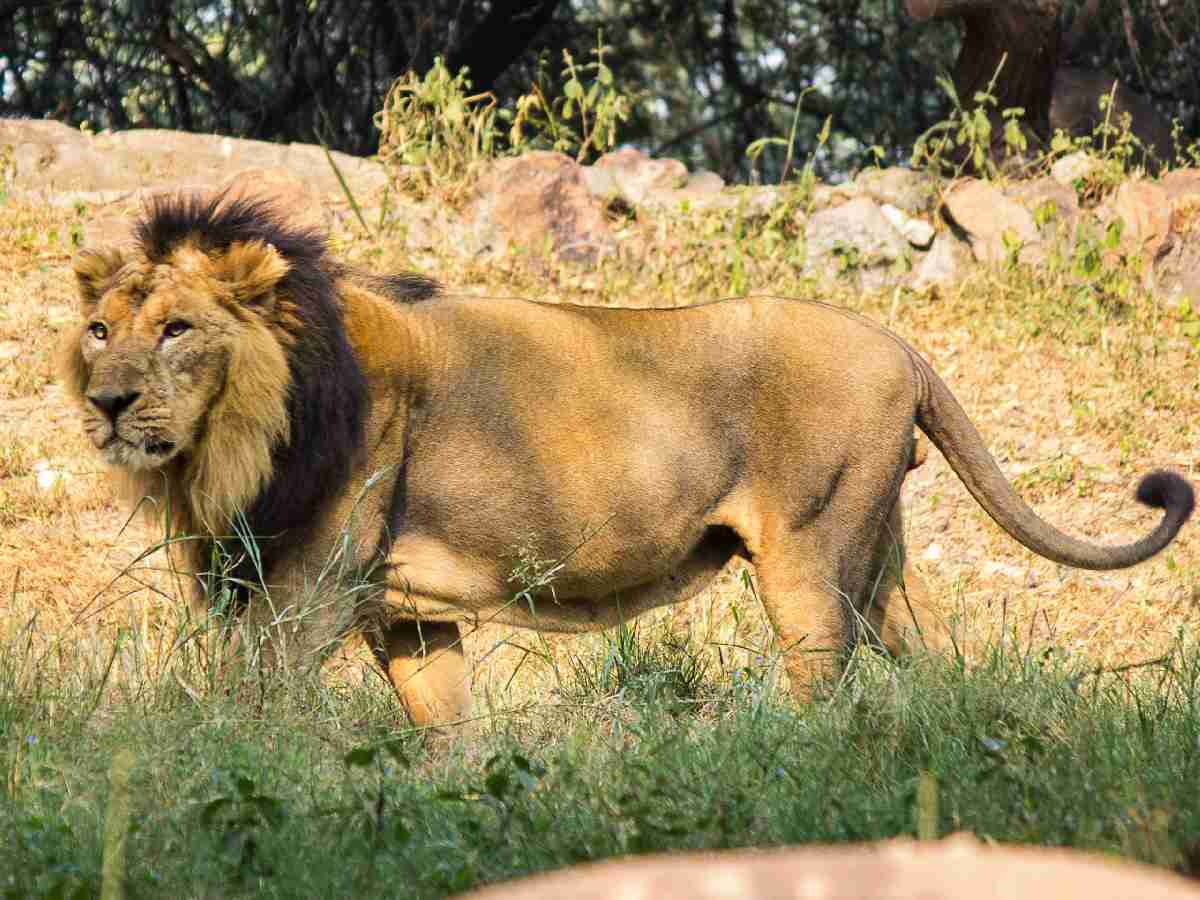
Fresh roars are set to echo through the Delhi zoo as Asiatic lioness Mahagauri has given birth to three cubs, adding a fresh chapter to the zoo’s conservation efforts and marking a rare repeat breeding success after her earlier litter of five cubs last year, of which two survived.
The three Asiatic lion cubs were born on Tuesday at the National Zoological Park to the breeding pair of Mahagauri and Maheshwar. The newborns are currently kept with their mother in a secure maternity enclosure, zoo Director Sanjeet Kumar said.
The official said the cubs are being provided a calm and undisturbed environment crucial for their early development, with veterinary and animal care teams monitoring their health through CCTV surveillance and regular observation.
The successful breeding of Mahagauri and Maheshwar is considered significant as the pair had earlier produced two healthy cubs – Kartik and Karni – on April 27, 2025.
Mahagauri became the first lioness at the Delhi zoo since 2009 to conceive again within around a year of giving birth, a rare occurrence in the facility’s recent breeding history, Kumar said.
According to him, lion breeding at the zoo remained stable until 2009, with cubs born every few years. However, the programme witnessed a sharp decline thereafter, with births becoming increasingly infrequent and nearly coming to a standstill at one point.
By 2021, Sundaram, a lion born at the zoo in 2009, was the only Asiatic lion left at the facility. Now 17 years old, Sundaram’s ageing prompted the authorities to look for new breeding stock to revive the Asiatic lion population.
As part of the revival plan, the zoo brought one male and two female lions – Maheshwar, Mahagauri and Shailja – from Junagadh in Gujarat in 2021.
The trio, born in 2020, was expected to strengthen Delhi zoo’s breeding programme, Kumar said.
However, the plan suffered a setback after Shailja sustained a serious injury while moving around her enclosure. She later developed a paralysis-like condition in her hind limbs, affecting her ability to breed, the official said.
With Shailja unable to contribute to the breeding efforts, the responsibility of expanding the zoo’s Asiatic lion population rested largely on Mahagauri and Maheshwar.
Their first successful breeding resulted in the birth of five cubs on April 27, 2025.
The first litter also highlighted the challenges associated with lion breeding, as three cubs died shortly after birth due to developmental issues. The remaining two survived after veterinarians provided artificial cat milk when Mahagauri was unable to nurse them, Kumar said.
The National Zoological Park currently houses six Asiatic lions, including three males – Sundaram, Maheshwar and Kartik – and three females – Mahagauri, Shailja and Karni.
The latest births are expected to further strengthen the conservation efforts for the endangered species.
NATIONAL
At least 50 cases have already been reported this month; NCPCR guidelines mandate help desks,…
DMRC says zero reduction in train trips, attributes decline to security measures and public apprehension…
A Delhi court denied bail to a former DU professor accused of raping a student,…
Delhi Police charged seven dhaba workers in the fatal beating of a Manipuri musician who…
Seven Delhi STPs failed DPCC standards in September, dumping high levels of faecal coliform and…
AISA chief Neha Bora petitioned the Delhi HC against a police notice requiring a peace…
