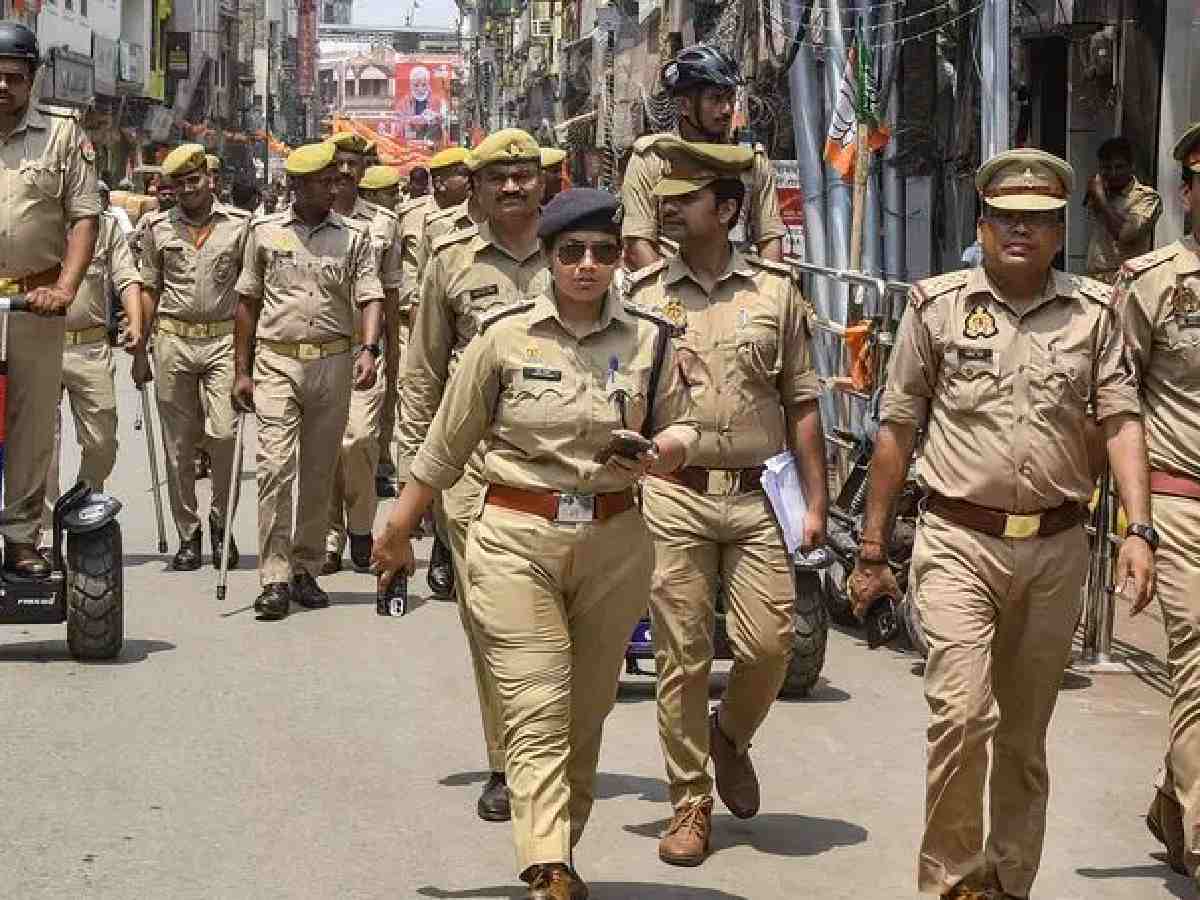
Delhi has stepped up security ahead of the 80th Independence Day, with multi-layered arrangements centred on the Red Fort, where the Prime Minister will unfurl the national flag on August 15.
More than 11,000 personnel from the Delhi Police, central paramilitary forces and specialised commando units have been deployed in and around the Red Fort. Another 3,000 traffic police personnel will manage access corridors and key routes across central Delhi.
This will be the first Independence Day celebration since the explosion near the Red Fort on November 10 last year. It also follows the large-scale protests at Jantar Mantar that were recently called off.
Security has consequently been heightened across several parts of the city. The arrangements will continue to be reviewed until Independence Day to ensure that the Prime Minister’s address proceeds without disruption, an officer said.
Security in and around Red Fort
Elite units, including the National Security Guard, bomb disposal squads and canine teams, will remain on alert. Plain-clothes intelligence officers have also been deployed in Old Delhi.
Major railway stations, interstate bus terminals and Delhi Metro stations are under round-the-clock surveillance.
“Surveillance through CCTV cameras, anti-drone measures, access control points, baggage screening and intensified frisking are part of the security grid,” an officer said.
More than 700 high-definition closed-circuit television (CCTV) cameras have been installed around the Red Fort complex. Artificial intelligence (AI)-based facial-recognition systems will scan crowds and match faces against centralised security watchlists in real time.
Automatic number plate recognition systems and headcount-tracking tools will monitor vehicle movements and venue capacity. Automated sensors will also detect unauthorised entry and unattended objects, while under-vehicle scanning systems will examine vehicles entering secure parking areas.
The Delhi Police Commissioner has prohibited the use of low-flying platforms across the National Capital Territory. These include drones, paragliders, microlight aircraft, hot-air balloons and quadcopters.
Anti-drone detection and jamming systems have been installed in the area. Armed snipers will also be stationed on high-rise buildings overlooking the monument.
Access restrictions and verification drives
Under orders from the Archaeological Survey of India, the Red Fort has been closed to visitors from mid-July until August 15. The closure has allowed security agencies to install multi-layered barricades and create secure access channels for invited diplomats, officials and delegates.
Entry to the venue will be restricted to people carrying valid invitation cards and authorised vehicles.
Police teams have conducted tenant-verification drives and checked employees at commercial establishments. River patrols have also been intensified along the Yamuna.
The security grid extends beyond the Red Fort to critical infrastructure, including water-treatment facilities, power grids and administrative complexes. Central intelligence agencies, military units and the Delhi Police are coordinating security arrangements for the event.
Surveillance technology returns
The Delhi Police is also expected to deploy surveillance technologies used during last year’s Independence Day celebrations.
The Ikshana surveillance vehicle, deployed for the first time during the 2025 celebrations, is expected to be used again. AstraLens, AI-enabled surveillance glasses tendered and deployed last year, are also set to return.
Officials said the first phase of the Safe City Project would help the Delhi Police conduct more efficient security checks. Multiple inspections of CCTV cameras around the Red Fort and adjoining areas have also been carried out to prevent surveillance lapses on the day of the event.
During the 79th Independence Day celebrations in 2025, 11,000 security personnel and 3,000 traffic police officers were deployed. The operation also expanded the use of under-vehicle scanners, introduced facial-recognition cameras at entry gates and included unannounced red-team exercises to test operational readiness.
Enclosures named after lakes
Officials said the seating enclosures at the Red Fort this year had been named after prominent lakes across the country. During this year’s Republic Day celebrations, the seating enclosures at Kartavya Path were similarly named after rivers.
The enclosures on the northern side have been named Badkhal, Bhimtal, Chandratal, Chilika, Dalpat Sagar, Dimna, Dudhsagar, Haflong, Harike, Hussain Sagar, Kanwar and Kankaria.
Those on the southern side have been named Kolleru, Loktak, Lonar, Pangong Tso, Pulicat, Pushkar, Rabindra Sarobar, Ramgarh Tal and Rudrasagar. Sakhya Sagar, Shanti Sagar, Vembanad and Wular will be used as bleacher enclosures.
NDMA guidelines call for planning and communication before force; a Delhi Police standing order specifies…
Security has been tightened at Noida-Delhi borders ahead of Saturday’s CJP protest, with BSF deployment,…
NDTA advised Connaught Place shops to remain closed on Saturday as a precaution against expected…
Sarai Kale Khan and New Ashok Nagar Namo Bharat stations will close Oct 9–10 for…
Delhi Police deployed heavy security at stations, but valid ticket holders will pass without hindrance…
AISA president Neha Bora urged protesters to continue at Jantar Mantar despite arrests, comparing the…
