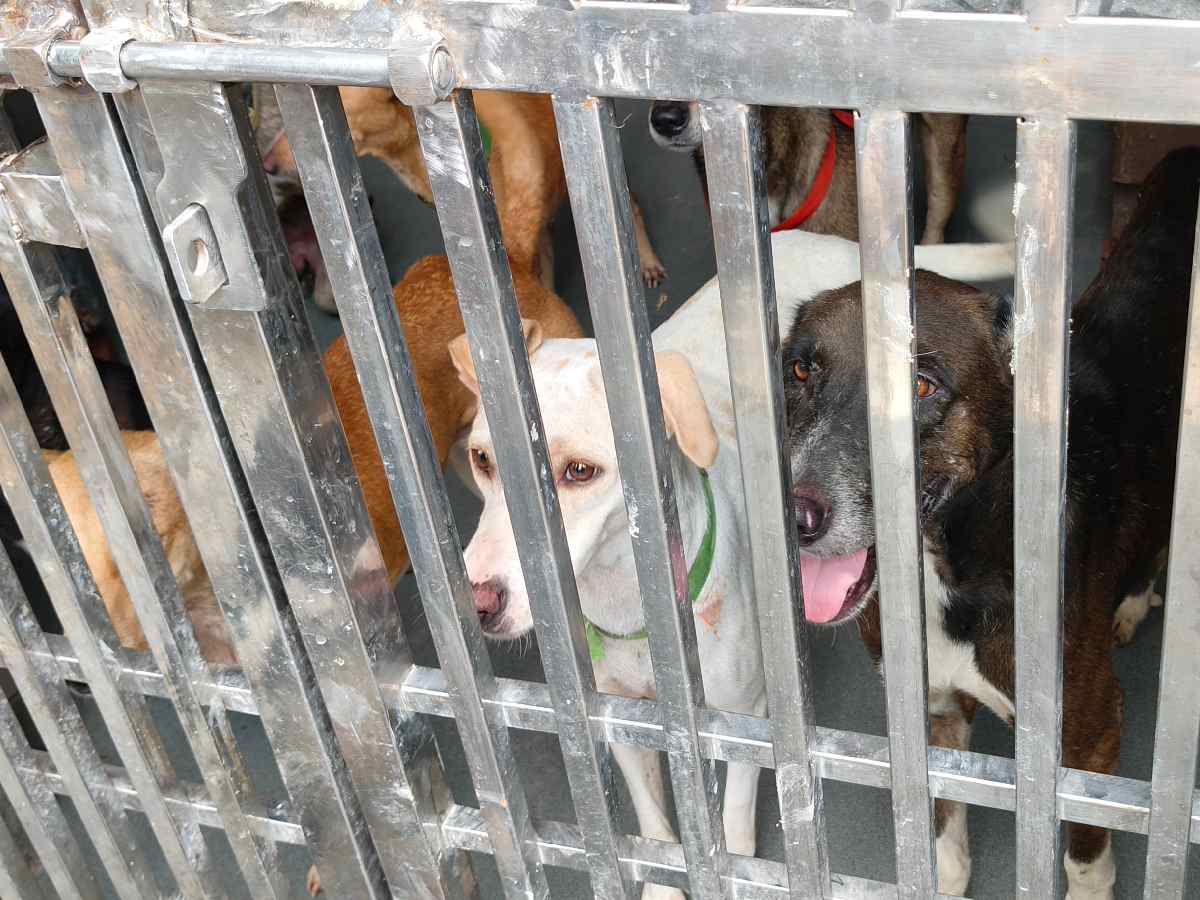
With growing uproar in the national capital over the Supreme Court’s orders to the Delhi government and civic bodies to remove all stray dogs from Delhi-NCR, questions are mounting about the safety and welfare of the animals.
Delhi already faces an acute shortage of shelters to house strays, and the issue of veterinary doctors has added to the crisis.
Shortage of veterinary doctors
According to Lok Sabha MP and Samajwadi Party member Ramashankar Rajbhar, the national capital is under threat from a lack of veterinary professionals. Data submitted by the Ministry of Fisheries, Animal Husbandry and Dairying shows that out of 58 sanctioned posts in Delhi, 11 remain vacant — leaving 18.9% of posts unfilled.
The ministry clarified that much of the funding for animal husbandry falls under state jurisdiction. “Animal husbandry is a state subject and the staffing of government hospitals is done by the states depending on their requirement based on parameters like geographical status, disease epidemiology, and animal profile,” the reply stated.
It added that under the Livestock Health & Disease Control Programme (LHDCP), the Centre provides financial support for veterinary healthcare through Mobile Veterinary Units (MVUs). Each MVU is staffed by a veterinary doctor, with operational costs shared between the Centre and states. “As of now, a total of 4,019 MVUs are operational across 29 States/UTs,” it said.
Also Read: In Delhi’s shadows, Bengali migrants in Jai Hind Camp face eviction, power cuts, and stigma
Strain on municipal facilities
An official from the Department of Animal Husbandry noted that the shortage of veterinary doctors has not yet impacted day-to-day activities but warned of looming problems.
“These shelters, specifically for neutering and sterilisation, fall under the ambit of the Municipal Corporation of Delhi (MCD). We normally do not have much to do in this regard; however, with an influx of strays in these facilities, the situation is going to worsen,” she said.
Currently, the MCD does not directly manage any animal shelters, though 20 shelters are registered with it, all run by NGOs.
The Central government has also clarified that the recruitment of veterinary doctors lies with the state government. “Since animal husbandry is a state subject, the Central government has no policy for the creation of new posts for the employment of veterinarians in state hospitals. States/UTs take action regarding the creation and filling of posts as per their recruitment rules,” it said.
MCD’s shelter plans
On August 14, Mayor Raja Iqbal Singh announced that the MCD would build dog shelters across all 12 civic zones and set up a dedicated helpline for residents to report incidents involving stray dogs. The initiative has been launched in anticipation of the Supreme Court’s ruling.
A sub-committee chaired by Sunder Singh, deputy chairperson of the Standing Committee, will oversee the plan, including identifying suitable land, deploying veterinary teams, and securing funding.
“It’s a lengthy process, but we are committed to following the court’s directive while ensuring humane treatment of animals,” the mayor said.
Dog bite statistics raise alarm
The situation is aggravated by rising dog-bite cases. In 2025, Delhi recorded 26,334 dog-bite incidents — 9,920 reported at MCD hospitals and 15,010 at anti-rabies vaccination (ARV) centres. Last year, over 68,000 such cases were reported.
The MCD currently sterilises and vaccinates about 10,000 dogs each month. It holds 5,471 anti-rabies vaccine doses and 3,736 anti-rabies serum doses in stock.
Court expands directives
On August 13, the Supreme Court issued a comprehensive written order expanding on its earlier oral verdict. The court laid down strict safeguards for the welfare of captured stray dogs, stressing that they must not face mistreatment, cruelty, overcrowding, starvation, or neglect.
The suo motu case has now been transferred from the bench of Justices JB Pardiwala and R Mahadevan to a new three-judge bench led by Justice Vikram Nath.
The court reiterated that all stray dogs in Delhi and the NCR must be rounded up and housed in shelters “at the earliest,” prohibiting their release back onto the streets. It directed civic agencies to prevent overcrowding, provide continuous monitoring, and ensure regular feeding.
“At no stage should these dogs be subjected to any mistreatment, cruelty, or deplorable standards of care,” the bench declared.
Staffing and accountability
The order mandates that trained veterinarians provide timely medical care and that vulnerable or weak animals be housed separately “as far as possible.” It also requires at least two responsible personnel to be present in shelters at all times, with duty rosters ensuring round-the-clock supervision.
Captured dogs must be earmarked and logged for later identification. Any lapse resulting in a stray being re-released would invite “the strictest of action” against the official or private individual responsible.
The court noted that the round-up followed “two decades of systematic failure” by authorities to address an issue that directly affects public safety. Without decisive action, it warned, “another two decades” of neglect would burden future generations.
Also read: Bill on school fee regulation leaves parents exposed to exploitation
Balancing welfare and safety
The bench emphasised the need to balance human safety with animal welfare, cautioning against “virtue signalling” and urging genuine supporters to volunteer at shelters.
“The directions given by us, as a court which functions for the welfare of the people, are both in the interest of humans as well as dogs. This is not personal,” it said.
On adoptions, the court authorised officials to consider adoption schemes only after thorough vetting, in line with the Standard Protocol for Adoption of Community Animals dated May 17, 2022. Adoption must ensure permanent rehoming and monitoring, not release back into public spaces.
Awaiting final decision
The apex court reserved its order on August 14 and is expected to make a final decision soon.
The case began suo motu after media reports of a child’s death from rabies following a dog bite. The bench has repeatedly flagged alarming statistics, particularly involving children and the elderly. The matter has triggered heated public debate, pitting animal-welfare activists against residents’ associations and municipal authorities.
By codifying welfare standards and operational protocols, the court hopes to ensure that the stray dog round-up addresses safety concerns while avoiding abuse or neglect.
An FIR over Jamia protests alleges Congress MPs Imran Pratapgarhi and Imran Masood unlawfully entered…
Delhi's 'Namo Yamuna River Safari' cruise will launch before Chhath, offering 40-minute family trips between…
Delhi's Old RTR flyover reopens for light vehicles today after repair work following road cracks,…
Visits to Govindpuri, Jangpura, Saket and Mayur Vihar show unlabelled corrosive substances sold for Rs…
Rescue teams recovered two bodies from the debris of a collapsed under-construction house in northeast…
Built on Jawaharlal Nehru’s vision, the Delhi landmark has witnessed the evolution of a young…
