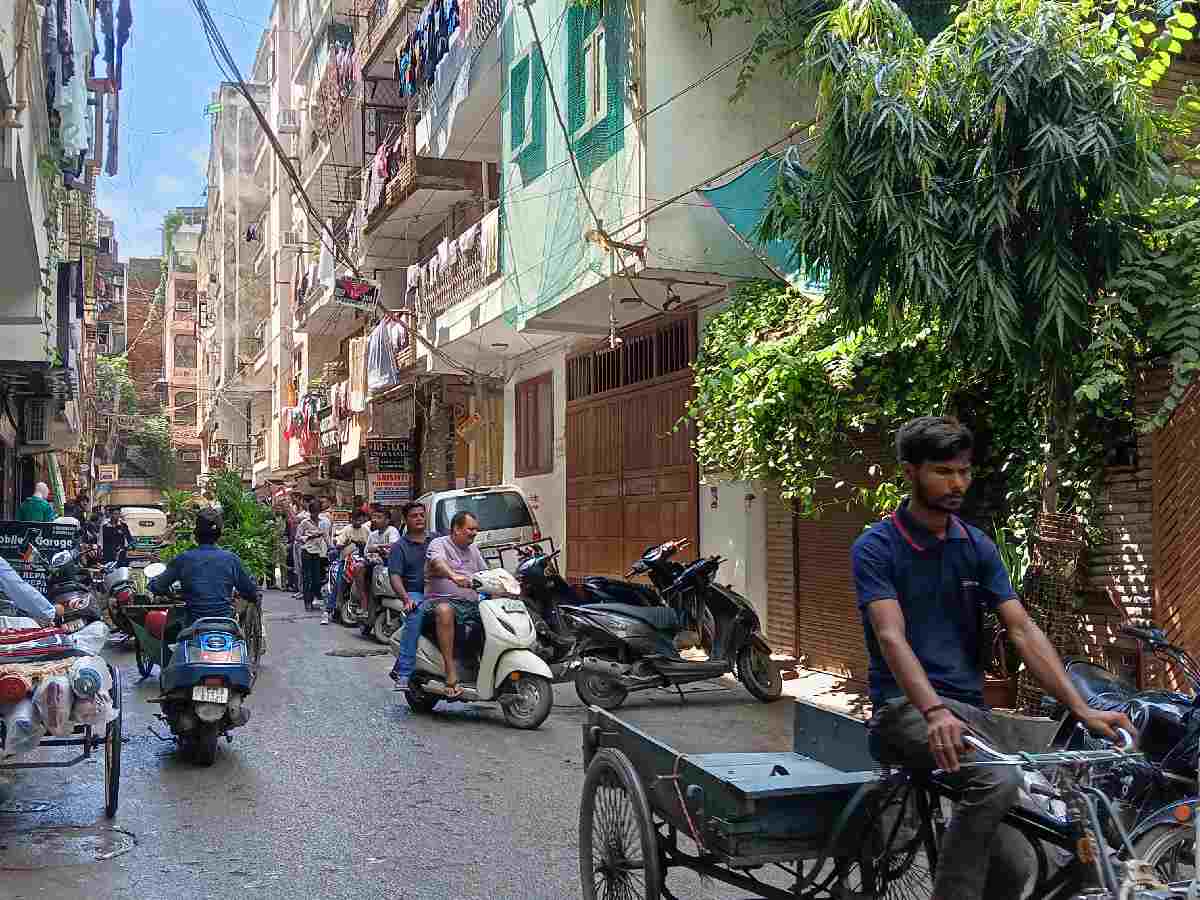
Through the narrow alleyways of Khirki Extension, also known as ‘Little Kabul’, a sense of grief and helplessness has spread. With the official death toll now at 2,205, according to estimates provided by the Taliban government, many Afghan refugees in Delhi are desperately trying to contact relatives in Afghanistan.
The earthquake has left nights sleepless for families who now call Delhi home. In their small rooms and shops, refugees spend hours dialling their families, hoping to hear a familiar voice. But the phone lines remain silent, and the dreaded thought of kin trapped under rubble lingers.
Calls that do not connect
Azam, a 20-year-old who sells dried fruit in Saket, spoke with a heavy heart. His family lives in Jalalabad, one of the areas most affected by the quake. He last spoke to his parents two weeks ago and has been calling continuously since the news broke, but the calls will not connect.
“I have been trying to reach out to them consistently, but I am faced with only a cracking dial tone. All I can hope for now is their safety, but I am more concerned about my grandmother,” he said.
The earthquake, of magnitude six, struck several eastern provinces on August 28, flattening villages and trapping residents under rubble. Most casualties have been reported from Kunar, where many live in steep river valleys separated by high mountains.
Also Read: Delhi’s Traffic Prahari app turns citizens into watchdogs
Painful memories return
For some, the tragedy has reopened old wounds. Bilal Khan, 33, who works at a restaurant in Shaheen Bagh, said his grandparents and cousins still live in Kabul. He feels helpless being so far away.
He recalled a similar event a few years ago, when he lost a cousin. “It is far from where the maximum impact of the earthquake was felt but I remain on the edge, since one cannot really assume the extent of the tragedy. I tried calling them but the phone lines were not reachable. I worry for their safety because in an earlier earthquake, I had lost one of my younger cousins,” he said.
Karim, a waiter at a café in Shahpur Jat, said it was already difficult to contact people in Afghanistan, and the earthquake has made it worse. “My uncle lives in the affected region, but I am not able to reach him. News reports have become our only source of information,” he said.
Even Kabul is vulnerable
Even Afghans whose families were not in the main quake zone are worried. Mohammed Wasim, a driver in Malviya Nagar, said he moved from Kabul four years ago. “Kabul is just over an hour from the epicenter of the earthquake. To give an example, even though Afghanistan is hundreds of kilometres from Delhi, we still felt a slight tremor. Imagine the extent of devastation that may have happened in Kabul as well,” he said.
While some remained fearful of what lay ahead, others like Rehmat, a resident of Shaheen Bagh, struck a stoic note. He said his family had survived multiple crises before.
“We are refugees and we have seen the worst when the Talibans first came to power. We were able to come out of that unscathed and I believe that my family who remain there still will also be safe,” he said, adding that he had not been able to reach them since the earthquake struck.
Also read: Pedestrians older than 40 are at the greatest risk on roads, suggests Traffic Police data
A country in crisis
This is the third major earthquake to devastate Afghanistan since the Taliban took power in 2021. An additional 12 deaths and hundreds of injuries have been reported in Nangarhar and Laghman provinces. Rescue operations continue, with hundreds of bodies recovered from collapsed homes.
According to the Associated Press, Taliban spokesperson Hamdullah Fitrat said casualty figures are still being updated and that tents, first aid, and emergency supplies are being distributed.
The rough terrain and cuts in funding are hampering relief efforts, with aid agencies urging the international community to provide more support. Poor infrastructure and aftershocks have left villages in Kunar’s mountainous Nurgal district without adequate food or shelter. In Mazar Dara, a fight reportedly broke out over limited food supplies.
The World Health Organisation reported that local healthcare systems are severely strained and appealed for $4 million to address shortages. The loss of US aid in January and ongoing crises — including poverty, drought, and mass deportations from Pakistan — have worsened the situation, leaving over five lakh people affected.
Elected to the Delhi Golf Club general committee, Mansher Singh says he wants to build…
A $780 million market built on pavements, where the pleasure of reading meets the price…
Supreme Court advocate Abhishek Pawar alleges women were denied washroom access for seven to eight…
Each day of closure costs shops in Khan Market and Connaught Place between Rs 60,000…
Delhi generates nearly 15,000 tonnes of waste daily, prompting the government to deploy 1,000 mechanical…
Delhi Police has issued an NOC for the Congress rally at Ramlila Maidan on November…
