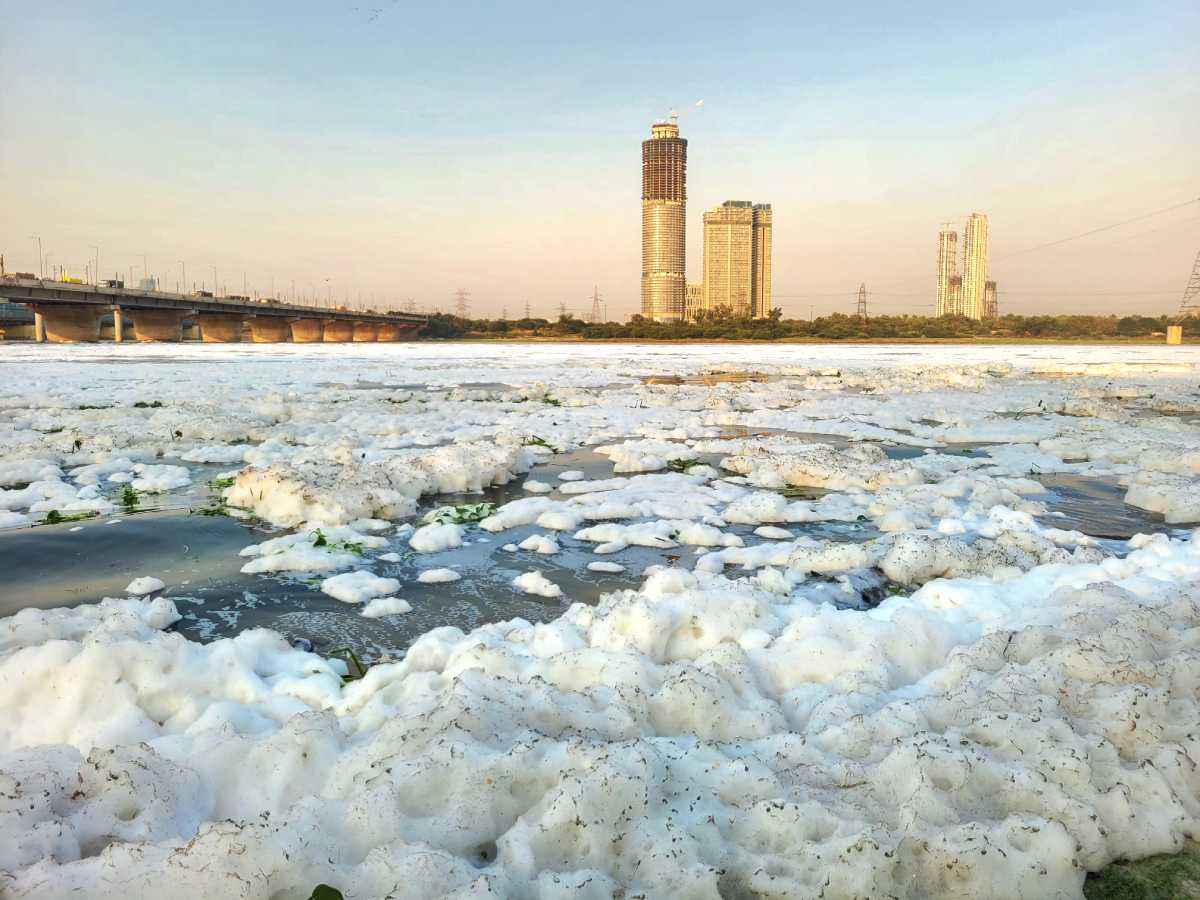
The Delhi Pollution Control Committee’s (DPCC) latest data on the water quality of the Yamuna River raises concerns about high faecal coliform levels, indicating significant untreated sewage entering the river.
The reports for January and February, uploaded after much speculation around the delay, also show high levels of Biological Oxygen Demand (BOD), which is a measure of the amount of dissolved oxygen that microorganisms need.
While the January analysis shows a considerable increase from December 2025 levels, the pollution indicators remained lower than those of January 2025.
The water quality testing by DPCC involves collecting water samples across eight locations along the course of the Yamuna river through Delhi, measuring several parameters such as Biological Oxygen Demand (BOD), dissolved oxygen, chemical oxygen demand, pH, and faecal coliform, to determine the pollution level.
The eight locations include major points like Palla, Wazirabad, ISBT Bridge, ITO Bridge, Nizamudin Bridge, Hindon Cut, 7 Okhla Barrage and River Yamuna at Asgarpur (Kidwali, Haryana).
The January report reveals faecal coliform levels as high as 350,000 Most Probable Number (MPN) per 100 millilitres at Asgarpur, which far exceeds the permissible limit of 2,500 and the desirable level of 500. The levels at various sites ranged from 3,300 MPN/100 ml to 220,000 MPN/100 ml, with Palla being the only site that remained within the permissible limit, recording 2,700.
BOD levels for January also showed alarming readings, ranging from 2.5 to 52 milligrams per litre (mg/l), while the water quality criteria specify a maximum of 3 mg/l.
This increase is notable compared to December 2025, when faecal coliform levels peaked at 92,000 units per 100 ml, a significant rise from 24,000 units per 100 ml in November 2025 and 8,000 units per 100 ml in October 2025. However, the latest figures remain considerably lower than those from January 2025, when levels peaked at 7,900,000 units per 100 ml.
The DPCC’s February water quality report indicates further improvement but still highlights serious exceedances of permissible limits. Faecal coliform levels ranged from 1,200 to 110,000 units per 100 ml, while BOD peaked at 36 mg/l at the ISBT Bridge.
The DPCC has also uploaded the data for Delhi’s sewage treatment plants (STPs), common effluent treatment plants (CETPs) and drains.
While the analysis of these are supposed to be uploaded at least once every month, recent delays in the January and February reports have attracted concerns from activists, who stressed that regular assessment of pollution levels of the river was most crucial, especially post-monsoon, when the river flow reduces, leading to a spike in pollution.
The January report also highlights that at least 13 STPs out of the 35 tested were not meeting the standards with respect to TSS (Total Suspended Solids), BOD, COD and faecal coliform. At least 12 STPs did not meet the standard with respect to faecal coliform for the testing performed in February.
Gold rods worth Rs 4.03 crore, weighing 3.2 kg, were seized from a Dubai-arriving passenger…
Delhi recorded its coldest night of the month so far, with the minimum temperature dropping…
Elected to the Delhi Golf Club general committee, Mansher Singh says he wants to build…
A $780 million market built on pavements, where the pleasure of reading meets the price…
Supreme Court advocate Abhishek Pawar alleges women were denied washroom access for seven to eight…
Each day of closure costs shops in Khan Market and Connaught Place between Rs 60,000…
