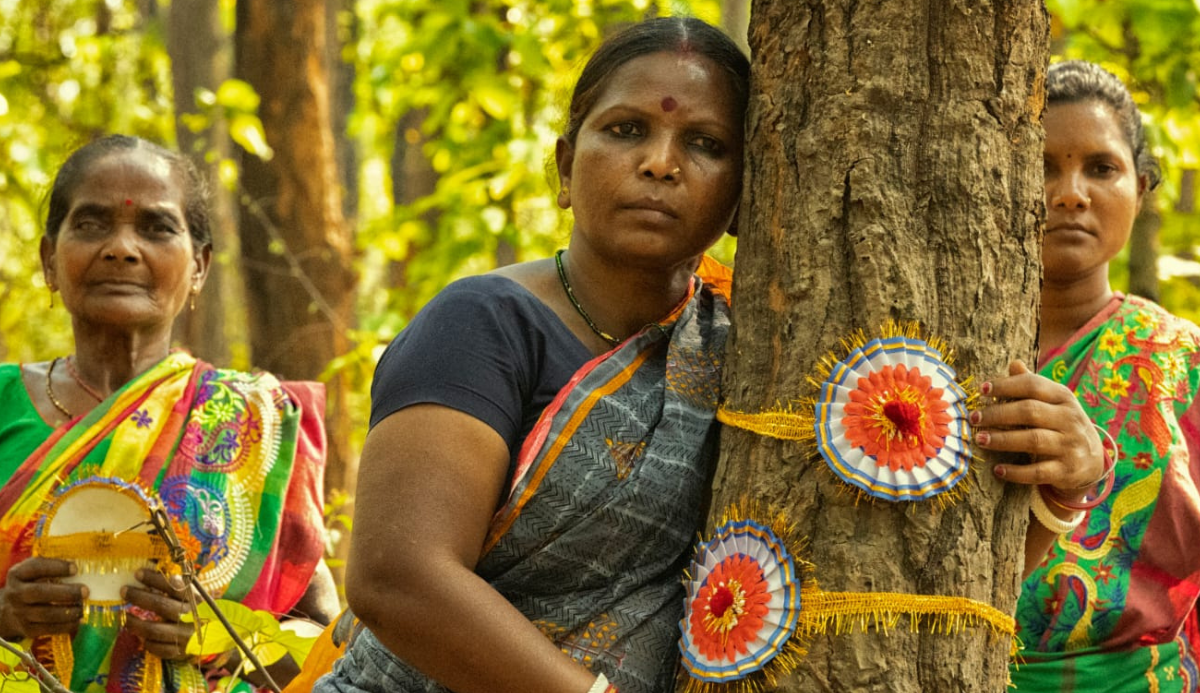
Jamuna Tudu: An environmental activist protecting forests and empowering women
On June 29, Delhi saw an exhibition on Jamuna Tudu – an unsung hero whose infectious passion has saved over 50 hectares of forest in the last 25 years in Eastern India. She attended the ‘The Silent Voice’, which put together the trajectory of her life, as its chief guest.
Talking to Patriot, Tudu threw light on her journey and how she took on mafias through hardships. “It has been full of difficulties, but when you focus on the change you’ve brought about, it inspires you to work even harder,” the Padma Shri awardee said.
Popularly known as ‘Lady Tarzan’ – a name bestowed on her by PM Narendra Modi, Tudu hails from Rairangpur in Odisha’s Mayurbhanj. She united 10,000 women to protect and conserve wildlife.
Rough waters
Recalling her journey, she said, “A day after my marriage, when my husband was showing the village, I came across a jungle devoid of trees. When I inquired, I found out the tree mafia had cut down the trees for their needs. It was then that I decided to take a stand and preserve the forest. It wasn’t easy at first, as the majority of people did not want to join me in my endeavour because it was risky and dangerous.”
She had to “pay the price” for her decision. “There were times my family members were threatened, my husband was beaten badly, robberies in our house took place, and I remember once, while visiting a neighbouring city, we were pelted with stones. We had to pick up arms to fight and save ourselves, but all of that added fuel to my drive to not back down, and slowly other women started joining in as well, and we vowed to protect the jungles that surrounded us and gave us life,” she said.
However, women came forward to “empower” each other. “As a tribute to that, we plant a tree in every village whenever a girl is born because we know that she’ll grow up to be a saviour,” she said.
“Back in the nineties, women were not allowed to venture outside their homes, so it was naturally difficult. I had to personally go to each individual’s house and explain to them the importance of my goal. While visiting nearby villages, I first used to contact the gram panchayat only so that the women present would listen,” Tudu explained.
After a lot of persistence, five women came together, and they established the Van Suraksha Samiti. “The women used to guard the jungle region and keep an eye on the unlawful actions of the mafia. The members would go around the jungles with sticks, bows, and arrows to scare away the intruders. Also, they would confiscate the woodsmen’s vacant saws and hide them in the town. It took time and effort, but all of us women formed committees to formulate and discuss how to reduce deforestation and blend in their traditions and superstitions with eco-friendly practises,” she narrated.
Today, to her credit, Tudu has over 10,000 forest protectors spread around 300 towns.
Father, an inspiration
Born on December 19, 1980, Tudu grew up surrounded by greenery because of her agriculturist father. “My father struggled but never gave up in his lifelong commitment to protecting the environment, which worked as motivation for me, and all the achievements that made so far are just a reflection of his hard work and willpower,” the 42-year-old said.
“Growing up among the encircling lush jungles, we supported our father’s farm by holding up saplings to his regions and cultivating them. To me, gazing at seeds emitting life has always felt like fostering little children. The time I spent with my father helped shape my appreciation for and knowledge of nature,” she added.
‘Rural and Urban connection to nature differ’
Speaking on the issue of industrialisation at the cost of forest, the environmentalist said that in villages, the volume of deforestation is comparatively lower than in urban areas because “people are attached to nature, whereas people in cities lack that, which is quite dangerous in my view.”
Further, she explained the ritual of celebrating Raksha Bandhan and Bhai Dooj with trees to “establish a personal bond with them”. “Many people will find it irrelevant, especially in urban areas, but all of these activities do create a personal bond,” she said.
Stressing on spreading awareness among the youth about forest reservations, Tudu said, “I feel the younger generation is getting quite detached from nature. That is dangerous. They’re more glued and involved in the virtual world rather than reality and currently have no idea of the gravity of the situation.”
“We need to work on it before it’s too late. people should step in and educate people around them, so set examples for younger generations then only they’ll be inclined towards protecting mother nature,” she added, concluding that “no matter how developed society gets, sustaining without trees and forest isn’t possible”.
Coforge opened its first library in Noida in February 2024; it now claims a combined…
Of the 237 spa centres across 10 zones with valid MCD licences, the South East…
CTI chairman Brijesh Goyal said the Rahul Gandhi rally could affect wholesale and retail markets…
Established to mark the university’s 25 years, Jubilee Hall has witnessed generations of student life.…
Delhi inaugurates the 70th National School Games, hosting over 14,000 participants in 14 sports across…
Delhi High Court asked "Doosra" filmmakers to respond to Sourav Ganguly's plea over alleged violation…

