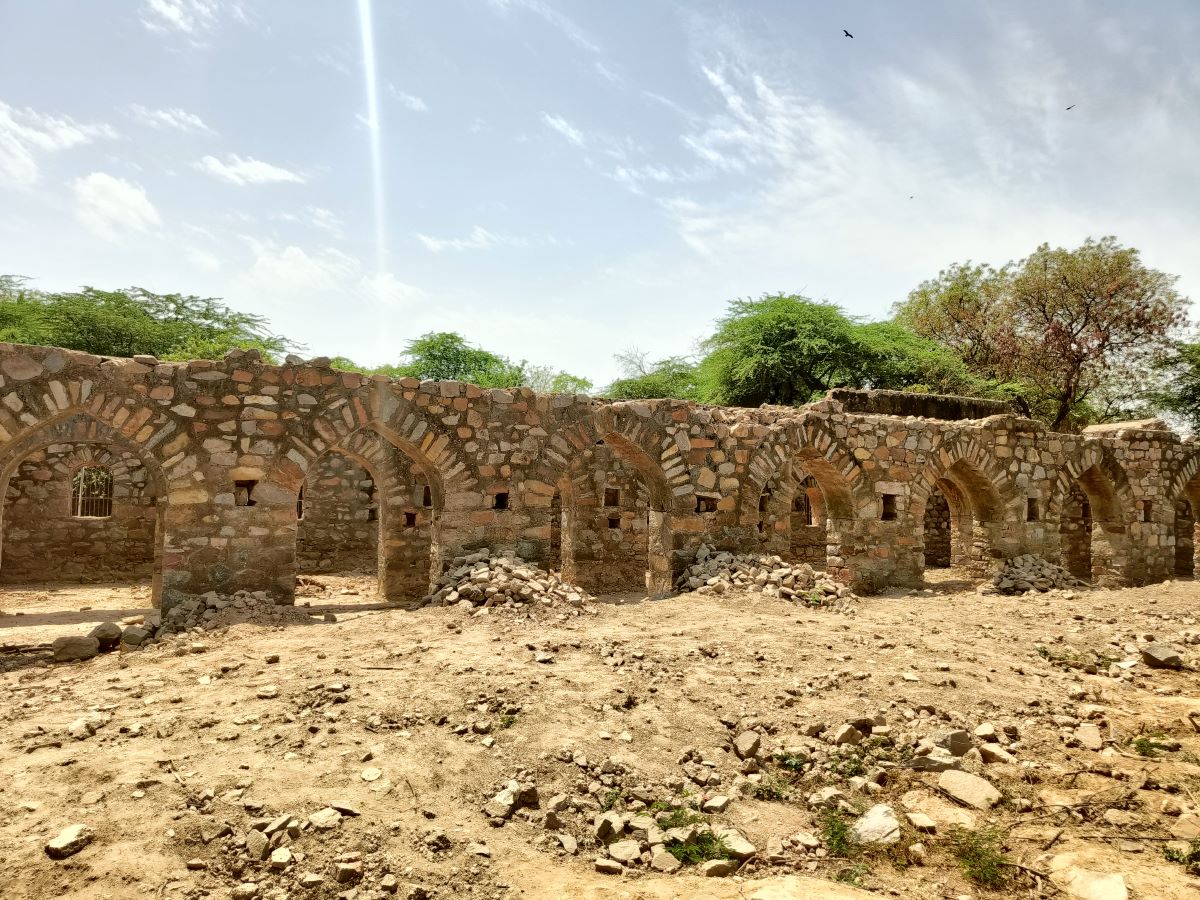
Archaeological Breakthrough: Tomb shows earliest use of true arch construction in India
The Archaeological Survey of India (ASI) has begun restoring the 13th-century tomb of Ghiyas-ud-din Balban, the ninth sultan of the Mamluk (slave) dynasty of Delhi, inside the Mehrauli Archaeological Park.
An ASI Delhi official told Patriot that they have cleared the foliage surrounding the monument.
“This area was previously packed with wild vegetation and trees. Following the visit of the Delhi Lieutenant Governor (LG) to the area a few months ago, efforts have been made to conserve the Balban tomb and several other monuments and carry out the necessary renovation works,” he said.
He elaborated that the conservation of the Balban tomb would be carried out in three phases. “In the first phase, we will take up the flooring and construct an approach path towards the monument from the entry, enhancing its visual appeal and convenience. It will involve using red sandstone mixed with lime concrete,” the official said.
The second phase will involve the restoration of the tomb’s true arches.
“Considering that some arches have deteriorated, we will conserve them based on their historical evidence. Additionally, we will undertake plastering and joint filling of the walls to prevent the growth of vegetation,” he said.
The tomb is significant as it shows the earliest use of true arch construction in India, a feature that became common in the Indo-Islamic architecture of Delhi.
The third phase will focus on conserving the upper portion of the monument.
“This will include removing debris, dump, refused material, and the conservation of fallen structure elements and maintenance of floor level, including repairing broken doors and staircase,” he said.
The monument, discovered in the mid-20th century, aims to attract several visitors. “We also want the tourists to come and explore such historical places, which show our heritage and history,” the ASI official said.
The restoration work on the project is being carried out at a cost of Rs 2 crores and is expected to be completed by October.
Officials mentioned that the monument will later get facilities like lighting, dustbins, benches, signages, cultural notice board and a garden.
Ghiyas-ud-din Balban, the Sultan of Delhi from 1266 to 1287 AD, was a prominent ruler of the slave dynasty during the reign of the Delhi Sultanate in India. Balban was sold as a slave to the then-ruler, Iltumish in 1232 AD, who later released him.
He passed away in 1287 and his grandson, Muiz ud din Qaiqabad, succeeded him as the ruler of the Delhi Sultanate.
Reflecting the architectural style of the Delhi Sultanate period, the tomb is characterised by red sandstone. It is also referred to as Dar-ul-Amaan (Haven of Safety).
Spread over 200 acres, Mehrauli Archaeological Park houses multiple monuments, including Jamali Kamali’s tomb, Quli Khan’s tomb, Gandhak ki Baoli, Rajon ki Baoli and others. Many monuments in the park have been recently renovated.
Saxena visited the heritage sites at Mehrauli Archaeological Park in March and directed officials to complete the conservation and restoration work before the onset of the monsoon.
Elected to the Delhi Golf Club general committee, Mansher Singh says he wants to build…
A $780 million market built on pavements, where the pleasure of reading meets the price…
Supreme Court advocate Abhishek Pawar alleges women were denied washroom access for seven to eight…
Each day of closure costs shops in Khan Market and Connaught Place between Rs 60,000…
Delhi generates nearly 15,000 tonnes of waste daily, prompting the government to deploy 1,000 mechanical…
Delhi Police has issued an NOC for the Congress rally at Ramlila Maidan on November…

