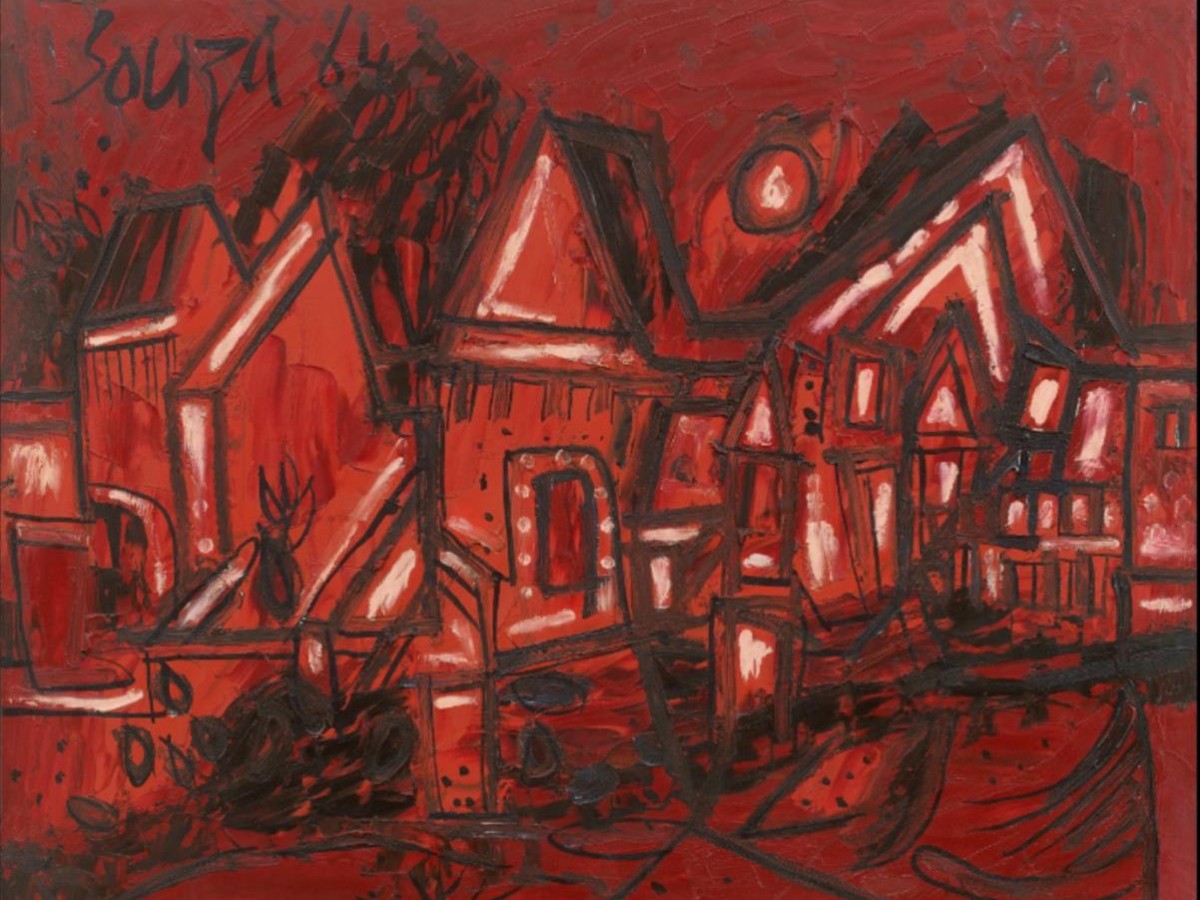
An oil painting titled 'Hampstead Terraces'
The Triveni Kala Sangam, in collaboration with the Raza Foundation, will commemorate the 75th Anniversary of Progressive Artist Group (PAG). On the occasion of Diamond Jubilee, it will hold a 10-day exhibition ‘Luminous Legacy’, which will have the iconic artistic masterpieces of seasoned artists such as MF Hussain, who have been in the field for decades.
On June 29, the exhibition will be inaugurated showcasing well over 30 works from legendary M F Husain, S H Raza, F N Souza, K H Ara, H A Gade and S K Bakre in Shridharani Art Gallery and Triveni Gallery.
Managing Trustee of the Raza Foundation Ashok Vajpeyi said, “The PAG had a plural vision of art: It accommodated different styles, idioms, art practices, and aesthetic approaches… The show is a modest attempt to underline their continuing presence and relevance.”
“It is a significant milestone in our journey as we celebrate the 25th Anniversary (Silver Jubilee) of our gallery and the golden jubilee of the esteemed Progressive Artist Group in the same year,” said Harsh Vardhan Singh, Director, Progressive Art Gallery.
The works, reflecting the spirit of independence and plurality, will take the visitors to the bygone era of the 1940s and later decades, when India as a nation began taking determined strides to create a secular and free India.
When: 11 am – 8 pm; June 29 – July 10
Where: Shridharani Art Gallery & Triveni Gallery, Triveni Kala Sangam, 205, Tansen Marg, New Delhi 110001
Elected to the Delhi Golf Club general committee, Mansher Singh says he wants to build…
A $780 million market built on pavements, where the pleasure of reading meets the price…
Supreme Court advocate Abhishek Pawar alleges women were denied washroom access for seven to eight…
Each day of closure costs shops in Khan Market and Connaught Place between Rs 60,000…
Delhi generates nearly 15,000 tonnes of waste daily, prompting the government to deploy 1,000 mechanical…
Delhi Police has issued an NOC for the Congress rally at Ramlila Maidan on November…
