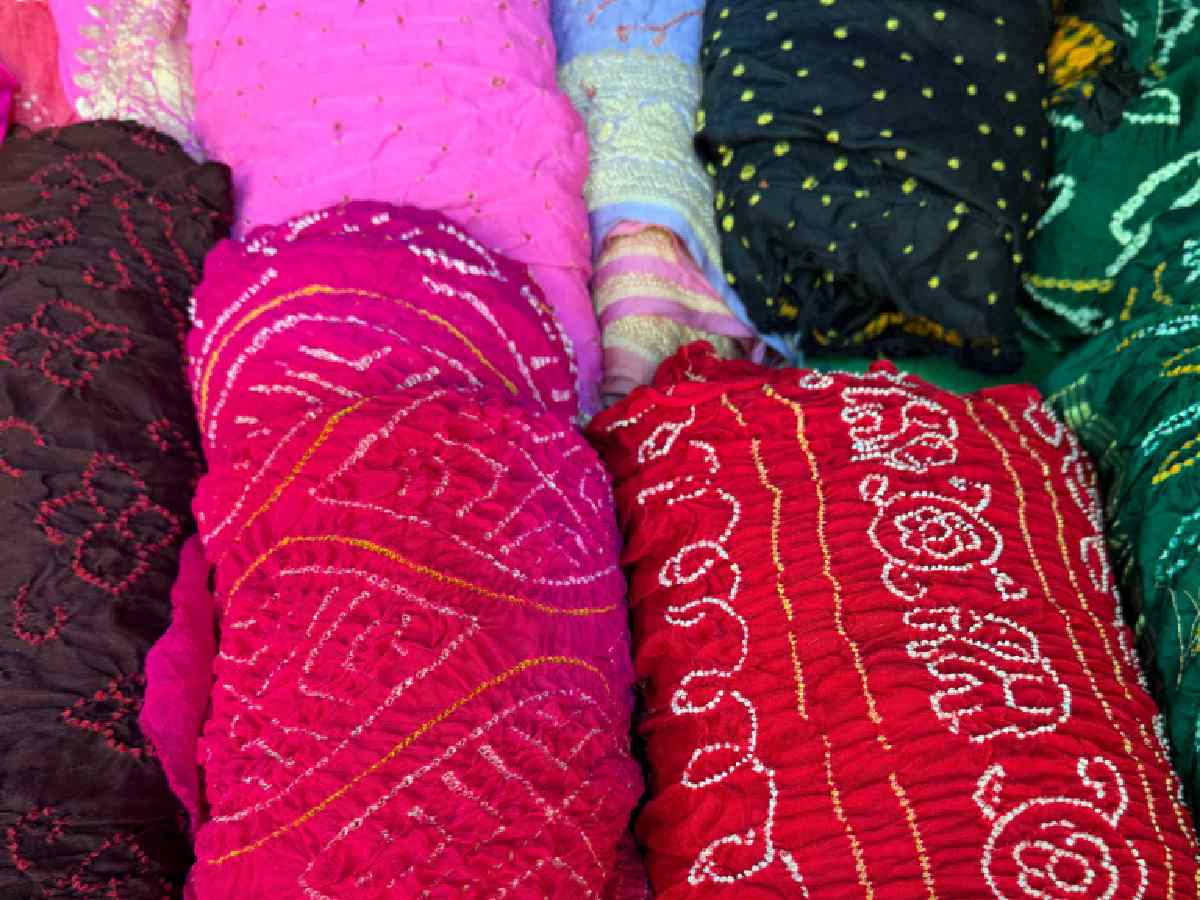
For many Delhi families, Diwali is not complete without a visit to a mela. There are colourful stalls to browse, decorations to bargain for, festive snacks to savour and the occasional impulse purchase that was never on the shopping list. The crowds, lights and noise are part of the attraction, turning a shopping trip into a festival ritual.
But while visitors carry home festive decorations and memories, the people behind the stalls have other priorities. For them, the mela is also a business opportunity, one that involves upfront investment, uncertain sales and a limited window to recover costs.
Markets such as Dilli Haat at INA to Dastkar’s festive exhibitions at Nature Bazaar in Andheria Mor continue to attract visitors in a city where online shopping promises convenience and competitive prices. Their appeal lies in something that a screen cannot easily replicate: the chance to discover a product, meet its maker and spend an evening wandering without a fixed plan.
“I have been coming to Diwali melas with my family for years. We can buy decorations online, but shopping at a mela has become part of our Diwali celebrations. We walk around without rushing, try different foods and usually end up buying something we had not planned to,” said Neha Sharma, a teacher and regular visitor.
For Sharma, the mela is as much about tradition as shopping. For others, it is the possibility of finding something different.
“In a mall, you generally know what you are looking for. Here, you come across things you did not even know existed. I like discovering handmade jewellery and unusual gifts. It feels more personal than scrolling through hundreds of products online,” said Aditi Mehra, a college student.
For sellers, however, the same leisurely outing has a financial dimension. A visitor can spend hours browsing without making a purchase. A stall owner cannot afford to treat the season as a casual outing.
Also Read: Delhi women’s U-19 T20 team in semifinals; selection issues persist
Setting up a stall
Long before the festive crowds arrive, sellers begin preparing their stock. Products have to be made or purchased, packed, transported and displayed. Participation in an exhibition also comes with expenses, which may include stall charges and, for those travelling from outside Delhi, accommodation.
The investment is made before sales begin, leaving sellers dependent on how many visitors actually open their wallets.
“We start preparing weeks before Diwali. There is a lot of money and hard work involved in bringing the stock here, so naturally, we hope for good sales. Some customers return every year, and that gives us the confidence to continue,” said Shabana Begum, who sells embroidery and textiles.
The festive season offers an opportunity to earn, but a busy stall does not necessarily mean a profitable one. Some visitors browse without buying, while others compare prices before making a decision. The returns also depend on the product being sold.
A vendor selling inexpensive decorations may need a high volume of sales to make the effort worthwhile. Someone selling handcrafted textiles or jewellery may depend on fewer, higher-value purchases.
“People can order almost anything on their phones today, but a mela is different. Here, they pick up a product, look at the details and ask how it was made. For us, that conversation matters as much as the sale. These few days can make a real difference to our earnings for the year,” said Ramesh Kumar, a handicraft seller.
Direct interaction gives sellers an opportunity to explain their products and establish relationships with customers. Yet appreciation does not always translate into a purchase. For small businesses, the real test is whether the money earned covers the costs and leaves enough to justify the time and labour invested.
Also Read: Behind the uniform: Delhi Police’s social media push
Handmade vs mass-produced
One of the biggest challenges for artisans is persuading customers to look beyond a product’s appearance and consider the work behind it.
A handmade diya competes with factory-produced alternatives. A textile created using labour-intensive techniques faces competition from cheaper, mass-produced fabric. Although the products may serve the same purpose, the cost of making them can differ considerably.
“Making pottery takes time, and every piece has its own character. When someone chooses a handmade diya over a factory-made one, it feels good. You realise that traditional crafts still have a place in people’s homes,” said Mohan Lal, a terracotta artisan.
For artisans, the challenge is not merely getting noticed. It is finding customers willing to pay a price that reflects the materials, time and skill required to make a product.
Customers, meanwhile, have their own budgets to consider. Even those who appreciate handmade goods may choose cheaper alternatives when buying decorations and gifts for several people.
The presence of traditional crafts at a festive exhibition, therefore, does not automatically guarantee a sustainable livelihood for the people making them. Their continued participation depends on whether interest in their work translates into sufficient sales.
Also Read: Delhi HC permits abortion beyond statutory limit
Meeting India’s craft traditions
Dilli Haat, established at INA in 1994, brings handicrafts, handlooms and regional food together in a permanent marketplace. Its stalls introduce visitors to products associated with different regions while giving sellers access to customers in the capital.
Dastkar’s festive exhibitions at Nature Bazaar in Andheria Mor provide another platform for craft-based businesses. According to the organisation, its ‘Festival of Lights’ brought together more than 200 artisan groups from across India.
For Delhi residents, such exhibitions provide an opportunity to explore regional crafts without travelling to the places where they originate. For sellers, they offer access to an urban market that may otherwise be difficult to reach.
“I enjoy talking to the sellers because they often know the story behind what they are selling. You learn where a craft comes from and how much effort goes into making it. You are not just buying something; you are also taking home a little piece of someone’s work,” said Nupur Kaur, a homemaker.
The interaction can add meaning to a purchase, although it is not guaranteed that every visitor will learn about a product’s origins. A customer may be drawn to a design without knowing the traditions or labour associated with it.
The market creates the opportunity for cultural exchange, but that exchange depends on whether sellers and buyers engage beyond the transaction.
Also Read: Jamia protest enters Day 17; three sent to judicial custody
Inheriting traditions
For many families, visiting a Diwali mela is a ritual inherited from parents and grandparents. The stalls may change, and the products may reflect new tastes, but the experience of walking through a crowded market, eating festive snacks and bargaining over decorations remains familiar.
“My memories of Diwali include going to these melas with my parents, eating snacks and bargaining over decorations. Now I bring my children along. I want them to experience what made these visits special for us,” said Rajiv Bhatia, a private-sector employee.
Unlike online shopping, where convenience often determines the experience, a mela allows visitors to browse without knowing exactly what they intend to buy. Families stop for food, look at handicrafts and discover items along the way.
For some, the attraction is nostalgia. For others, it is the variety, the atmosphere or the chance to spend time outdoors with family and friends.
“What I like about these melas is that you meet all kinds of people. A family may stop at our stall, then go for food or look at paintings and handicrafts. It becomes more than a market; it becomes an experience people want to repeat,” said Imran Ahmed, a handcrafted jewellery seller.
Also Read: From the Emergency to CAA: police at Delhi’s campuses
No guarantee of sales
Festive exhibitions give small businesses an opportunity to display their products before customers they might not otherwise reach. They can also help sellers build relationships with buyers who may return in subsequent years.
“Some people come here with a shopping list, while others simply walk around and discover things. They may not buy much at first, but they talk to us and sometimes return later. A mela gives small sellers visibility that is difficult to get otherwise,” said Poonam Devi, who sells festive decorations.
Visibility, however, is not the same as income.
Once Diwali passes and the stalls close, the contrast between the visitor’s experience and the seller’s reality becomes clearer.
For Delhi families, these markets remain spaces where shopping is about more than convenience. They offer the chance to wander, sample regional food, discover handmade objects and interact directly with the people selling them. Their appeal rests partly on the familiarity of an annual tradition and partly on the possibility of finding something unexpected.
For sellers, however, the decision to return the following year depends on a more immediate question: whether the business makes financial sense.
A crowded exhibition may look like a successful festive season, but footfall alone cannot pay for stock, transport or stall charges. The real measure lies in what sellers earn after meeting those costs.
When the festive lights dim and the crowds disperse, visitors may remember the outing for years. Sellers are left with the accounts — and the decision of whether it is worth coming back.
Delhi Police registered an FIR under the defacement act after videos of graffiti on a…
Cleaning is underway after toxic foam resurfaced on the Yamuna at Kalindi Kunj amid ongoing…
Three people, including a woman, have been arrested for allegedly defacing two Delhi Metro stations…
Delhi’s AQI crosses 300 for the first time this season, reaching 312 at 9 am…
Delhi Police busted a cyber fraud network that used fake traffic challan SMSs to dupe…
Delhi’s new winter pollution curbs triggered traffic snarls at city borders as commuters faced long…


