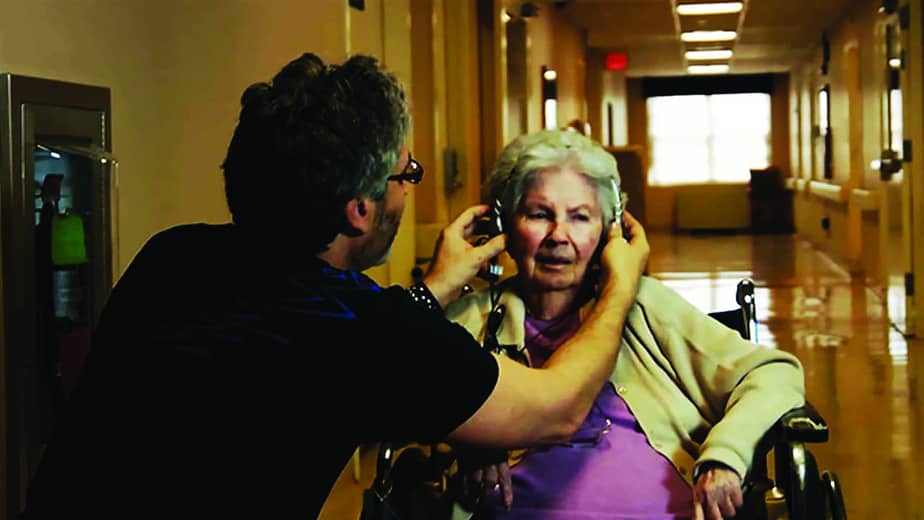
Every three seconds, a case of dementia is reported around the world. It progresses slowly, ultimately becoming severe enough to make elderly people incapable of performing their daily routine. Its most obvious feature is memory loss, for it is a neuro degenerative disease characterised by progressive loss of grey cells.
How would a family memory distinguish the onset of Alzheimer’s with the usual problems of old age? If a senior citizen seems fazed, disoriented and confused, that would be an obvious signal. He or she may struggle to find the right word. Moreover, there is an inability to recognise objects and faces and to read text. There is a marked decline in the ability to reason, judge and solve problems.
Usually, caregivers have a harrowing time, as the elders whose wisdom and patience the family has counted on for decades become dependent and helpless, just like toddlers. So what can doctors do to help? According to Dr Praveen Gupta, Director & Head of Department, Neurology, Fortis Memorial Research Institute, Gurgaon, “There is no one particular drug that can effectively stop the decline though certain drugs can slow down the rate of deterioration. Diet supplements including Vitamin B12 can improve the memory.”
He also points out avoidable and unavoidable risk factors associated with Alzheimer’s:
Unavoidable risk factors
l Age: It is more likely in older people, a greater proportion of over-85-year-olds suffer from Alzheimer’s.
l Family history: If there is family history of Alzheimer’s then the person is at higher risk of suffering from the disease.
l Genetic predisposition: Having a certain gene (the apolipoprotein E or APOE gene) puts a person, depending on their specific genetics, at three to eight times more risk than a person without the gene.
l Gender: Being female puts one at a higher risk (more women than men are affected).
Avoidable risk factors
l Sleep disorders: Breathing problems and sleep apnea, if left untreated, can cause Alzheimer’s.
l Blood vessels risk: Diabetes, high cholesterol and hypertension can cause strokes and increase the risk of dementia.
l Head injury: While head injuries do not directly cause Alzheimer’s, the severity of trauma inflicted can have a role to play in the onset of the disease.
How can Alzheimer’s be ascertained and diagnosed? Doctors might first rule out other possibilities by testing the blood and urine. They may conduct multiple brain scans (CT, MRI, EEG, and PET) to get a clearer image of the functioning neural pathways. These criteria also need to be progressive (a worsening compared with how the person has been before) and severe enough to affect daily activities.
Then there is the mini mental state examination (MMSE), a common cognitive test to help diagnose Alzheimer’s disease. It is also sensitive to the severity of the disorder (a score under 10 is said to be severe). Biomarker Tests can be carried out to check whether someone is at higher risk of Alzheimer’s or not. Loss of Odour Identification Test can be administered as degeneration of the olfactory senses is indicative of the severity of cognitive impairment.
Looking at the problem from a human angle, Dr Gupta points out, “Patients with dementia are often unable to assert their basic rights and freedoms. At times physical and chemical restraints are used to control them. An appropriate and supportive legislative environment based on internationally accepted human rights standards is required to ensure the highest quality of service provision to people with dementia and caregivers.”
Dr Reshma is an advocate of wellness, prevention and holistic health. Instagram handle: dr.reshmakhattarbhagat
CAQM reviewed dust pollution in Delhi and enforced GRAP-1 rules after AQI fell to 'poor'.…
Over 1 lakh of 4.56 lakh Form 6 voter enrollment applications in Delhi have been…
NDMC cut water and power near Race Course Mosque during a demolition drive, affecting nearby…
BNSS caps custody at 24 hours and requires production before a Magistrate; force permitted only…
An SEM court reserved its order on extending the judicial custody of CJP leaders Saurav…
Delhi recorded its first 'poor' air day of the season on Wednesday as AQI hit…
