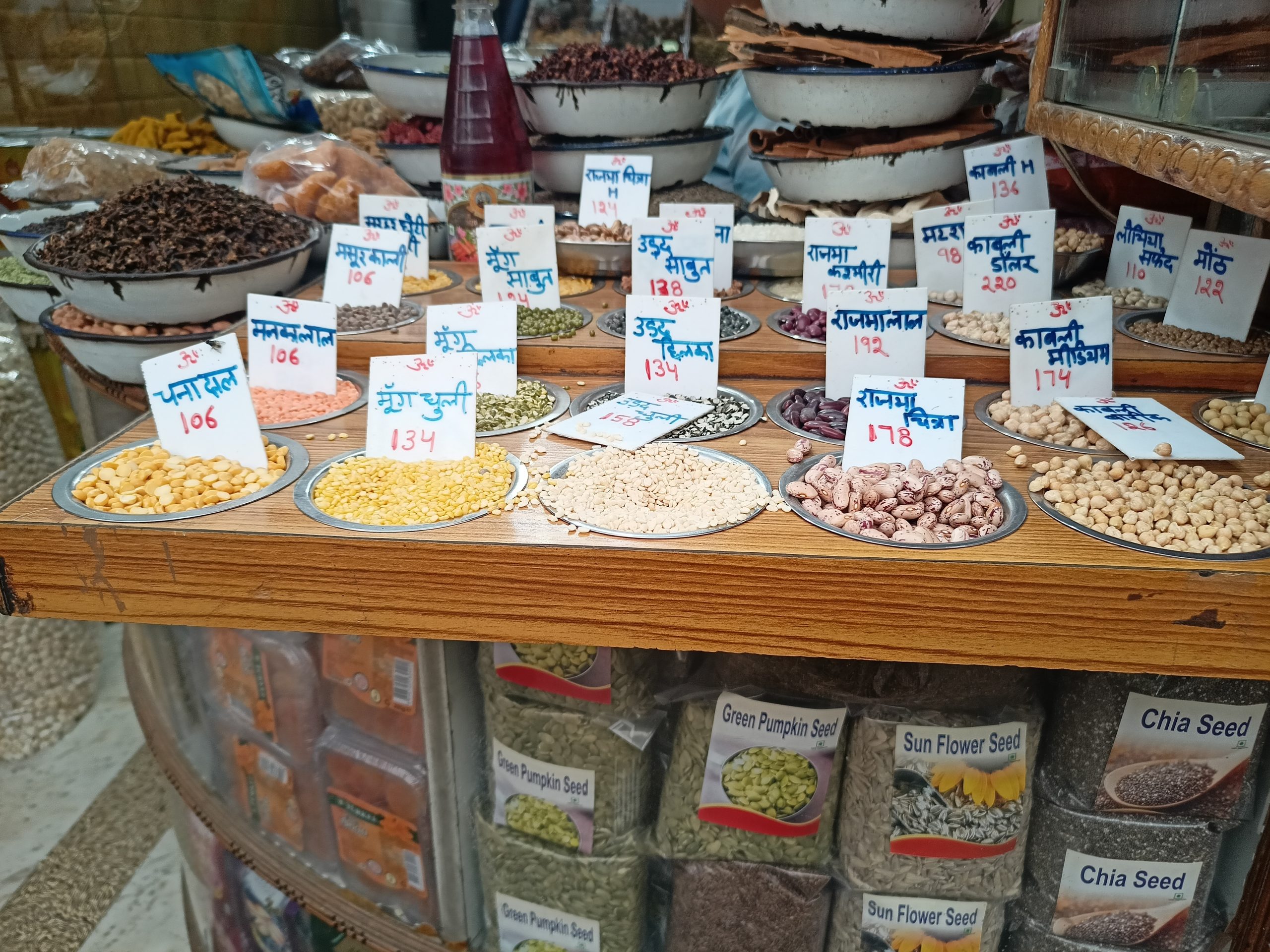
Lentils and pulses displayed at a shop
Adjacent to the ancient Fatehpuri Masjid, Khari Baoli holds the distinction of being Asia’s largest spice market, offering an extensive array of herbs, spices, nuts, and dry fruits.
As one follows their nose around the mosque, the tantalising aroma of diverse herbs and spices tickles the senses.
According to historical tales, the market was established in the 17th century by Fatehpuri Begum, the wife of Mughal Emperor Shah Jahan. Adorned with a stepped-well-like structure, it was a step-well that was earlier built by the son of Sher Shah Suri, Islam Shah, during his reign.
Home to over 300 shops, it began with a handful of establishments but gradually evolved into Asia’s premier spice hub. Some shops in the market boast a legacy spanning 100 to 200 years, upheld by succeeding generations.
Khari Baoli is a treasure trove showcasing spices and herbs not just from India, but also from around the globe. Here, prices vary based on the quality of these aromatic treasures.
It also specialises in offering bathing products and items integral to religious rituals, such as incense sticks. The historic lanes of Khari Baoli evoke an antique allure at every step, with each shop with a unique specialty and a compelling historical narrative.
BNSS caps custody at 24 hours and requires production before a Magistrate; force permitted only…
An SEM court reserved its order on extending the judicial custody of CJP leaders Saurav…
Delhi recorded its first 'poor' air day of the season on Wednesday as AQI hit…
Stage I of GRAP was invoked later this year in Delhi due to govt's preventive…
DDA plans to resume tethered hot air balloon rides at Baanseera park from Nov 14,…
NDMC is consulting RWAs and traders on draft 2026 property tax bye-laws, seeking feedback on…

