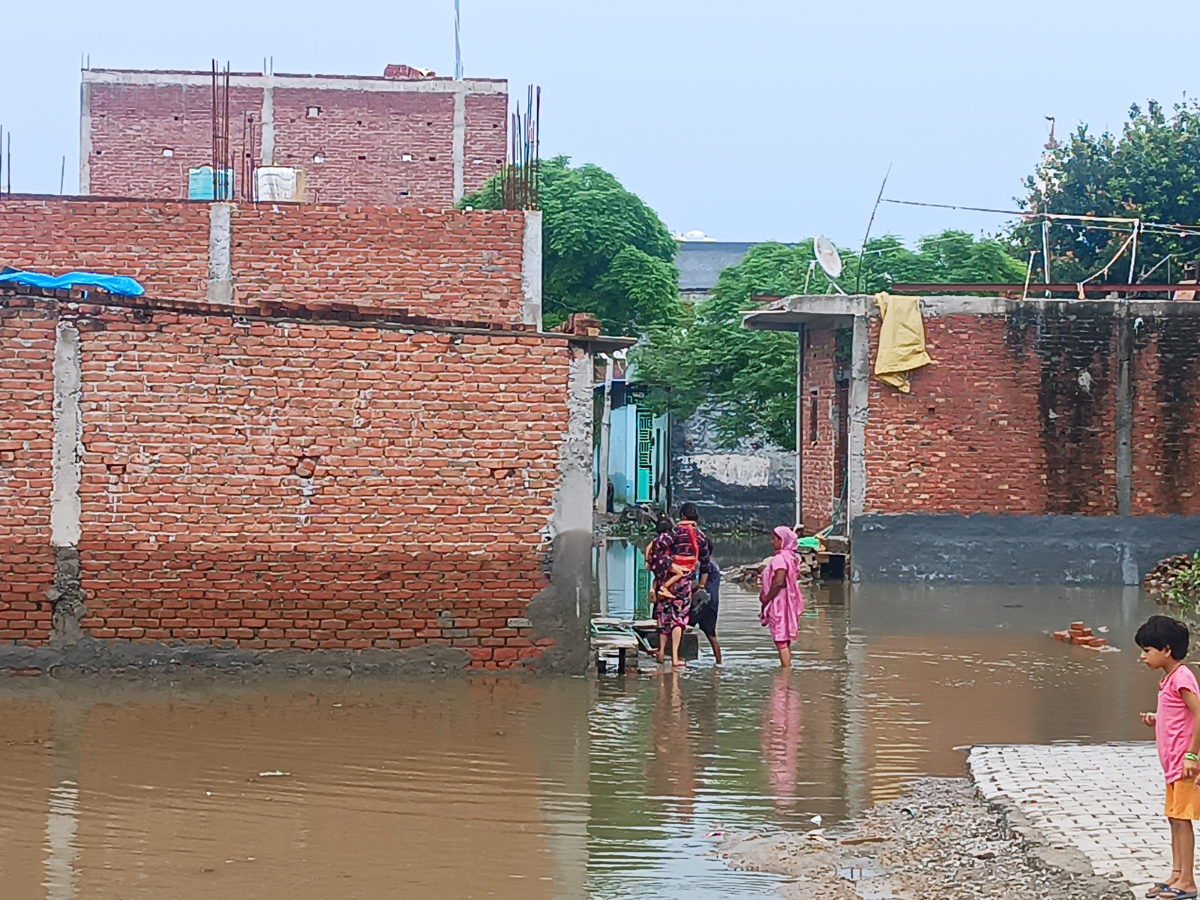
Last week, torrential rain in north India, coupled with the release of water from the Hathnikund barrage, led to an increase in the water level of Hindon river, a tributary of the Yamuna.
The rising water level of the Hindon River near Ghaziabad and Noida has brought back memories of the destructive 1978 floods.
While the floodplains along the Hindon and Yamuna were affected, waterlogging was also reported in several areas and roads in Noida and Greater Noida.
According to locals, until July 26, 10 villages, including Chhijarsi, Chotpur, Haibatpur, Yusufpur, Chaksahberi, Bahalolpur and Chipiyana Khurd, situated on the Hindon’s floodplains were affected.
Hindon originates in the upper Shiwalik region of the Himalayas and flows through several districts of Uttar Pradesh, including Ghaziabad and Gautam Buddh Nagar, bordering Delhi.
Local activists working in the relief camps believe that the floods have impacted over 70,000 locals and forced over 3000 people to seek shelter in the camps.
In its visit, Patriot found that the water level near Hindon bridge was much higher than its level in June before the arrival of the monsoon.
Several houses, which earlier seemed safe from the reach of the river, are now covered with silt and garbage.
Here are some of the visuals:
At least 50 cases have already been reported this month; NCPCR guidelines mandate help desks,…
DMRC says zero reduction in train trips, attributes decline to security measures and public apprehension…
A Delhi court denied bail to a former DU professor accused of raping a student,…
Delhi Police charged seven dhaba workers in the fatal beating of a Manipuri musician who…
Seven Delhi STPs failed DPCC standards in September, dumping high levels of faecal coliform and…
AISA chief Neha Bora petitioned the Delhi HC against a police notice requiring a peace…

