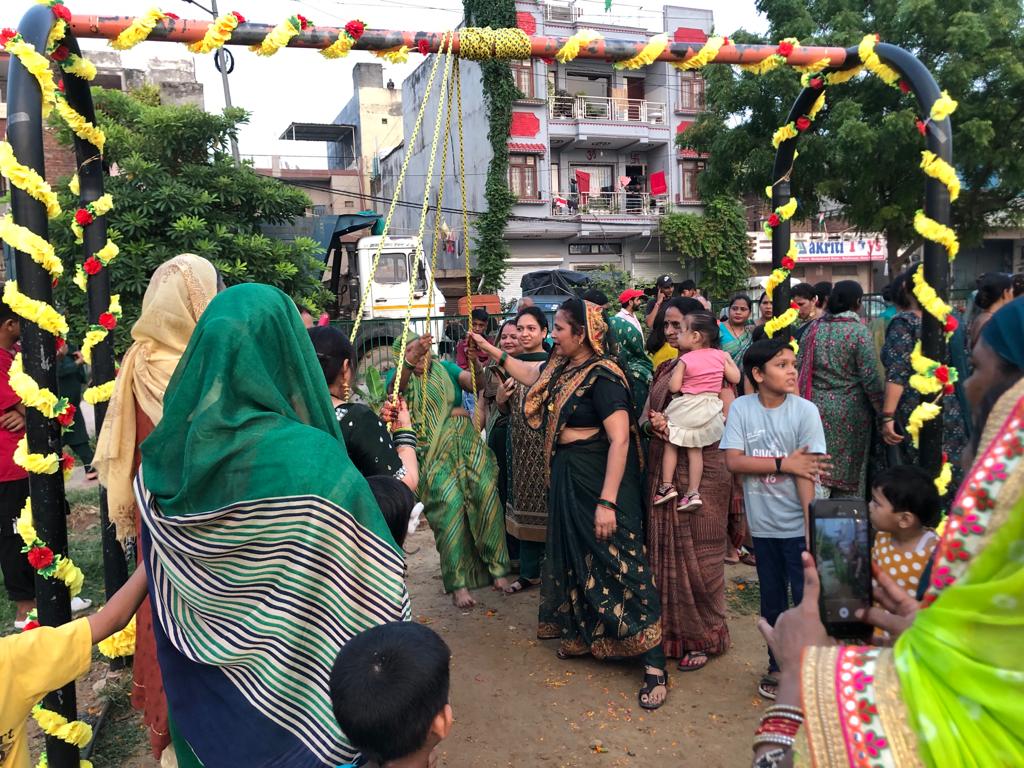
Photo: Shivani Jha
Hariyali Teej, a sacred Hindu festival, is celebrated two days before Naga Panchami in August. The festival’s roots are entwined with Hindu beliefs, primarily centered around Goddess Parvati and her union with Lord Shiva.
Parvati, according to Hindu beliefs, is the epitome of devotion, love, and marital bliss. Women observe fasts on Teej, seeking Parvati’s blessings for a harmonious married life or a suitable life partner.
It’s a day of praying for the well-being of their families and the prosperity of their homes.
In Delhi’s Palam area, women from all walks of life came together to celebrate Teej in Dada Dev Temple’s fair ground. Most of them were dressed in green, a colour worn by women on Teej, and had their hands adorned with mehendi — a common ritual during the festival. For men, a local dangal (wrestling) competition was being held.
Pehelwaans from all age groups participated, wrestling simultaneously on the sound of drums. While there were many swings for children such as Ferris Wheel, Pirate’s Ship, Carousel, among others, there was a special swing for women which was tied to the trees, which is an integral part of Teej’s celebrations.
These swings, often decorated by flowers, are rooted in the tales of Lord Krishna and his consort Radha. According to legends, Lord Krishna would swing Radha and other gopis (cowherd girls) on intricately decorated swings in the lush meadows of Vrindavan. This romantic and playful aspect of their relationship is celebrated by women swinging joyfully on swings during Teej.
In Mayur Vihar, another festive celebration of Teej was organised on the evening of August 17, 18 and 19. The event was a delightful culmination of all things synonymous with the festival.
Attendees were treated to captivating dance performances, showcasing traditional folk dances from various north Indian states. The atmosphere buzzed with the rhythmic beats of mehendi-adorned hands and lively nagadas.
One of the highlights was a hands-on pottery-making session, where visitors engaged in the art of crafting clay pots. The festivities were further enhanced by an array of stalls offering handcrafted bangles, clothing, and other essentials.
As the festival unfolded, it painted a picture of the multifaceted nature of celebrations. While many communities unite on common local grounds to embrace the harvest festival, there are those who opt for a more intimate observation within the precincts of their apartments.
This diverse celebration landscape intertwines personal customs within the festive pulse of Delhi, weaving a unique cultural fabric that’s as varied as the city itself.
Here are some of the visuals:
Elected to the Delhi Golf Club general committee, Mansher Singh says he wants to build…
A $780 million market built on pavements, where the pleasure of reading meets the price…
Supreme Court advocate Abhishek Pawar alleges women were denied washroom access for seven to eight…
Each day of closure costs shops in Khan Market and Connaught Place between Rs 60,000…
Delhi generates nearly 15,000 tonnes of waste daily, prompting the government to deploy 1,000 mechanical…
Delhi Police has issued an NOC for the Congress rally at Ramlila Maidan on November…


