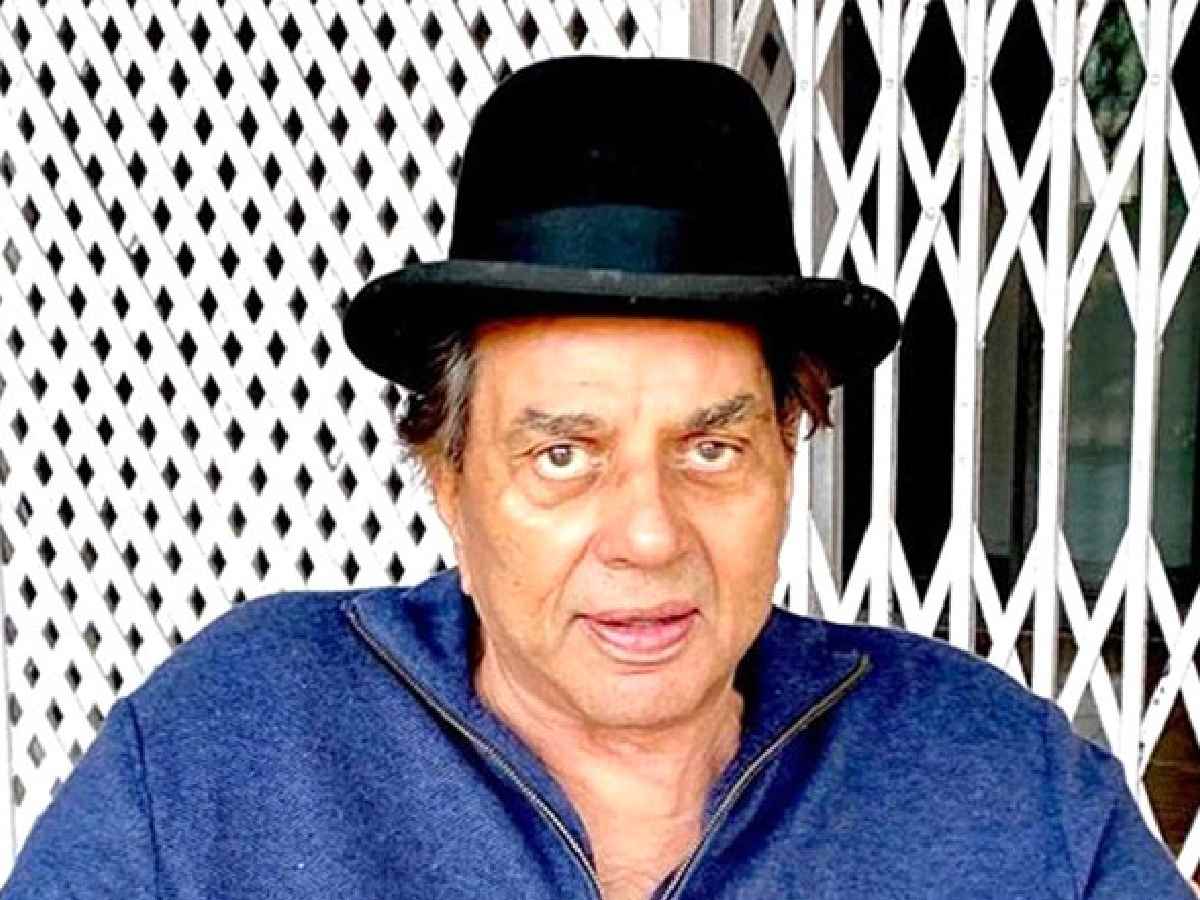
Sixty years after its release, one of Hindi cinema’s most cherished romantic duets, “Aapko Pyar Chhupane Ki Buri Aadat Hai”, continues to evoke nostalgia for a gentler era of filmmaking. The song from Neela Aakash (1965), featuring Dharmendra and Mala Sinha, was filmed over four long summer days in Delhi’s Lodhi Gardens, where medieval domes, manicured lawns and shaded walkways shaped the mood of the romance.
For many Delhi residents who witnessed the shoot firsthand, the memory remains vivid. Among them is Bhaskar Ramamurti, then a schoolboy at the Delhi Tamil Education Association (DTEA) School, who still recalls the excitement that rippled through the gardens each morning as crews set up equipment. “Every day, hundreds of children would come for picnics,” he said. “Because of our shouting and running around, the shooting simply couldn’t proceed.”
It was during one such chaotic moment that Dharmendra, then a rising star, walked toward the group of children. “He stood there calmly and said, ‘Ab shor mat karo’—don’t make noise now. There was both authority and affection in his voice. We all quietened instantly.” Ramamurti, still shaken by Dharmendra’s recent passing, remembers it as an early lesson in grace.
Also read: Beloved Hindi cinema star Dharmendra dies at 89
Watching the song today, one can still spot Lodhi Garden’s familiar landmarks—the Bada Gumbad, Athpula Bridge and a scattering of 15th-century tombs that give the park its character. Dharmendra and Mala Sinha wander along the winding paths, exchanging shy glances, teasing each other, ducking behind trees. Their movements feel spontaneous, almost unscripted—a quality helped by the limitations of outdoor shooting in the 1960s.
The Neela Aakash team likely filmed in April or May, judging by the bright daylight and soft shadows. Technology was minimal. Handheld cameras, natural light and carefully timed shots created the visual rhythm. The duet, sung by Mohammed Rafi and Lata Mangeshkar, set to Madan Mohan’s music and Raja Mehdi Ali Khan’s lyrics, was part of a broader effort to use Delhi as a living backdrop.
Beyond cinema, Dharmendra’s relationship with Delhi was shaped by politics and personal ties. Dr JP Sharma, known as Lal Dhage Wale, recalled that although the actor visited the capital often as a Lok Sabha member, his heart was never fully in politics. He returned far more frequently for film promotions and industry events than for parliamentary work.
Delhi also played a defining role in the life of Hema Malini, Dharmendra’s second wife—though her Delhi roots are often overlooked. Widely recognised as Tamil by origin, she spent all her school-going years in the capital. She attended the DTEA School on Mandir Marg, then Reading Road, from 1959 to 1966, completing Class 11 there. Her father, VSR Chakravarti Iyengar, worked for the Government of India and lived with his family in Roberts Square in Gol Market.
The school’s history intersects with several prominent figures. A few years ago, the DTEA institutions honoured some of their best-known alumni at a function at the FICCI Auditorium. Among those felicitated were Hema Malini and tennis legend Ramanathan Krishnan, both former students. The institution, once affectionately called the “Madrasi School” by Delhiites, continues to hold a place in the cultural memory of the capital’s Tamil community.
For fans revisiting Neela Aakash, the Lodhi Gardens sequence remains one of the film’s brightest moments—a celebration of youthful affection and the unhurried elegance of 1960s Delhi. And for those who once stood among the gardens’ trees watching Dharmendra coax children into silence, the song preserves something more personal: a fleeting encounter with an actor whose charm extended far beyond the screen.
Delhi Police books journalist under SC/ST Act for casteist remarks against ACP during a Jantar…
Hindu College staff protests against principal, demanding DU takeover over financial and admission irregularities and…
Delhi Cabinet approves Industrial Policy 2026 with Rs 1,000 crore for top sectors to turn…
Delhi launches DJB command centre with GPS tanker tracking and AI tools to manage water…
ABVP protests at JNU against Congress MP Akoijam over sexual harassment claims, demanding the party…
DU officials oppose HEFA loans for hostel expansion, warning repayment could raise student fees and…
