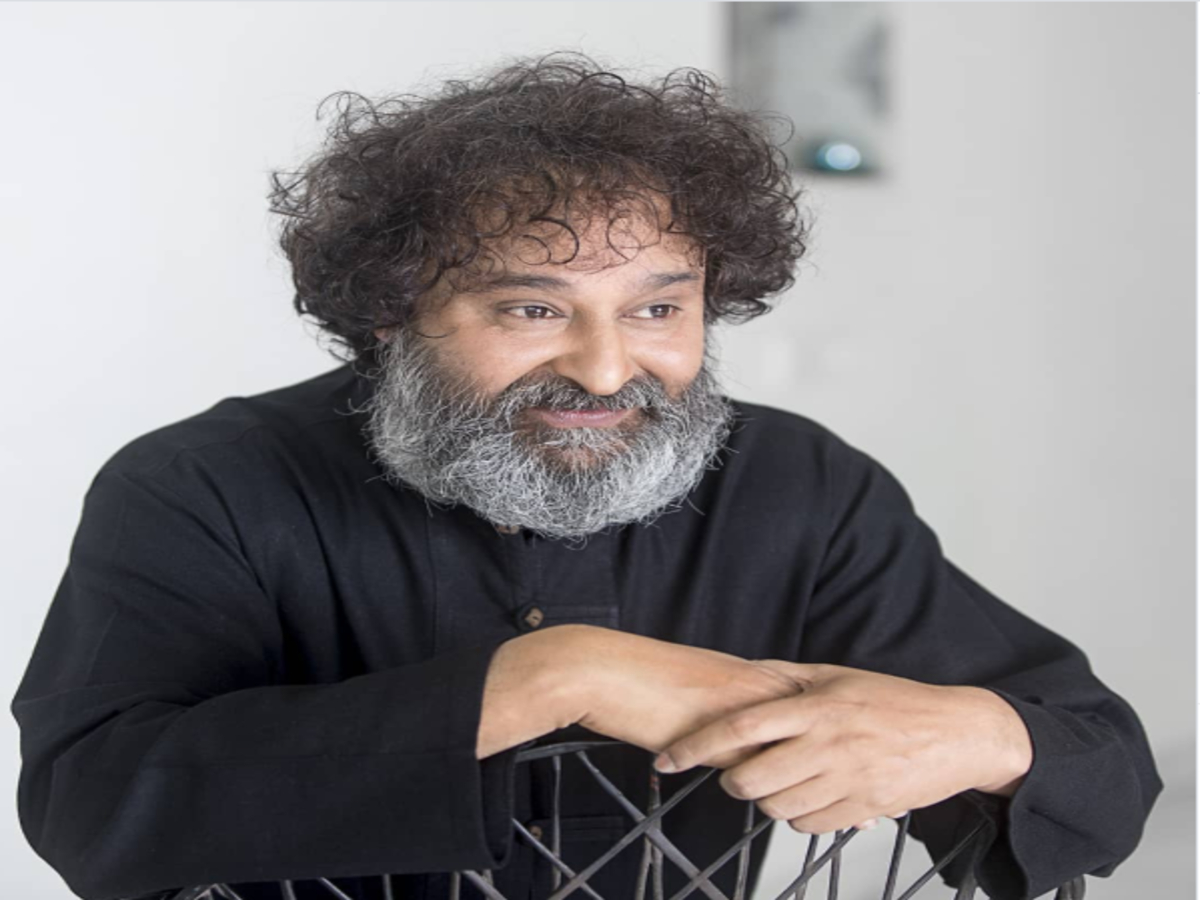
Jameel Khan
For more than two and a half decades, Gullak actor Jameel Khan has built a career that rarely chased the spotlight but steadily earned it. Born in 1974 in Bhadohi, Uttar Pradesh, Khan entered the profession in the late 1990s, working across theatre, advertising, independent cinema and mainstream Bollywood before becoming a household name as Santosh Mishra in TVF’s Gullak. The role brought him two Filmfare OTT Awards for Best Actor (Comedy Series) in 2021 and 2022, recognition that arrived after years of persistence rather than sudden stardom.
Yet Khan insists his journey was never charted by design. “Not by design,” he says. “More by destiny carving its path for me.” His only consistent approach, he adds, has been to give more than 100 per cent to every opportunity, regardless of scale.
Theatre roots
Khan’s early professional years unfolded far from the camera. “I was doing a lot of theatre at that time,” he recalls. “The limelight wasn’t there as far as films were concerned, but in theatre I was always gaining momentum.”
While the wider audience did not recognise him then, the theatre-going public did. Advertising, modelling, voice work in Hindi, Urdu and English, and eventually films followed organically. “Directors picked me up as an actor from there,” he says. The desire, he admits, was simple: acknowledgement. “You wanted to be popular, to be known as a good actor.”
Watching his guru Naseeruddin Shah command attention and respect left a lasting impression. “One wanted to be somewhat like him,” Khan says. “That’s how it all began.”
Also Read: From Delhi theatre to national recognition: Harsh Mayar’s journey on screen
Formative years
Khan credits his education with shaping both his craft and his worldview. Sherwood College, Nainital, he says, laid the foundation. “That built my character, my discipline, my independence. My love for acting began there.”
Aligarh Muslim University offered a contrasting experience. “AMU got me back to Indian culture,” he explains. Studying alongside students from all economic and social backgrounds taught him coexistence without judgement. “Not by name, caste, colour or sex — that is what AMU taught me.”
Mumbai brought yet another shift. “Bombay taught me not to judge people for what they wear or eat,” he says, describing the city as inclusive and reflective of how India, in his view, should always remain.
Slow ascent
Khan’s filmography reflects a career built on steady work rather than headline roles, from Hum Dil De Chuke Sanam(1999) and Asambhav to Gangs of Wasseypur, Goliyon Ki Rasleela Ram-Leela, Baby and a range of independent productions, including Beneath the Sea of Lights.
“I’ve never gone out seeking work,” he admits, calling it a limitation in an industry driven by networking and visibility. “If they remember me, they call me. If they don’t, bad luck.”
Success and failure, he believes, are not entirely within an actor’s control. “The success of a film is not in my hands,” he says. “I don’t let it go to my head, and I don’t take failure to heart.”
Selective choices
What draws Khan to a role today is clarity and depth. “A character which has layers and something to convey,” he says. “If people can take something away from it, the journey is worth it.”
Ironically, Gullak’s success has narrowed certain offers. “I turn down father roles almost every week,” he says. “Unless it challenges me, it doesn’t interest me.” The decision often comes at a financial cost, but for Khan, creative satisfaction matters more. “It doesn’t appeal to me if it doesn’t challenge me.”
OTT shift
Khan believes the rise of OTT platforms has created space for stories rooted in everyday reality. “There is now an audience for my kind of cinema, my kind of characters,” he says.
OTT, he feels, occupies a crucial middle ground. “It allows longer storytelling without becoming exhausting like daily television,” he explains. With audiences exposed to global content, he adds, viewers have grown more discerning and more open to ordinary, flawed, deeply human characters.
Comedy craft
Despite being widely perceived as lighter fare, Khan calls comedy the toughest genre. “To make people laugh is not easy,” he says. “To make people cry is easier.” The real challenge, he believes, lies in balancing humour with emotional truth, making audiences laugh and then quietly moving them.
That balance, he says, is what makes Gullak resonate so deeply. “It connects to small things from people’s lives,” he explains, “and that’s where laughter and emotion meet.”
Hard lessons
The most difficult phase of Khan’s career came early, when he was unknown and often underpaid. “Those were different challenges,” he recalls. Survival, he admits, sometimes dictated choices. “I’ve done work I wouldn’t have done if I were financially secure.”
Yet he views challenges as essential. “If life isn’t challenging, it becomes dull,” he says. “You have to fight it and come out the winner. Otherwise, life stops being interesting.”
Looking ahead
Naseeruddin Shah remains Khan’s greatest influence. “Most of my learning has been with him,” he says. He also speaks with admiration of actors such as Manoj Bajpayee, Irrfan Khan and Aamir Khan.
His association with Delhi, though brief, left an impression. “It’s vibrant, lively, full of energy,” he says, calling the city a cultural melting pot and the political heart of the country.
As for advice to young actors chasing fame, Khan is unequivocal. “If you go with the intent of becoming famous, don’t,” he says. “Focus on giving a stellar performance. Everything else — name, fame, money — will follow.”
For Jameel Khan, it always has, slowly, quietly and entirely on his own terms.
Read More: ‘Dhurandhar’ starts streaming on Netflix: Aditya Dhar says film begins new chapter
Delhi HC will rule Oct 23 on AISA chief Neha Bora’s plea against a police…
A CREA analysis shows Delhi's winter AQI has seen no steady gain since 2022, with…
DMRC will plant over 28,000 saplings across 991 MCD parks in 3 months to offset…
Delhi HC quashed an FIR against an SSC aspirant, ruling mere presence at a protest…
CJP leaders Saurav Das and Ashutosh Ranka sought more time to join the Delhi Police…
Delhi Police held 3 more people, including a couple using a minor to sell heroin…
