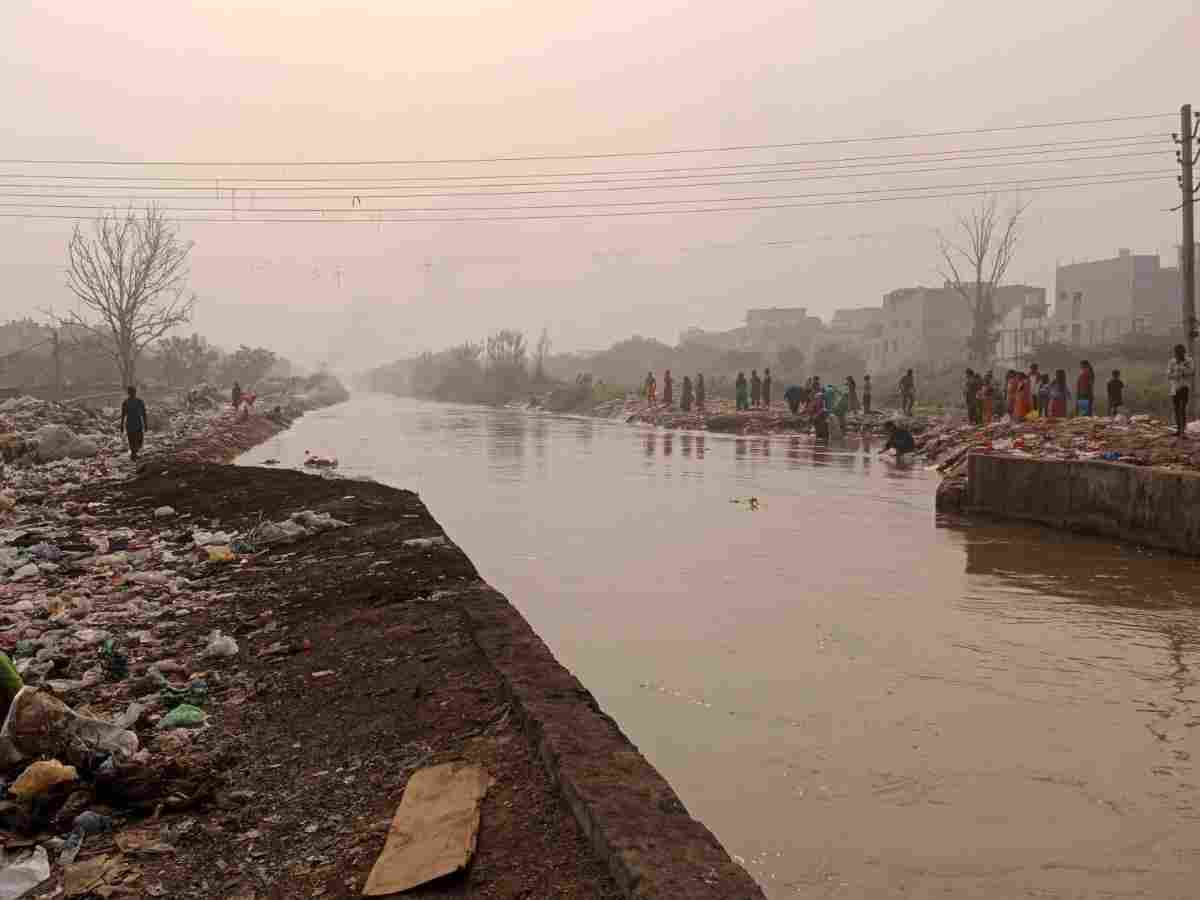
The National Green Tribunal has directed the Delhi government and other states to expeditiously implement the Central Inland Fisheries Research Centre’s recommendations for the preservation of native fish species in the Yamuna River.
The tribunal also directed the Delhi Jal Board (DJB), National Mission for Clean Ganga (NMCG) and Central Pollution Control Board (CPCB) to accelerate the installation and operationalisation of the sewage treatment plants in the urban local bodies (ULBs) along the river Yamuna to ensure that the treated water meets the standard fit for aquatic life.
The green body was hearing the matter where it had taken suo motu (on its own) cognisance of a newspaper report, which cited a survey by the ICAR- CIFRI (Indian Council for Agricultural Research-Central Inland Fisheries Research Centre) in Prayagraj regarding the fish species in the Yamuna River, showing that the number of Indian fish species had decreased.
According to the survey, there was a decrease in the population of Indian fish species such as Catla, Rohu, Nayan, Padin, Gonch, Chital, Rengan, Reetha, Bamchar or Eel, and Mahasheer, while the population of eight types of foreign fishes, namely, Common Carp, Silver Carp, Big Head, Thai Mangur, Grass Carp, Tilapia, Crocodile Fish and Bass has gone up which, in turn, affected the Indian species.
In its order dated January 29, a bench of the NGT Chairperson, Justice Prakash Shrivastava, and expert member A Senthil Vel underscored that the decline in indigenous fish species was due to river pollution.
The bench said, “It is noticed that though different agencies have taken steps for preservation of the native fishes in the river Yamuna, but in spite of these programmes, the population of native fishes has shown a declining trend. Hence, there is a need to re-evaluate and ensure that the programmes which have been undertaken are effectively implemented at the ground level.”
Also Read: Aviation job scam in Kolkata mirrors patterns seen in Delhi
The tribunal noted the ICAR-CIFRI, Prayagraj, recommendations for compliance by the local governments.
These comprised prohibition of illegal fishing gears, enhanced monitoring, control and surveillance during the fishing ban period, implementing strategic ranching practices, ranch air-breathing fish in designated areas and maintenance of the proper records of the fish catch data.
The recommendations also included following ranching guidelines for stocking in leased stretches, banning the release of exotic fish for rituals, increasing public awareness, maintaining continuous water flow and taking action to manage point sources of industrial and organic effluents to protect biodiversity and maintain ecological balance.
The tribunal directed the state governments of Delhi, Uttarakhand, Himachal Pradesh, Haryana and Uttar Pradesh to duly consider the suggestions and take effective steps to implement them expeditiously.
“The CPCB, NMCG and DJB are directed to ensure strict enforcement of the effluent standard and compliance with norms by the ULBs discharging treated/untreated sewage and throwing solid waste in the river Yamuna and the industries which are discharging treated/untreated effluents in the river Yamuna.”
“They are further directed to accelerate installation and operationalisation of the sewage treatment plants in the ULBs abutting the river Yamuna to ensure that the treated water meets the standard fit for aquatic life,” the tribunal said.
It directed the CPCB to ensure continuous water quality monitoring at different stretches of the river Yamuna to ensure the parameters concerning Dissolved Oxygen, BOD, Ammonia and heavy metals, crucial for fish survival, are maintained and ultimately achieved the aim of restoring Indian native fishes in the river, particularly, the Indian Major Carps (IMC).
The tribunal asked the Union Ministry of Environment, Forest and Climate Change (MoEF&CC), Central Water Commission and state irrigation departments to maintain a minimum flow level in the river Yamuna to support breeding and migration of native fish species.
It said, “They are directed to regulate/prohibit sand mining that disturbs the spawning beds. They are further directed to remove obstruction or construct fish ladders at barrages like Wazirabad, Okhla, Hathnikund to facilitate the migration of native fish species such as Mahasheer.”
The tribunal also directed the National Fisheries Development Board (NFDB) and state fisheries department to ensure strict licensing and zoning of aquaculture forms, prohibition of farming of highly invasive species like Thai Mangur (Clarias gariepinus), and promotion of native fish aquaculture by providing incentives.
“The ICAR-CIFRI, National Bureau of Fish Genetic Resources and state fisheries department are directed to release fingerlings of native species into identified river stretches, especially during the post-monsoon season.
“They are also directed to consider establishing Mahasheer and Indian carp hatcheries along the Yamuna basin to maintain genetic diversity and declare biodiversity-rich stretches as a fish conservation zone,” the tribunal said.
It directed the MoEF&CC, National Bureau of Fish Genetic Resources and other academic institutions to revamp research on species decline by conducting scientific studies on ecological interactions between native and exotic fishes, breeding biology and population tolerance.
“The MoEF&CC, Department of Animal Husbandry and Dairying, Ministry of Agriculture and the state governments should take steps to implement the national inland fisheries policies effectively by integrating Yamuna-specific fish conservation plans within river basin management.
“Strict penal action is to be taken against those responsible for the illegal introduction of exotic species into the river,” the tribunal said, disposing of the matter.
Read More: Centre moves Delhi HC against order permitting posthumous reproduction
NDMC to build a larger tulip garden with parking at Nehru Park, featuring seasonal blooms,…
A 17-year-old student was found burnt at an east Delhi school, with police probing a…
Delhi's temperature fell to 17°C following overnight rain and thunderstorms, with an AQI of 167…
Coforge opened its first library in Noida in February 2024; it now claims a combined…
Of the 237 spa centres across 10 zones with valid MCD licences, the South East…
CTI chairman Brijesh Goyal said the Rahul Gandhi rally could affect wholesale and retail markets…
