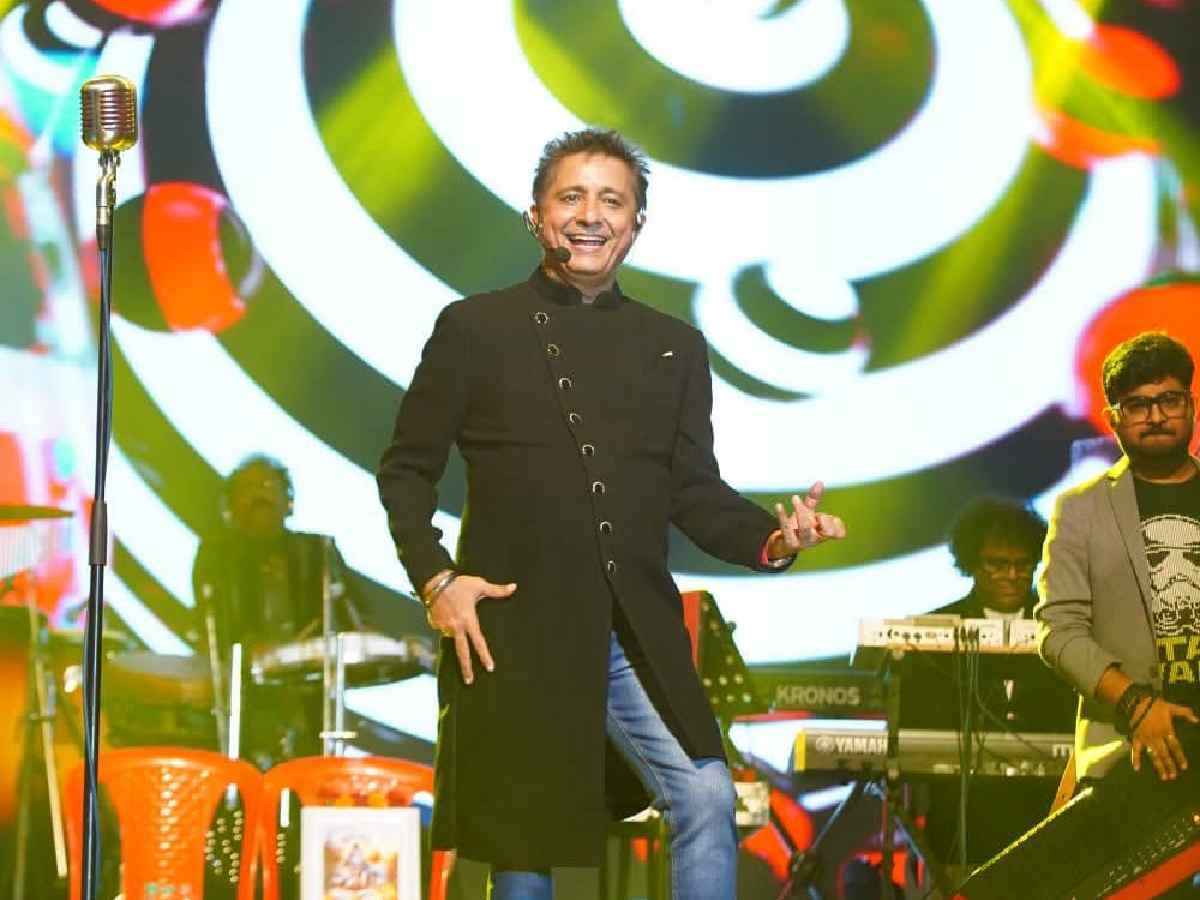
Sukhwinder Singh
Bollywood singer Sukhwinder Singh believes that the iconic song Chaiyya Chaiyya from the film Dil Se continues to cast its spell and remains universally loved even after so many years.
“The song had magic from the start, and it continues to resonate. AR Rahman called me and said, ‘I have something different for you.’ When I heard Gulzar Saab’s lyrics, I got goosebumps. Recording it felt like entering a trance – it wasn’t just a song, it was an experience. None of us anticipated it would become such a global phenomenon, but we felt something powerful while creating it,” he said.
Singing with soul and stagecraft
Singh also spoke about songs like Bismil and Jai Ho. He explained that such songs demand not just vocal strength but emotional depth. “Before I sing, I try to get into the soul of the character to feel his pain, his joy, his passion,” he said. “For Bismil, I approached it almost like a theatrical performance. With Jai Ho, I had to channel hope and triumph into every note. Meditation and silence help me prepare mentally before I lend my voice to such songs.”
Also read: World Music Day: Delhi women who gave voice to India’s musical heritage
Cherished collaborations with composers
The 53-year-old singer cherishes his collaborations with various composers.
“Every composer has brought something unique to my journey, but AR Rahman is like a brother and a magician. Our chemistry is special – he understands my voice and pushes me to go deeper. Working with Vishal Bhardwaj on Bismil was also unforgettable. He directed me like a filmmaker, shaping every nuance,” he said.
Grammy, Oscar and a dream come true
When asked about winning a Grammy and an Oscar for Jai Ho, Singh described it as a surreal experience.
“I never dreamed of a Grammy or an Oscar when I started out in Punjab. I just wanted to sing from the heart. Holding that Oscar, I felt like I was carrying the dreams of every Indian singer. It was a moment of pride – not just for me, but for the entire Indian music community,” he said.
Playback singing vs the magic of live shows
On the difference between playback singing and live performances, he said both had their own charm. “Playback singing is intimate – it’s about becoming the voice of a character and fitting into the cinematic world. But live performances – that’s where I truly come alive. The audience’s energy feeds me. On stage, I feel free, like a bird in the sky. I never use auto-tune, and I treat every show like it’s my last.”
Music as devotion and discipline
Known for his high-energy stage acts, he added, “For me, music is devotion. When I sing live, I’m not just performing – I’m praying. That intensity comes from love: love for my audience, love for my art. I give everything I have. I also do yoga and regular vocal riyaaz – that keeps my stamina high.”
Thoughts on changing trends in playback music
Singh has delivered powerful songs such as Jalwa Jalwa, Lagan Lagi, Kar Har Maidaan Fateh, Dil Haara, and many more. Reflecting on the current music scene, he acknowledged the evolution of playback singing.
“Playback singing has become more versatile and experimental, which is great. But sometimes I feel we miss the emotional depth of earlier eras. Technology has advanced, but the soul must never be compromised. I believe the future belongs to singers who stay rooted yet are unafraid to innovate,” he said.
Also read: Important to have both success and criticism: Diana Penty on ‘Chhaava’
Celebrating India’s independent music movement
On India’s growing independent music scene, the Chak De! India singer expressed his admiration.
“It’s fantastic to see young artists creating music outside of films. There’s a raw honesty in independent music. I encourage it – it brings fresh sounds and stories to audiences. I just hope they stay true to their voice and don’t get swayed by trends,” he said.
Growing up in a land filled with music
He also reflected on his early musical influences growing up in Punjab.
“Music was everywhere – in the air, in the soil. Folk music was my first love. I was fascinated by the raw energy of Punjabi folk songs and the way they told stories,” he recalled.
The voices that shaped his journey
“My biggest influence early on was Kishore Kumar. His versatility amazed me. I also listened to Nusrat Fateh Ali Khan Sahab – his passion and command over his voice had a huge impact on how I later approached my own singing,” he concluded.
Elected to the Delhi Golf Club general committee, Mansher Singh says he wants to build…
A $780 million market built on pavements, where the pleasure of reading meets the price…
Supreme Court advocate Abhishek Pawar alleges women were denied washroom access for seven to eight…
Each day of closure costs shops in Khan Market and Connaught Place between Rs 60,000…
Delhi generates nearly 15,000 tonnes of waste daily, prompting the government to deploy 1,000 mechanical…
Delhi Police has issued an NOC for the Congress rally at Ramlila Maidan on November…
