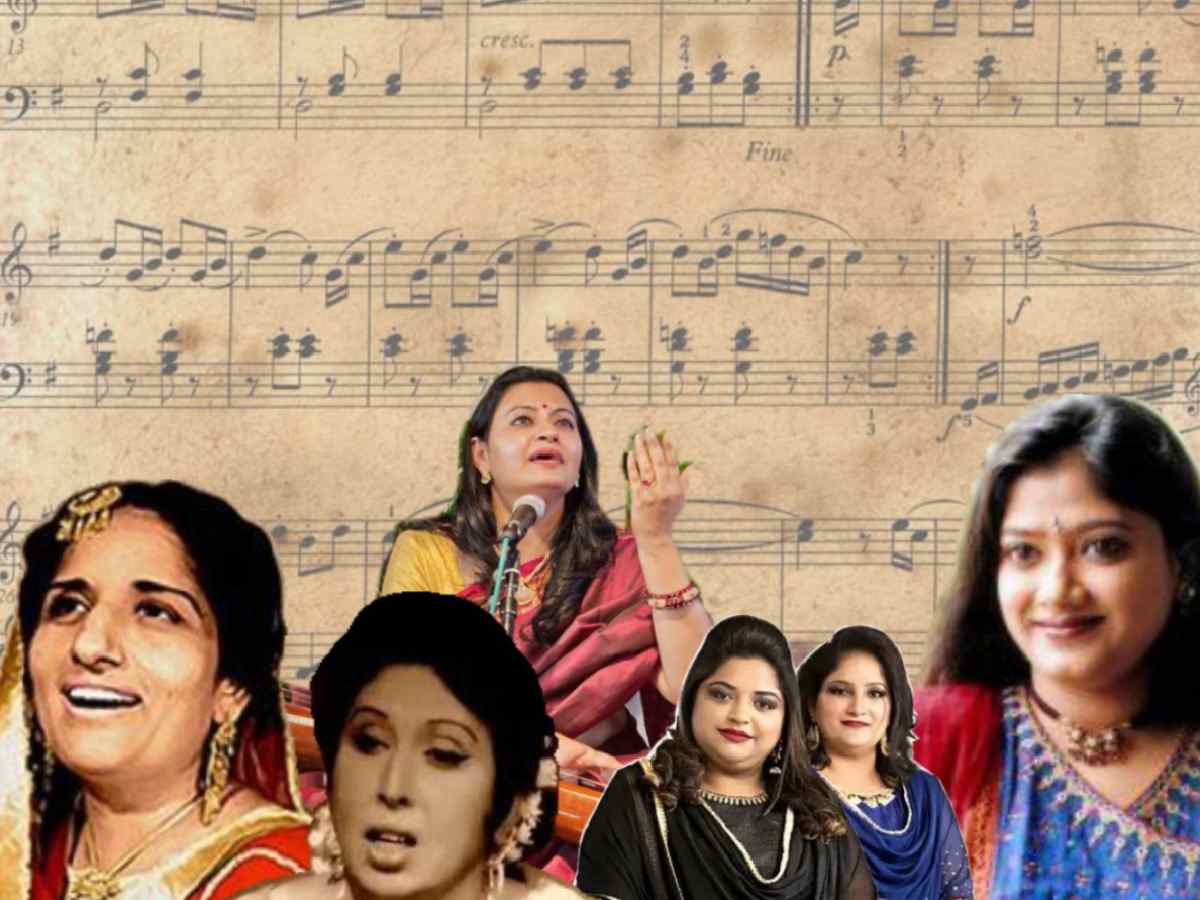
World Music Day is celebrated globally on June 21. Music and songs are essential to almost every culture, especially in India. The country boasts a rich history of music and musicians. With over 121 languages spoken across the nation, here are five women from Delhi who have sung enchanting verses in their own languages. These women became trendsetters in the world of music, redefining the role of women in cultural development.
Iqbal Bano
Iqbal Bano is most popular for her semi-classical Urdu ghazals and classical thumris. She was born in Delhi in 1935 and moved to Pakistan in 1952. She became an even more notable figure when she went on stage and sang banned songs under the rule of General Zia-ul-Haq. The banned songs were compositions by the famous poet Faiz Ahmed Faiz, including Hum Dekhenge. Following this, she was banned from all officially sponsored concerts and from appearing on television. She was awarded the Pride of Performance award in 1974.
Surinder Kaur
Surinder Kaur was born on November 25, 1929, in Lahore and is called the ‘Nightingale of Punjab’. She studied music with Inayat Hussain and Pandit Mani Prasad. She moved to Delhi after the partition. Her most memorable hit was Badnam Na Ho Jaye Mohabbat Ka Fasaana from the movie Shaheed (1949). She married Joginder Singh and collaborated with him on several occasions. In total, she sang 2,000 songs and won the Sangeet Natak Akademi Award for Punjab Folk Music in 1984. In 2002, Guru Nanak Dev University awarded her an honourary PhD in Music.
Also read: Magic of QSQT still lives on, says Udit Narayan
Meeta Pandit
A Delhi-based musician, Meeta Pandit earned her bachelor’s degree in commerce from Lady Shri Ram College and her PhD in music. She is the sixth generation of a long line of musicians from the Gwalior Gharana. She took up music after the unfortunate and untimely demise of her brother, becoming the first woman in her family to pursue music. A trained Hindustani classical vocalist, she earned the title of ‘Top Grade Artist’ from All India Radio.
Roohani Sisters
The Roohani Sisters are a group of vocalists in Delhi who excel in ghazals, Sufi music, alams, qawwalis, kaafis, and more. The group was founded by Jagriti Luthra, who is the lead vocalist. Other members include Sonakshi Jain, Yashu Dewal, Madhumita Roy, and other background vocalists. They believe in the empowerment of women through classical music.
Srilekha Parthasarathy
Born into a Tamil family, Srilekha grew up in Delhi. In the year 2000, she recorded a jingle for Idhyam Oil, which later became her claim to fame. It marked her entry into the industry. She learned Western, Southern, and Northern forms of music and spent some time working in theatre. Her first song in cinema was Yedho Ondru from the movie Laysa Laysa.
Also read: Vijay Raaz reflects on Run and the evolution of comedy in Hindi cinema
Monitoring report identifies solid waste at 32 locations and inadequate tapping at 11 drains discharging…
A 15-year-old girl was injured when a balcony collapsed in northeast Delhi's Welcome area early…
AIMIM urged the Delhi Waqf Board to protect the Race Course Road mosque from demolition,…
Delhi woke up to poor air quality, with the AQI at 225 and minimum temperature…
Delhi HC will rule Oct 23 on AISA chief Neha Bora’s plea against a police…
A CREA analysis shows Delhi's winter AQI has seen no steady gain since 2022, with…
