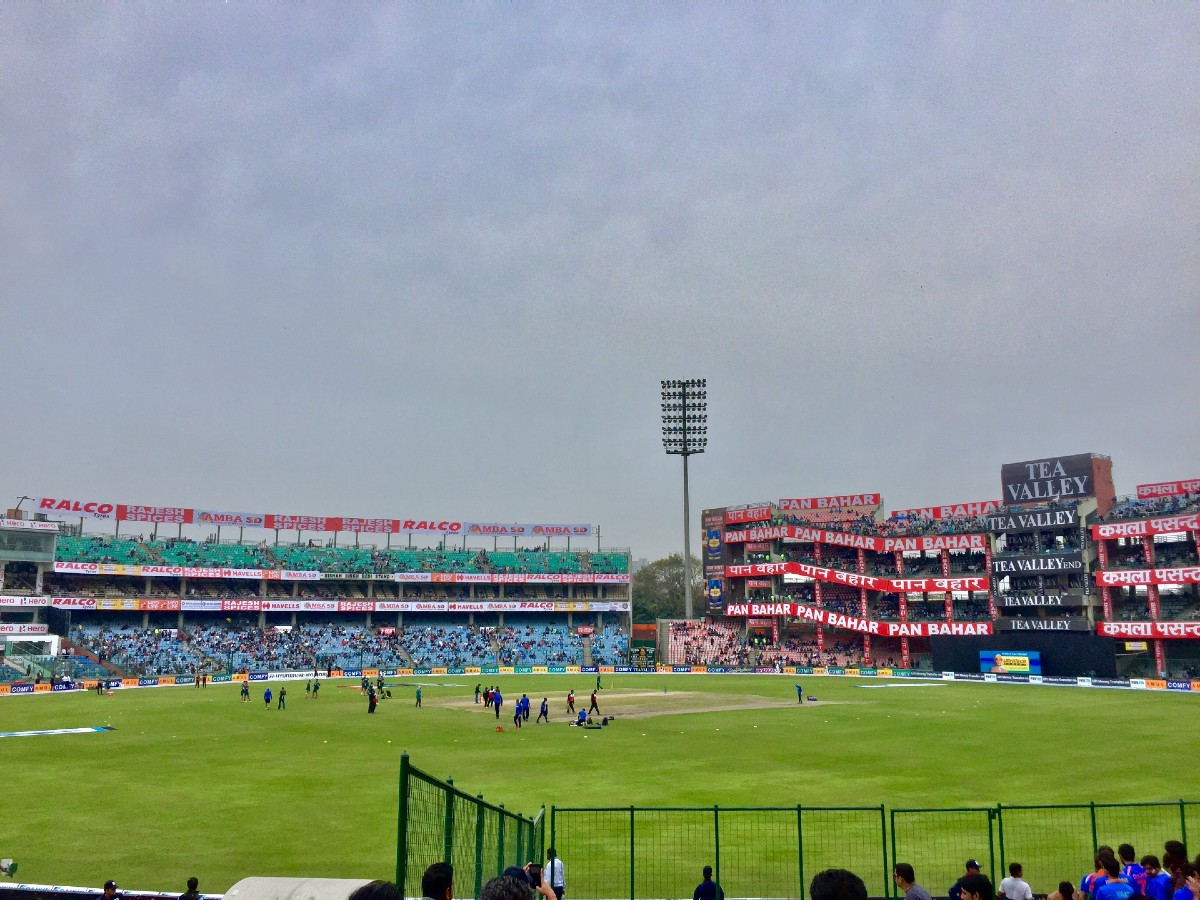
The Ferozeshah Kotla ground
Delhi will get to host a Test match after more than five years when India and Australia play the second Test of the four Test matches for the Border-Gavaskar Trophy, between February 17 and 21 next year at the Ferozeshah Kotla grounds of the Arun Jaitley Stadium.
The previous Test played in Delhi in December, 2017, had attracted plenty of criticism due to excessive pollution levels that troubled players, especially those from the opposition team Sri Lanka.
The months of November, December when there is excessive pollution have since been mostly avoided for international games, especially the multi-day Test matches.
There was only one international game played in the last five years during these pollution-heavy months and that was in November, 2019 when the visiting Bangladeshi players were again forced to train in masks.
“The Australia tour of India for the Border-Gavaskar Trophy will kickstart in Nagpur from the 9th of February. Team India will then play the next three Test matches in Delhi, Dharamsala and Ahmedabad,” said a statement from the Board of Control for Cricket in India confirming the Test.
The Ferozeshah Kotla has so far hosted 34 Test matches with 19 of them producing results. The first-ever Test at the Kotla was held between India and West Indies in 1948. India have won 13 and lost six of the 34 Tests they have played at the venue. Their last loss at the venue came way back in 1987, when they lost to West Indies. Their previous win at the Kotla was in 2015 against South Africa.
They have also hosted seven T20 Internationals and 26 One-day Internationals.
BNSS caps custody at 24 hours and requires production before a Magistrate; force permitted only…
An SEM court reserved its order on extending the judicial custody of CJP leaders Saurav…
Delhi recorded its first 'poor' air day of the season on Wednesday as AQI hit…
Stage I of GRAP was invoked later this year in Delhi due to govt's preventive…
DDA plans to resume tethered hot air balloon rides at Baanseera park from Nov 14,…
NDMC is consulting RWAs and traders on draft 2026 property tax bye-laws, seeking feedback on…
