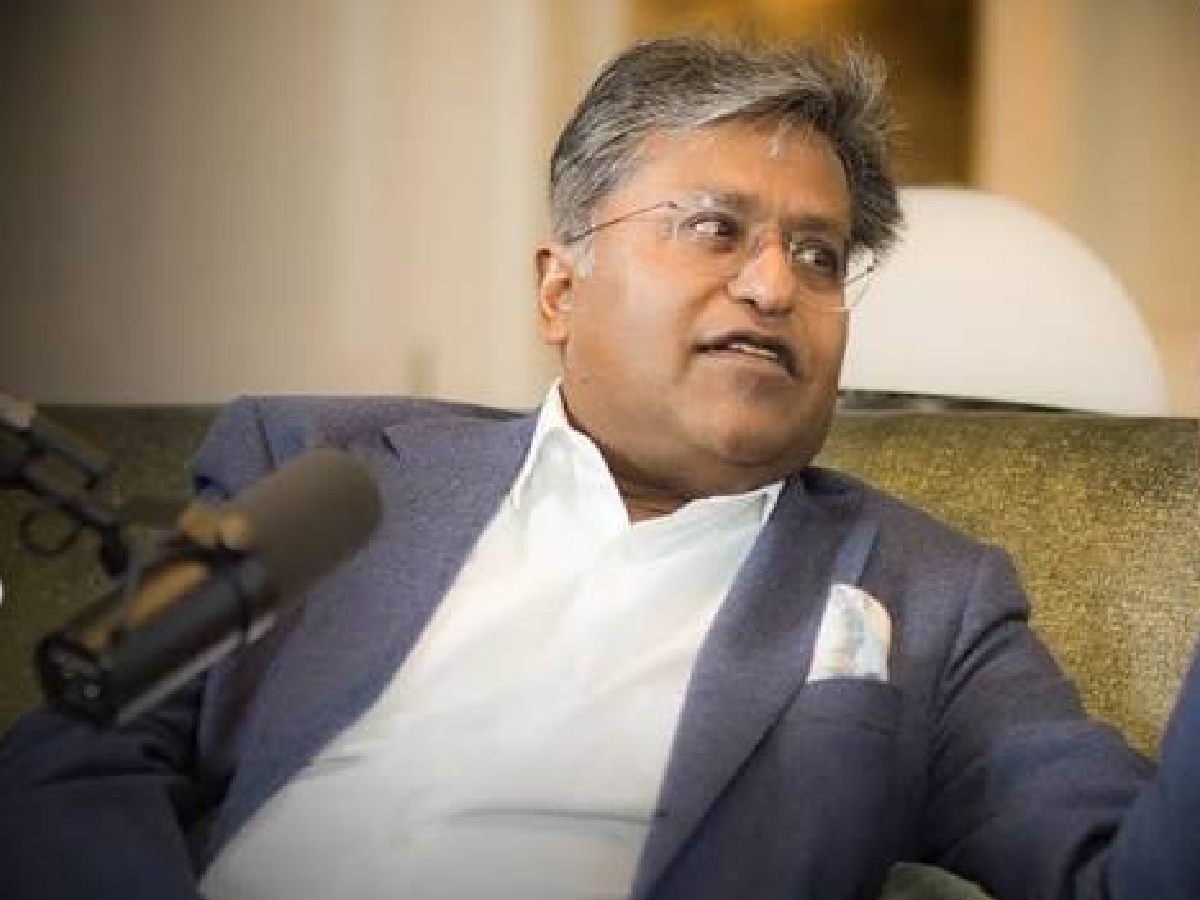
While suggesting a new, essentially winter window for the Indian Premier League (IPL), founder Lalit Kumar Modi says the tournament could be organised exclusively with Indian cricketers, though he acknowledges overseas players add value. Living in London since May 2010, the 62-year-old businessman also feels T20 leagues are the future of cricket, along with bilateral Test matches and T20s. Modi, who faces criminal and enforcement cases in India, doesn’t rule out visiting the country, but says he intends to stay in London for now. Significantly, the former Vice-President of the Board of Control for Cricket in India (BCCI) and ex-President of the Rajasthan Cricket Association asserts he doesn’t need a formal position in cricket administration to air his views on the game.
Edited Excerpts:
What prompted you to suggest two possible IPL windows?
I’ve been warning for years that cricket’s commercial model and calendar are heading towards a crisis. When I created the IPL in 2008, we had eight teams and a 59-match tournament. Today, we’ve 10 teams, and a proper home-and-away league would require 90 league matches plus four playoffs — 94 matches. You can’t keep expanding the product while squeezing everything into essentially the same window. Then there is the increasingly punishing April-May heat, player fatigue, broadcasting economics and the growing dependence of the BCCI on IPL revenues. But the bigger problem is that cricket is trying to sustain too many versions of essentially the same sport and an endless succession of International Cricket Council (ICC) tournaments. Cricket is suffering from format proliferation and calendar inflation. My two IPL proposals — beginning in January or creating a carefully structured October-April calendar — are alternatives to be commercially evaluated. The biggest threat to the IPL is not competition; it is complacency.
Has anyone from BCCI or the ICC prompted you to float the idea of the new windows for the IPL and test the waters on this issue?
No. These are my own views. I’ve never needed permission or encouragement to express an opinion about cricket. I don’t need to test the waters for anybody. I am looking at the economics, the changing audience, the players and the future of the sport.
Would other cricket boards agree to follow the BCCI’s preferred windows?
Not necessarily. Nor should anybody expect automatic agreements. But the world of cricket has changed. The IPL is no longer a tournament looking for a place in international cricket. It has become the principal commercial engine of the sport. The world’s best players have powerful financial reasons to participate. Broadcasting networks, sponsors and investors understand the scale of the Indian market. Other cricket boards can choose to counter-programme the IPL. That is their commercial decision. But they must also consider the consequences of player availability, broadcast audiences, sponsorship and the value of their own competitions.
What incentive would you offer other cricket boards, if you were with the BCCI at present?
I’d start by changing the entire discussion. The boards should examine the actual revenues and costs of each series, not simply claim every international fixture is indispensable. I would offer a predictable multi-year calendar, agreed player-release arrangements, meaningful development partnerships and compensation where a demonstrable commercial benefit justifies it. There could also be commercially negotiated participation and development arrangements for countries whose players materially strengthen the IPL.
Could the IPL survive without foreign players?
Absolutely. I believe the IPL could remain an extraordinarily successful commercial property built around Indian players alone. The core of the IPL was always India’s enormous audience, Indian cricketing talent, Indian sponsors and the country’s appetite for sport and entertainment. International stars improve the quality of the competition and extend its global reach. However, international players also benefit enormously from the IPL. The sensible solution is to accommodate them while respecting valid national and contractual release arrangements.
Would an Indian-only IPL necessarily be more profitable than the existing product?
That would require actual commercial modelling. Foreign players add value to the IPL. They did not create its underlying value.
While suggesting the new windows, did you take into account that two major festivals — Dussehra and Diwali — fall in October-November and the IPL too would have to take a break for these festivals, extending its schedule?
Why should Indian festivals automatically be regarded as an obstacle to cricket? Dussehra and Diwali are among the biggest periods of celebration, entertainment and consumer activity in India. Festival scheduling can be an advantage if designed intelligently.
Would broadcasters agree to the changed IPL windows?
That is precisely why the BCCI needs to conduct a serious commercial exercise before deciding. Broadcasters do not buy cricket dates. They buy audiences, advertising opportunities, subscriptions and commercially valuable content.
What is the future of bilateral Tests, One-Day Internationals (ODIs) and international T20s?
International cricket should ultimately have only two formats: Test cricket and T20. I don’t see a sustainable long-term reason to preserve three principal international formats, particularly when the cricket calendar is already overloaded. The time has come to simplify international cricket. Bilateral T20s should primarily serve genuine international competition, development, qualification and preparation for major tournaments. Test cricket should be protected and commercially reinvented. We need fewer, better bilateral matches and much more rest for the players.
Also Read: Rs 8,941-crore water push, and the same old complaints
Does the World Test Championship have a future?
Potentially, yes. But I believe it needs fundamental restructuring. A true World Championship must have sporting credibility, commercial relevance and an understandable competition structure.
What is the future of ODIs, particularly the World Cup?
This is where I will probably upset a few traditionalists again. I believe the ODI format has reached the end of its natural commercial life. The answer cannot simply be that it has existed for decades. The 50-over World Cup has a magnificent history. I respect that. But the history of a competition is not, by itself, a sufficient reason to preserve its format indefinitely.
Existing contractual, hosting and broadcasting commitments, including the 2027 tournament, should be honoured or renegotiated lawfully and commercially. But the ICC should establish a clear transition strategy rather than endlessly renew the same format. We should concentrate global resources on a truly premium Test Championship and an outstanding T20 World Cup. Sport evolves. The ODI format served its purpose. That does not mean it must exist forever. Eliminating ODIs would release significant calendar capacity.
Should the ICC reconsider the number and frequency of World Cups?
Absolutely. And this is connected directly to my argument about the number of formats. Cricket has become obsessed with creating more tournaments. We have a 50-over World Cup, a T20 World Cup, the World Test Championship, the Champions Trophy and multiple other competitions across age groups and categories. At the same time, franchise cricket is growing, bilateral commitments continue and broadcasters are expected to finance everything. Then we wonder why players are exhausted and why the commercial economics of individual competitions come under pressure. I would simplify the senior men’s international structure around two premium global championships — for Test cricket and T20.
The Champions Trophy and the ODI World Cup should ultimately be phased out as part of the transition from 50-over cricket. Not tomorrow morning and not by ignoring existing contracts, but through a deliberate, negotiated restructuring of future cycles. I believe major world championships must retain scarcity and importance. If everything is a World Cup, we risk diminishing the significance of winning one. There is also an enormous player welfare issue. Every additional global tournament means more preparation, travel, physical strain and displacement of family time.
We should not measure the success of cricket administration by how many days a player can be made to work. We should measure it by the quality of the product, the strength of the economics, the health of the players and the long-term development of the game.
Do you foresee returning to India and cricket administration?
I have never ruled that out. But visiting India and permanently moving there are completely different matters. London has been my home for many years, and that is where I intend to remain based. As for cricket administration, I have never needed an official title to think about the future of the game. Do I still care about cricket? Immensely. Do I believe its administrative and commercial structures need reform? Absolutely. But I am not seeking an administrative office or announcing a return to cricket politics. I can contribute my experience and opinions without occupying a chair. There is a difference between building an institution and merely administering one. And the responsibility of those administering it is to keep improving it — not simply preserve what they inherited. I created the IPL to change cricket’s economics. I would like to see the next generation of administrators have the vision to change it again.
From griddled babru to fermented bhaturu, chefs say adapting cooking methods for hotel kitchens raises…
Delhi Police apprehends 10 people, including seven pan-shop owners, and seizes 551 banned e-cigarettes and…
A Parliamentary panel has dropped a proposed November 17 hearing on Delhi-NCR air pollution from…
Delhi govt declared Nov 16 a public holiday for Chhath Puja; all offices, PSUs, and…
Police arrested an 18-year-old for stabbing a youth to death after a quarrel in Delhi's…
On the blast anniversary, Delhi Police stepped up Red Fort security using AI facial recognition,…
