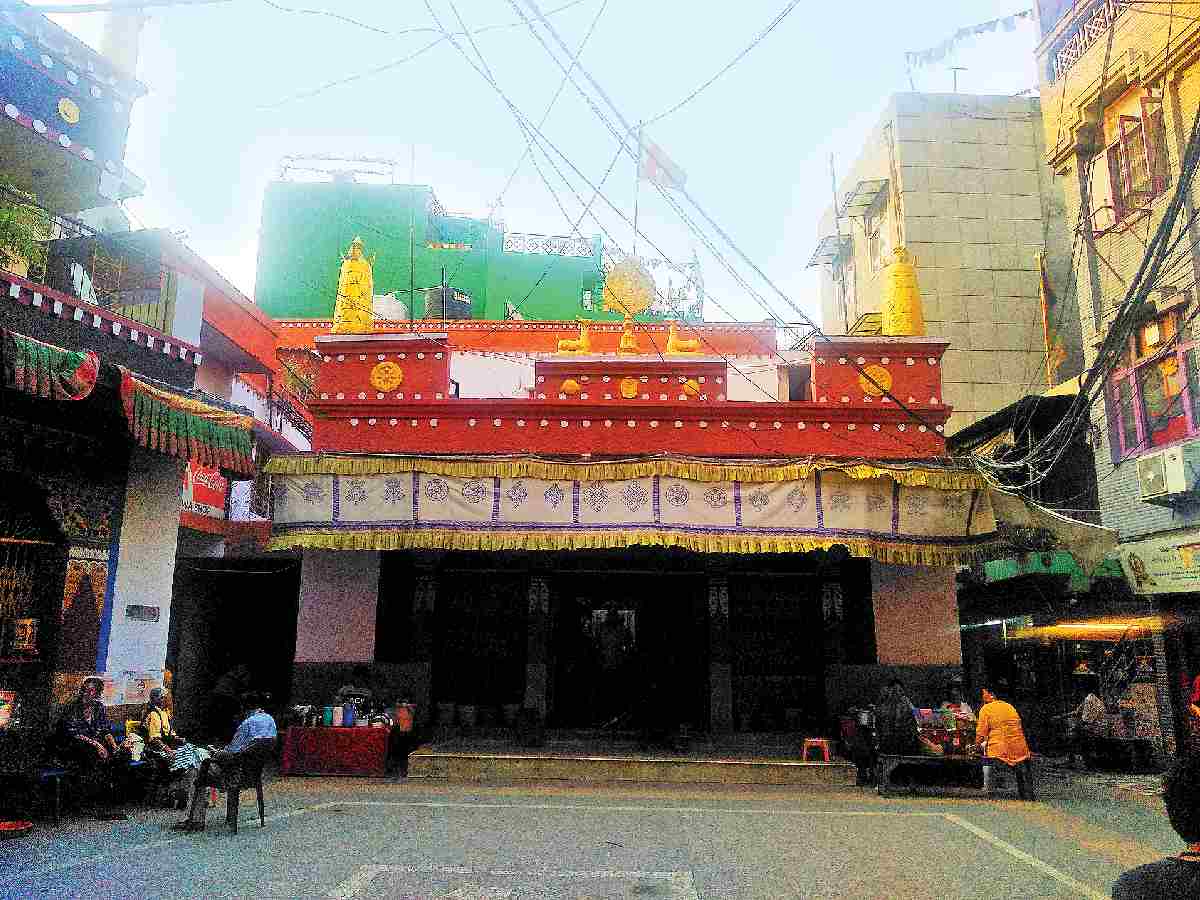
Delhi: Walking through the winding, thinly packed alleyways of Majnu Ka Tila, a sense of foreboding accompanies each hurried step. Once crowded with people moving constantly through its narrow passages, the market today feels noticeably subdued. The crowds remain, but the bustle has softened, and an air of economic uncertainty lingers.
For decades, this North Delhi enclave, affectionately known as ‘Little Tibet’, has functioned as a cultural hub for the city. A recent directive from the Delhi High Court targeting unauthorised structures, however, has placed its vibrant commercial life under threat.
On March 30, authorities including the Municipal Corporation of Delhi (MCD) and the Delhi Development Authority (DDA) must ensure that establishments found violating rules comply with regulations. Failure to do so could lead to demolition. While demolition has not yet begun, several businesses have already shut down and are searching for opportunities elsewhere.
Livelihoods at stake
The economic impact is being felt most acutely by workers and traders who have spent years building their lives in these narrow lanes. Restaurateurs and small vendors alike now face the prospect of losing their livelihoods.
“Relocating would mean starting from scratch,” said a worker, requesting anonymity. “We do not have the means to actually leave from here. Not just our livelihoods but our lives are based here. Even if a significant chunk of its restaurants survive, I do not think they will incorporate the staff who have been affected by the lost jobs.”
Small roadside eateries have also begun relocating. According to workers, several vendors have moved to areas along the road leading to Vishwavidyalaya Metro station.
“They were scared that they would be removed for encroachment because the MCD has been looking to remove roadside eateries for a long time,” said Tenzin, a worker at a local eatery. He added that many initially believed they would be spared because they were also residents of the area, but the prevailing uncertainty forced them to move.
Falling footfall
As authorities focus on addressing safety concerns and land-use violations, staff at some of the area’s well-known eateries say they are already witnessing the impact.
At Busan Korean Restaurant, customers had earlier been visiting to have a final meal before a possible closure. That surge, however, was short-lived.
“Barely anyone is coming here anymore. It might be because of the change in temperature,” a staff member said. “Honestly, it is not too bad but compared to earlier months, it’s frightening.”
Some businesses are attempting to relocate and urging customers to follow them on social media. Smaller operators, however, often lack the financial resources or digital reach to rebuild quickly.
A community under strain
The closure of shops in Majnu Ka Tila represents more than an economic setback; it also disrupts the social fabric of the area. For students and members of the Tibetan refugee community, the market has long served as a gathering space and cultural refuge.
For many, its disappearance would mean losing what they describe as a “home away from home”.
As viral social media reels capture what could be the final glimpses of the bustling market, shopkeepers who have already shuttered their establishments now face a struggle that goes beyond business — a fight for economic survival in a rapidly changing city.
Allegations of uneven enforcement
Some business owners believe that the crackdown has affected establishments that were complying with regulations.
“We are all refugees from Tibet, so we know how to fight it out,” said the manager of Boba Burst, a café known for its range of boba tea. “The thing is that the (Delhi) High Court had moved the order against illegal establishments which do not have emergency exits or are not following some part of fire safety guidelines. This is the right thing to do, but during the course of enforcement many other establishments which follow the law have also been targeted.”
Residents also say that rising instances of racism against people from North East India and individuals with Mongoloid features have made the situation even more difficult for the community.
Court intervention
In December, the Delhi High Court directed authorities to take “appropriate action” against a large number of commercial establishments in Majnu Ka Tila that were operating without sanctioned building plans.
Responding to a Public Interest Litigation (PIL), the court described the situation as a “life-threatening hazard”, noting that several structures lacked basic fire safety measures and structural stability.
The ruling particularly highlighted multi-storeyed buildings along the Yamuna riverbank that had been converted into commercial spaces, including cafes, bars, and restaurants.
The petitioners, Arnav Singh and another individual, raised concerns about buildings rising seven to eight storeys high, often with illegal basements and rooftop constructions. One of the key issues cited in the plea was the absence of proper vertical access, with some structures reportedly lacking staircases beyond the third or fourth floor, forcing visitors to rely solely on small lifts.
Given the heavy footfall from nearby university students and visitors, such conditions were deemed a serious safety risk.
Following the court’s observations, the Delhi Development Authority registered a suo motu complaint through its Special Task Force portal. The court directed the DDA, the Municipal Corporation of Delhi, and the Delhi Fire Services to examine the complaints and enforce the National Building Code urgently.
Authorities have been asked to conduct inspections and take necessary legal action, with the court indicating that the process should ideally be completed within three months.
A $780 million market built on pavements, where the pleasure of reading meets the price…
Supreme Court advocate Abhishek Pawar alleges women were denied washroom access for seven to eight…
Each day of closure costs shops in Khan Market and Connaught Place between Rs 60,000…
Delhi generates nearly 15,000 tonnes of waste daily, prompting the government to deploy 1,000 mechanical…
Delhi Police has issued an NOC for the Congress rally at Ramlila Maidan on November…
CJP chief Abhijeet Dipke received conditional bail following his arrest for participating in a Connaught…
