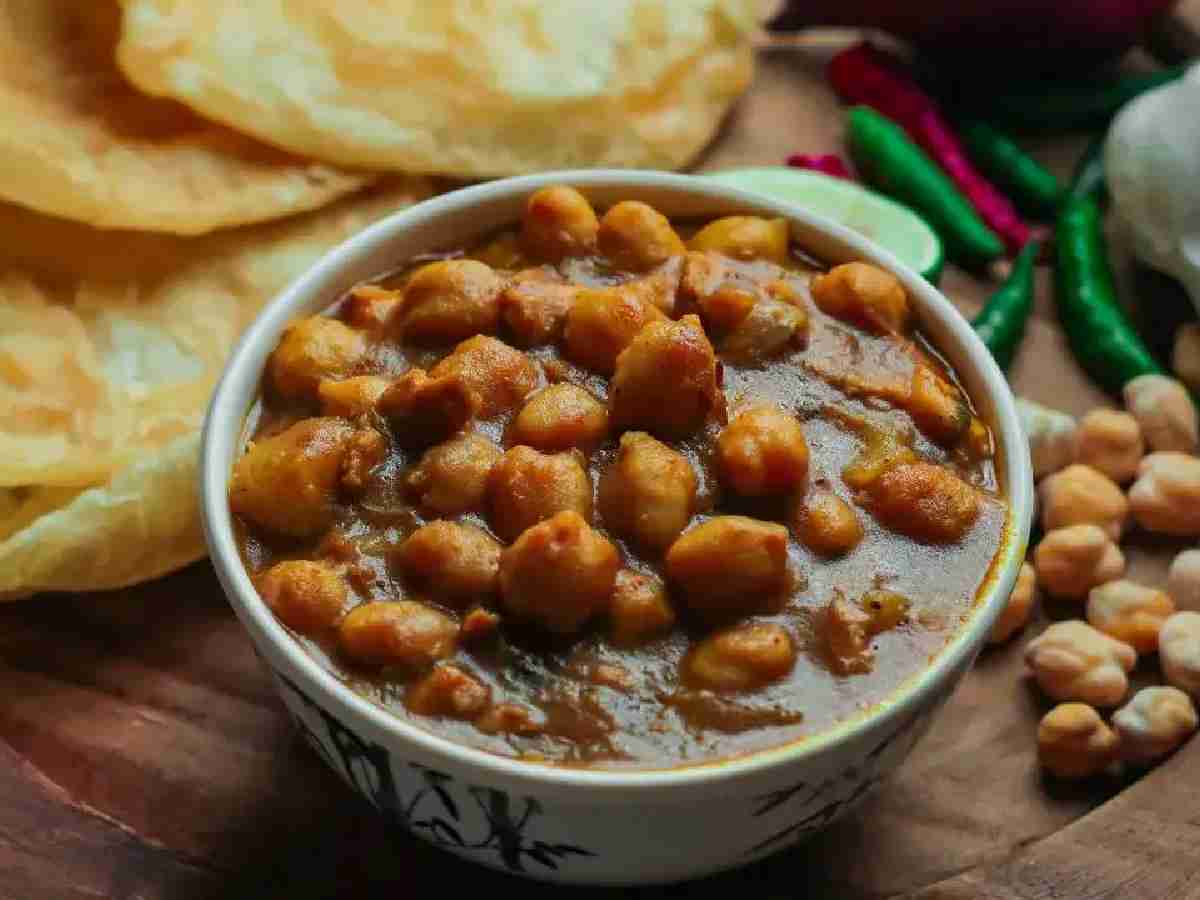
Even today, in Delhi, many remember that after 1947, Punjabis who settled here from across the border brought with them the flavours of rajma chawal, chhole bhature, and chhole kulche. Before Partition, Delhi was largely unfamiliar with these dishes. Refugees from Punjab’s Multan introduced the city to paneer-based fare such as paneer tikka, aloo paneer, and paneer tikki. It is undeniable that Punjabi refugees also popularised butter chicken, sarson ka saag, and makki ki roti.
Beyond food, post-Partition Delhi also embraced Punjabi women’s attire—the salwar kameez—which had been little known in the city before 1947.
The rise of chhole-based dishes
The Partition of India in 1947 triggered one of the largest migrations in history, reshaping the cultural and culinary landscape of many Indian cities, particularly Delhi. Among the many contributions of Punjabi refugees who settled in the Capital, chhole-based dishes—chhole kulche, Pindi chhole, and chhole bhature—emerged as iconic street foods, becoming integral to the city’s identity.
“Following the Partition, lakhs of Punjabis from West Pakistan migrated to Delhi, bringing with them their rich culinary traditions,” says veteran journalist KN Gupta. “Faced with the challenge of rebuilding their lives, many turned to food as a means of livelihood. Small eateries, roadside stalls, and dhabas sprouted across the city, offering affordable and delicious dishes rooted in Punjabi cuisine.”
Chhole, a spiced chickpea curry, was a natural choice—its ingredients were inexpensive, widely available, and versatile, making it ideal for feeding large numbers of people. Paired with kulche, bhature (deep-fried, fluffy breads), or served as Pindi chhole (a drier, spicier version), these dishes were quick to prepare and deeply satisfying.
From Karol Bagh to Lajpat Nagar
Chhole bhature soon became synonymous with indulgence. The contrast of spicy chhole with crispy, golden bhature was irresistible. Refugee-run eateries in Karol Bagh, Patel Nagar, and Lajpat Nagar perfected this combination, attracting crowds with its rich aroma and vibrant presentation.
“The dish’s popularity soared as it transcended class and community, enjoyed by everyone from street vendors to bureaucrats,” says Radhe Shyam Gupta, who runs an eatery in East Delhi. He adds that some vendors added paneer or aloo to the chhole, further widening its appeal.
Chhole kulche and Pindi chhole win hearts
Chhole kulche, with its tangy chickpea curry and soft, charred kulcha, became a favourite for its portability and affordability. Street vendors, often working from makeshift carts, served it to labourers, students, and office workers, catering to Delhi’s growing working-class population. Tamarind, green chutney, and chopped onions enhanced its punchy flavours, making it a go-to snack.
Similarly, Pindi chhole, named after Rawalpindi, offered a robust, spice-heavy preparation that paired well with kulcha or naan, appealing to Delhiites who craved hearty, soulful meals.
Culinary entrepreneurship and iconic eateries
Delhi’s evolving food culture—shaped by its growing cosmopolitanism—helped these dishes thrive. Punjabi refugees, with their entrepreneurial spirit, opened iconic establishments such as Kwality, Aao Ji Chhole Kulche, Sita Ram Chhole Bhature, and Sona Rupa, which popularised chhole-based dishes beyond street carts.
Also Read: From Nehru to now: Delhi’s Independence Day journey from simplicity to spectacle
“These eateries became cultural hubs where families and friends gathered, making chhole kulche and chhole bhature synonymous with Delhi’s social fabric,” says SK Gambhir, an educationist and tax consultant. He adds that his Multani community also introduced the city to paneer dishes.
From roadside stalls to modern food courts, chhole kulche, Pindi chhole, and chhole bhature remain favourites—symbols of the resilience and culinary influence of Punjabi refugees.
The birth of butter chicken at Moti Mahal
For those over fifty who have lived in Delhi long enough, passing by Moti Mahal restaurant in Daryaganj evokes memories of a bygone era. The establishment was opened by Kundanlal Gujral, Thakur Das, and Kundan Lal Jaggi—refugees from Peshawar who settled in Delhi after 1947.
The trio had worked together at a restaurant in Peshawar before the Partition. “They rented a small space in Daryaganj to sell vegetarian and non-vegetarian dishes,” says Rajan Dhawan, a chartered accountant and close relative of Kundanlal Gujral. Without refrigeration, leftover chicken from the night was simmered in a gravy of tomatoes, cream, and butter to keep it tender. A dash of garam masala transformed it into a new Punjabi delicacy—butter chicken. Today, the dish is served in top restaurants and hotels worldwide, but its origins trace back to Moti Mahal.
From Mukhe Da Dhaba to global fame
Moti Mahal also popularised dal makhani alongside butter chicken. Harish Khanna, a retired Hindi professor from Delhi University, recalls visiting the restaurant with his father and grandfather in the 1960s.
The story begins in undivided India, in Peshawar’s Gora Bazaar, where a small dhaba called Mukhe Da Dhaba was run by Sardar Mokha Singh Lamba. Kundanlal Gujral and his companions worked there, serving tandoori chicken so famous that both Hindus and Muslims travelled from afar to taste it.
After the Partition, Mokha Singh settled in Tilak Nagar but retired due to age. His protégés went on to open Moti Mahal—laying the foundation for one of Delhi’s most celebrated culinary landmarks.
Supreme Court advocate Abhishek Pawar alleges women were denied washroom access for seven to eight…
Each day of closure costs shops in Khan Market and Connaught Place between Rs 60,000…
Delhi generates nearly 15,000 tonnes of waste daily, prompting the government to deploy 1,000 mechanical…
Delhi Police has issued an NOC for the Congress rally at Ramlila Maidan on November…
CJP chief Abhijeet Dipke received conditional bail following his arrest for participating in a Connaught…
The DPCC has floated ₹104 crore tenders to test pilot pollution-control technologies across 40 key…

