For more than sixty years, 75-year-old Tej Prakash, who works at the historic Gauri Shankar Mandir in Chandni Chowk facing the Red Fort, has closely observed the festive mood that builds up about a week before Independence Day. The tricolours appear in shopfronts and at traffic lights, while the entire Red Fort area is spruced up for the special day.
He admits the event is no longer a modest affair. “It has seen many changes over the years,” he says.
Dr RK Gupta, who used to visit Delhi from Rishikesh with his family to watch the celebrations in the 1970s through the 1990s, observes: “While the core traditions—flag-hoisting, the Prime Minister’s address, and cultural programmes—remain, the scale, security, and public participation have grown exponentially. Technological advancements have made celebrations more accessible, while heightened security reflects modern challenges.”
Simplicity and symbolism (1947–1960s)
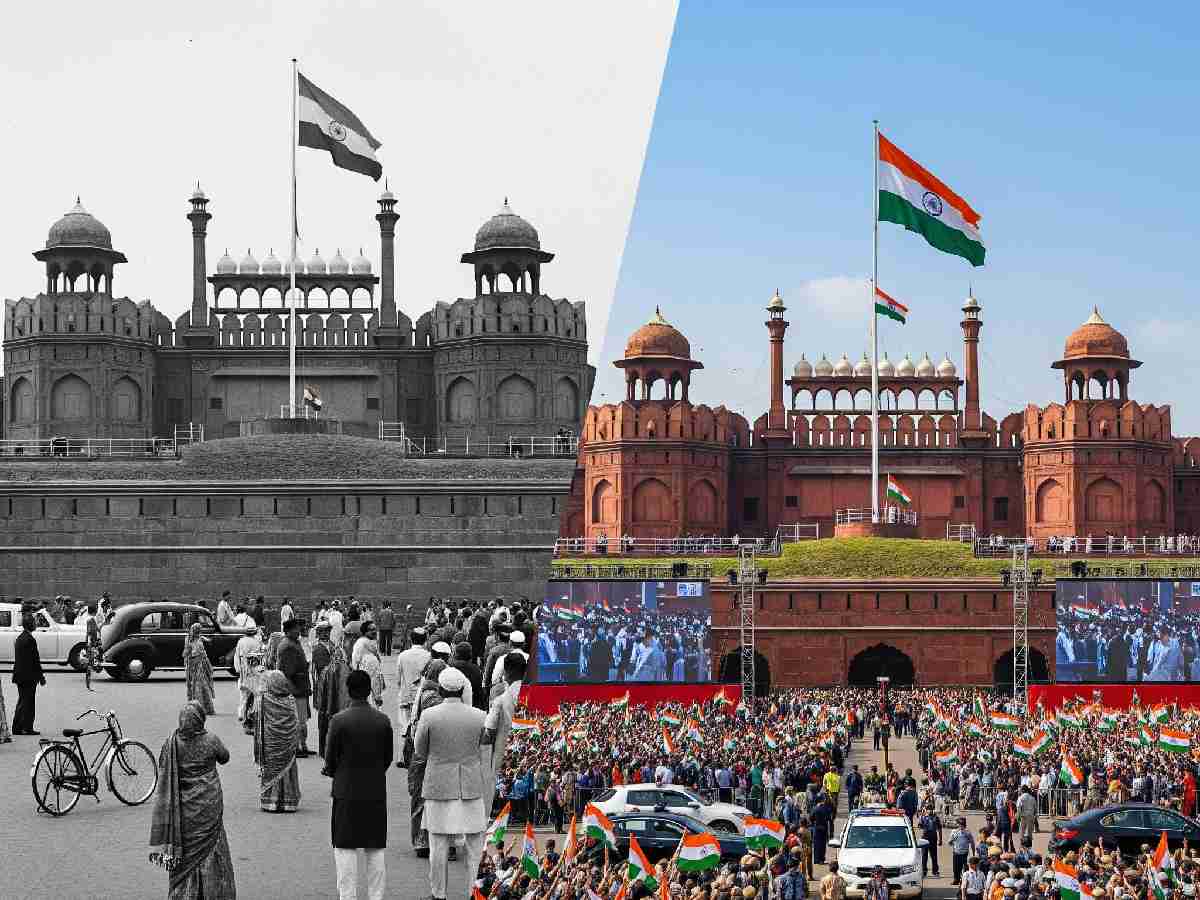
In 1947, Delhi’s first Independence Day marked a historic milestone. On August 16, Jawaharlal Nehru hoisted the tricolour at the Red Fort, addressing a nation emerging from colonial rule and Partition. The event was modest—flag-hoisting, the national anthem, and speeches emphasising unity and reconstruction. Celebrations were largely official, with limited public participation due to logistical constraints and the sombre backdrop of Partition.
The Red Fort, with its Mughal grandeur, was chosen for its historical resonance—a tradition that continues today.
“I vividly remember in the 1950s and 1960s, celebrations retained a formal tone. The Prime Minister’s address focused on nation-building, reflecting India’s post-independence challenges like poverty and illiteracy. Public participation was minimal, with events centred on government-organised ceremonies. Schoolchildren and the armed forces took part in parades, and cultural programmes featured patriotic songs and dances,” recalls veteran journalist Trilok Deep.
During those years, many important central government buildings were illuminated on Independence Day.
Growing scale and national pride (1970s–1980s)
By the 1970s, as India gained confidence as a democratic republic, the celebrations expanded in scale. The Red Fort ceremony became more structured, with the Prime Minister’s speech broadcast nationally on radio and later television.
“The 1980s saw increased public engagement. The government encouraged community participation through flag-hoisting ceremonies in schools, colleges, and neighbourhoods. Iconic landmarks like India Gate and Rashtrapati Bhavan were illuminated in tricolour hues, creating a festive atmosphere,” says Deep.
The “Independence Day Fair” at the Red Fort, featuring state exhibitions and cultural performances, became a highlight. Crowds grew larger, though security remained relatively relaxed compared to later decades, reflecting a less complex threat environment.
Modernisation and inclusivity (1990s–2000s)
The 1990s ushered in modernisation, spurred by economic liberalisation and technological advances. Television coverage of the Red Fort ceremony reached millions, turning it into a national spectacle. The Prime Minister’s speech began by addressing India’s global aspirations, while cultural programmes showcased a wider variety of regional performances—from Bharatanatyam to folk dances—emphasising cultural unity.
Public participation surged through initiatives like the “Har Ghar Tiranga” campaign, encouraging citizens to hoist flags at home. Educational institutions organised quizzes, essay competitions, and patriotic performances, fostering civic engagement among youth.
By the 2000s, the Red Fort began hosting special guests such as freedom fighters and their families, honouring their sacrifices. However, rising global and regional security threats prompted stricter measures, including barricades, police patrols, and basic CCTV surveillance—especially around the Red Fort and central Delhi.
Security and technology in the 21st century (2010s–2020s)
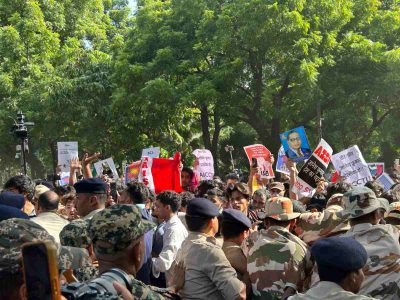
The 2010s brought heightened security to the forefront. On Independence Day in 2025, over 10,000 personnel—including police, paramilitary forces, and snipers—were deployed. AI-powered facial recognition cameras, drone bans, and airspace restrictions from August 2 to 16 underscored the scale of vigilance.
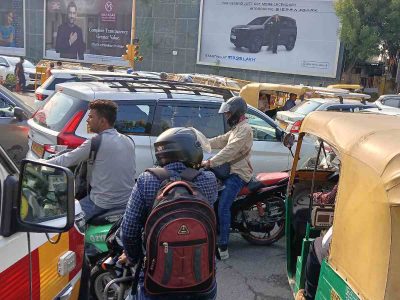
Incidents like a stray kite landing near the podium in 2017 led to preventive measures such as “kite catchers.” Traffic restrictions intensified, with road closures and diversions in central Delhi—causing inconvenience for commuters but ensuring safety.
Technology also transformed participation. The Prime Minister’s speech is now live-streamed on platforms like MyGov and the NaMo App, with citizens invited to share inputs. The 2025 theme, Honouring Freedom, Inspiring the Future, promoted citizen engagement through competitions on topics such as women’s contributions and national security. Social media monitoring was deployed to curb misinformation.
Also Read: Remembering the Partition’s scars on the eve of Independence Day
Inclusivity grew as Panchayat representatives were invited as special guests in 2025, recognising grassroots democracy. The “Jan Bhagidari” initiative, expanded in recent years, welcomed diverse groups—youth achievers, tribal representatives, and farmers. In 2022, the “Har Haath Tiranga” campaign saw 25 lakh flags distributed across Delhi.
Faith and tradition endure
Despite the changing nature of Delhi’s Independence Day celebrations, certain traditions endure. Visiting temples, mosques, and other places of worship on August 15 remains popular.
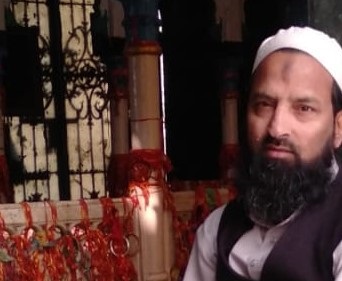
“We organise langar on August 15 every year, and devotees throng here to pray for the peace and prosperity of India,” says Mohammad Qayyum Abbasi of the Dargah Matka Pir.
Hanuman Mandir in Connaught Place also witnesses a heavy rush of devotees. “My father used to tell me that Hanuman Mandir organised a special puja on August 15, 1947. That tradition is still going strong,” says Mahant Suresh Sharma, the temple’s priest.
And as ever, the skies over Delhi will fill with vibrant colours this Independence Day, as kite-flying continues to be a cherished symbol of freedom.