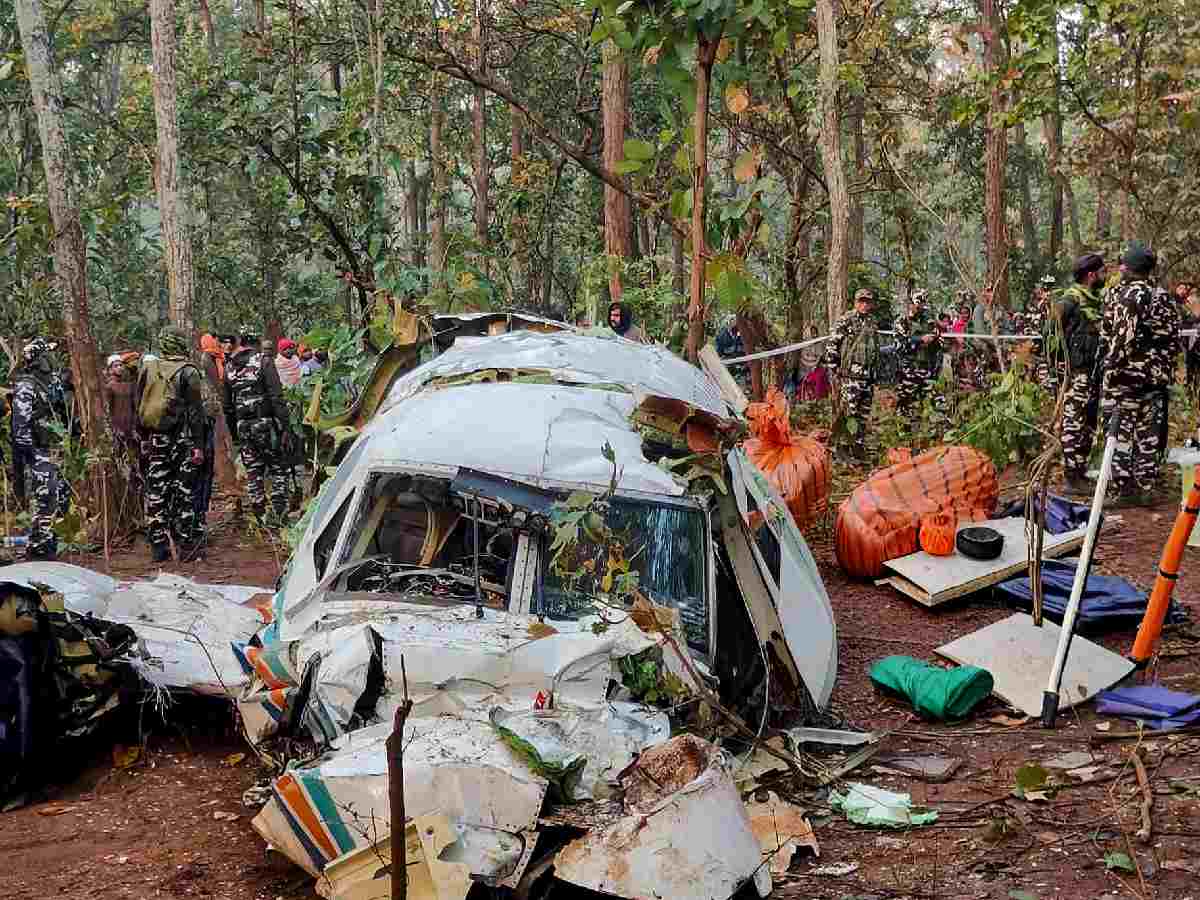
Seven people were killed on February 23, Monday night, when an air ambulance crashed. A Redbird Airways Beechcraft C90 (VT-AJV), operating as an air ambulance from Ranchi to Delhi, crashed near Simaria in Jharkhand’s Chatra district. According to the Directorate General of Civil Aviation (DGCA), the aircraft had requested a flight path deviation due to adverse weather conditions shortly after establishing contact with Kolkata. Communication and radar contact were subsequently lost at 7:34 PM.
Local officials suggested that a thunderstorm may have been the primary cause of the accident, though a formal investigation is currently underway. The deceased comprised two crew members, a patient, and accompanying family members. The incident has once again drawn attention to regulatory oversight of non-scheduled flights and air ambulance operations.
Pattern of incidents over the years
The crash comes amid continuing concerns over the number of aviation incidents recorded in India in recent years. While overall figures remain relatively low, data from the Aircraft Accident Investigation Bureau (AAIB) indicates persistent systemic issues.
According to the AAIB, in 2025 the country recorded eight accidents requiring investigation, along with five incidents or serious incidents. Comparable patterns were observed in previous years, with six accidents reported in 2024 and 10 in 2023. The number of incidents in those years stood at eight and five respectively.
An earlier spike was recorded in 2019, when 27 incidents and 10 accidents were reported nationwide, taking the cumulative total to 37 — the highest in the past decade.
Data from the DGCA’s official portal on incident reports also indicates that many events have been concentrated in the national capital. Of the 158 incidents and serious incidents recorded since 2007, 29 occurred in Delhi, followed by 24 at Mumbai Airport.
Recent near-misses add to concerns
Though such incidents are not routine, recent events suggest continuing operational vulnerabilities.
On February 24, hours after the Jharkhand crash, a Delhi–Leh SpiceJet flight (SG121) experienced an engine failure shortly after departure at 6:08 am. The pilot issued a “Mayday” call and initiated an immediate return to Delhi. Following standard emergency procedures, the airport was placed on full alert, and the aircraft landed safely at 6:49 AM.
Also Read: Bird-strike incidents surge at Indian airports amid wider safety concerns
A SpiceJet spokesperson confirmed that all passengers disembarked normally without injury and stated that no fire warnings were triggered in the cockpit during the incident.
In January, an Air India Airbus A350 operating from Delhi to New York was forced to return to Indira Gandhi International Airport shortly after take-off due to the sudden closure of Iranian airspace. After landing safely, the aircraft was taxiing towards its parking bay in dense fog and marginal visibility when its right-hand engine ingested a cargo container that had fallen onto the taxiway.
A preliminary investigation by the DGCA found that the container had toppled from a ground-handling tug while crossing an intersection. Although the tug operator removed remaining equipment from the aircraft’s path, the fallen container remained on the taxiway and was sucked into the engine, causing substantial damage.
No injuries were reported among the more than 250 passengers and crew on board, but the aircraft was grounded for extensive repairs, potentially disrupting Air India’s long-haul A350 operations.
Runway confusion incident at Delhi airport
Another serious incident occurred on November 23, 2025, when an accident was narrowly avoided at Indira Gandhi International Airport.
An Ariana Afghan Airlines Airbus A310, operating a non-scheduled commercial flight from Kabul, landed on an unassigned runway despite being cleared by the Tower Controller to land on Runway 29L. Instead, the aircraft touched down on the parallel Runway 29R.
At the time, Runway 29R was being used exclusively for departures, and its approach lights, Instrument Landing System (ILS), and Precision Approach Path Indicators (PAPI) were switched off.
The flight crew later reported losing their ILS signal about four nautical miles from touchdown. Due to poor visibility and haze, they were unable to distinguish between the two parallel runways, which are separated by only 360 metres.
Although the aircraft landed safely with no injuries or damage, Cockpit Voice Recorder (CVR) data was lost as it was overwritten during the aircraft’s subsequent flight back to Kabul later that day.
Following the incident, the DGCA issued an interim safety recommendation asking all international airports to equip air traffic control units with video and background communication recording systems to assist future investigations.
Staffing shortages within DGCA
An RTI reply accessed by the media highlighted administrative and staffing concerns within the aviation regulator.
According to the DGCA, the Central Public Information Officer (CPIO) concerned handles only the management of Group ‘A’ Technical Officers and did not possess the operational records requested. The application has been forwarded to other departments.
Despite the absence of operational details, the reply revealed significant staffing shortages in key safety divisions.
The Airworthiness Wing, responsible for maintenance standards, is operating with a 44% vacancy rate, with only 174 of its 310 sanctioned posts filled.
The Air Safety Wing, which conducts audits, has over 25% vacancies, with 30 of its 116 posts unfilled. The Surveillance & Enforcement Division, meanwhile, has seven active personnel despite having zero officially sanctioned posts.
Redbird Airways fleet and ongoing investigation
According to the DGCA, Delhi-based Redbird Airways currently operates a fleet of six aircraft, including the one involved in the crash. It remains unclear whether the aircraft’s black box has been recovered.
The incident marks the second major aviation crash in less than a month. Earlier, former Deputy Chief Minister of Maharashtra Ajit Pawar died when his aircraft crashed in Baramati. Four others — including one passenger and three crew members — were also killed.