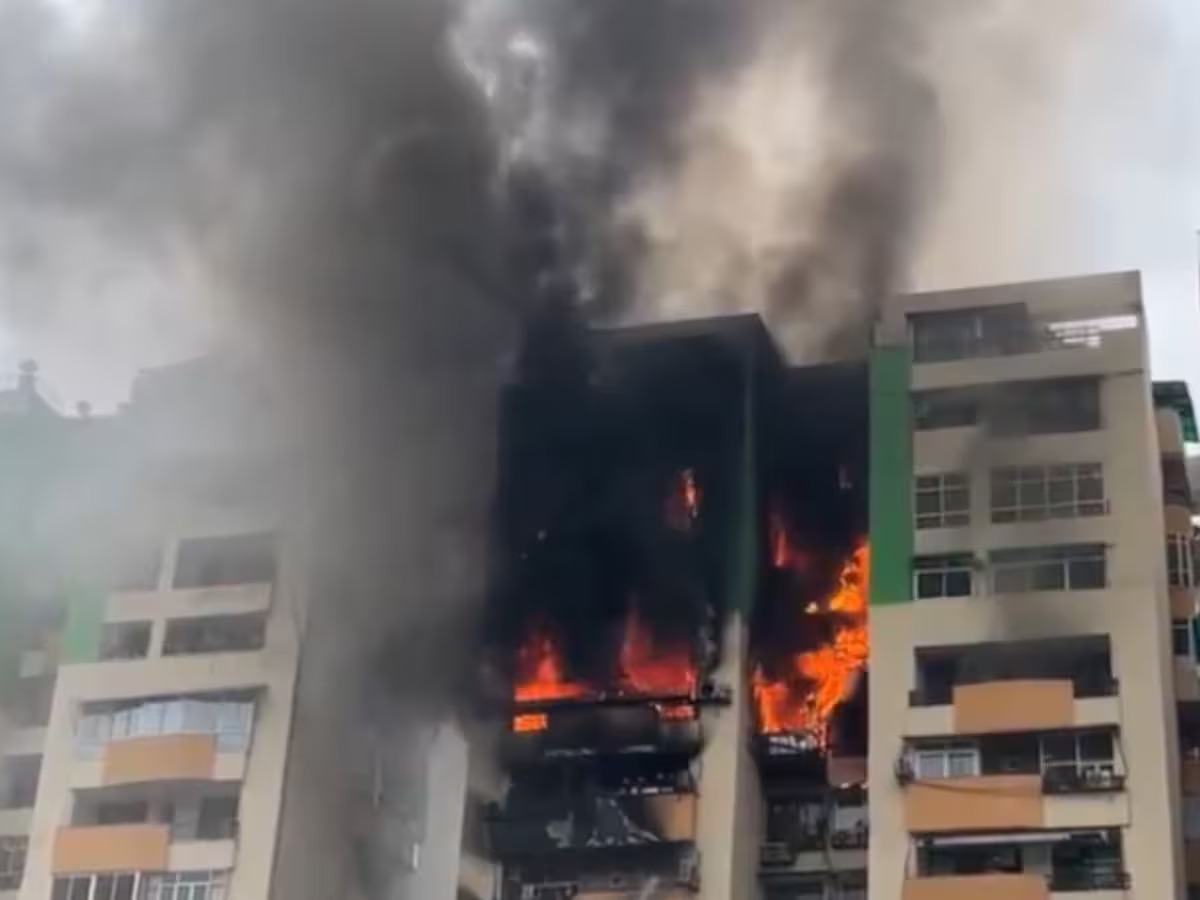
Fire-related emergencies in the national capital surged sharply this April, rising by 73% compared to March. Official data reveals that 32 people lost their lives in fire accidents between January and April this year.
According to the Delhi Fire Services’ ‘Call Summary 2026’, as many as 2,663 fire-related calls were made in April alone. This represents a steep increase from 1,538 calls received in March and 1,096 in February. January recorded 1,396 fire calls, bringing the total to 6,693 for the first four months of the year.
12,000 calls
Overall emergency calls, which include fire incidents, animal rescues, and other forms of assistance, also peaked in April at 3,914. The cumulative number of calls attended by the DFS stood at 12,008 from January to April.
Officials suggested that the spike in April could be linked to rising temperatures and an increase in fires involving rubbish and dry waste. The data showed that incidents involving such fires rose from 441 in January to 725 in April, indicating a steady upward trend.
Regarding casualties, March recorded the highest number of deaths due to fire incidents, with 15, followed by six in both January and February, and five in April.
In May, at least 10 people have died so far. On May 4, a devastating fire tore through a residential building in Vivek Vihar, East Delhi, killing nine people from two families, including a toddler. It is suspected that an air-conditioning unit explosion triggered the blaze.
428 deaths
The total death count across all emergency categories stood at 428 during this period. Despite the rising number of fire-related incidents, the prompt response of personnel helped save 837 lives, with April alone accounting for 261 rescues—the highest monthly figure this year.
Moreover, according to data collated from the DFS’s online fire report, 430 emergency calls to the department were recorded in Janakpuri, while Jahangirpuri fire station followed closely with 404 calls from January 1 to May 4, 2026. These were mostly recorded in residential areas, with short circuits and garbage fires leading the trend.
Hoax bomb threats
However, one anomaly stood out in the form of two emergency calls recorded from the Delhi Secretariat. While one was a hoax call, the other related to a bush fire.
Earlier in 2026, the Delhi Secretariat had also received a hoax bomb threat in February.
Apart from the Secretariat, the Delhi Assembly, the Red Fort, and two schools in the national capital also received bomb threats via email.
These messages had reportedly originated from a group calling itself the Khalistan National Army. In a formal letter to the Delhi Police Commissioner, the Speaker Vijender Gupta’s office requested a thorough investigation to trace the source of the emails, citing the seriousness of the warnings directed at the Assembly and the Secretariat.
The emails included the slogan “Delhi banega Khalistan” and warned of imminent explosions at the Delhi Army School, the Red Fort, and across the Metro network.
More concerning, however, is the pattern in which these calls were received. To put matters into perspective, Janakpuri and Jahangirpuri recorded an average of three calls per day, while the other top five fire stations recorded an average of two calls per day.
Concerning trend
In April, another concerning trend emerged with a sharp rise in the number of vehicles going up in flames. On multiple occasions, two-wheelers and e-rickshaws were involved in such incidents. When one vehicle caught fire, it often spread to nearby vehicles.
Earlier in 2025, Janakpuri was designated a vulnerable location by the DFS, particularly due to a high concentration of congested residential areas. Officials also point out that the Janakpuri Institutional Area has emerged as a hub of incidents. Many educational and government institutions there operate with outdated safety standards. Hostels located on their fringes have similarly been flagged as fire hazards.
Buses in flames
Last year in June, along Pankha Road in Janakpuri, two buses were engulfed in a sudden fire. No casualties were reported. Fires caused by malfunctioning air conditioners have also become a regular occurrence in the area. While many point to rising temperatures, the factors are more complex.
Also Read: Lack of experts stalls Delhi fire safety audit
“Heat alone is not the only factor, but it is certainly a major contributing one,” a DFS official said, adding that as temperatures rise, the load on electrical infrastructure increases significantly.
Air-conditioning units run continuously, wiring heats up, and transformers operate under stress, increasing the risk of short circuits and fire incidents, the official explained.
The official further noted that the weather is extremely dry at this time, which compounds vulnerability and makes even a small spark dangerous.
Once a fire starts, it tends to spread faster than usual under such conditions, he said.
Seasonal rise
“We observe a seasonal rise in fire incidents during summer months every year, but this time the increase has been sharper,” the official said. “The combination of sustained high temperatures, dry winds, and increased power usage is making the situation more challenging.”
“Our teams are on alert and responding to a significantly higher volume of calls daily,” the official added.
The spike in fire calls comes as Delhi continues to reel under high temperatures, ranging from 40°C to 42°C in recent days.