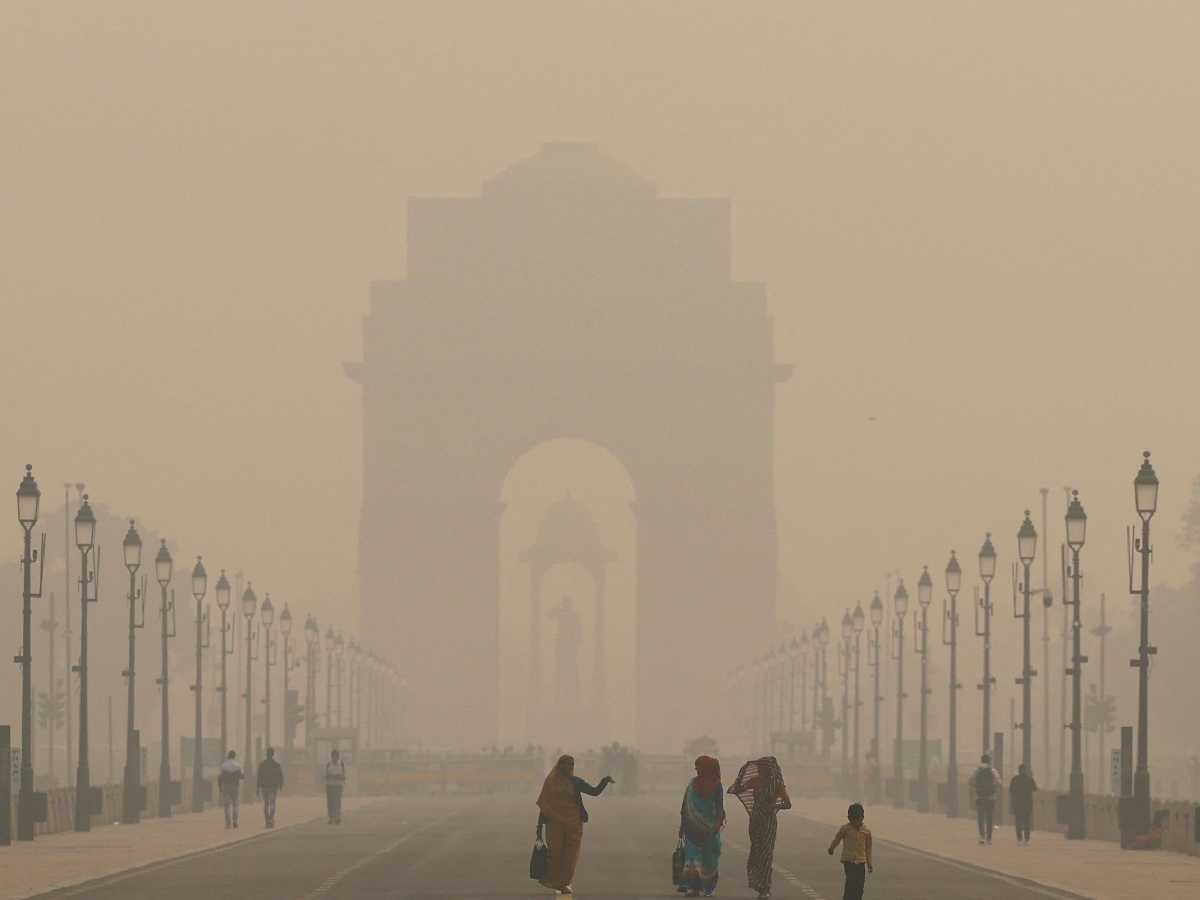
The Union Budget 2026–27, announced on February 1, has reduced the allocation for pollution control at a time when toxic air quality across Delhi-NCR continues to pose a public health crisis. The Centre has earmarked Rs 1,091 crore for the 2026–27 financial year, a decrease of Rs 209 crore from the previous year’s revised estimate of Rs 1,300 crore.
The funding is directed towards the Control of Pollution scheme, which supports pollution control boards and the National Clean Air Programme (NCAP), the flagship initiative that monitors 82 cities failing to meet prescribed air quality standards.
Delhi-NCR’s worsening air record
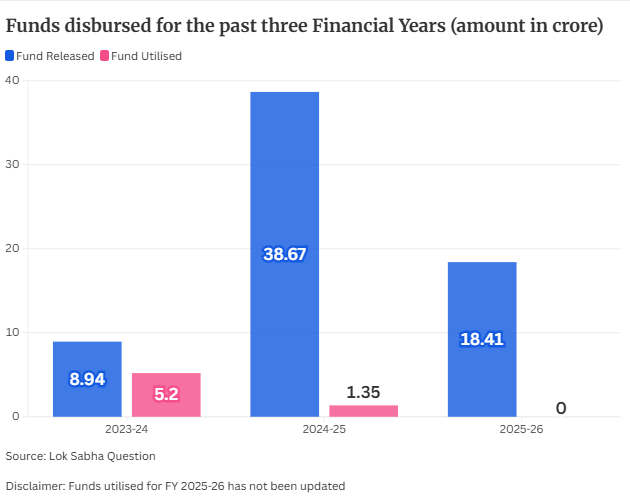
Even as pollution levels remain persistently high, underlying structural factors are rarely addressed. In 2025, Delhi once again recorded zero good air days. According to a Lok Sabha reply by Minister of State for Environment, Forest and Climate Change Kirti Vardhan Singh, the capital saw a decline in the number of severe air days, which stood at eight in 2025, compared to 17 in 2024. However, like the previous year, 2024 had also recorded no good air days.
More troubling are the figures for moderate air quality days. In 2025, Delhi recorded 121 moderate air days, while 2024 saw 142 such days. Despite this, critics point to what they describe as a nonchalant response from both the Centre and the State.
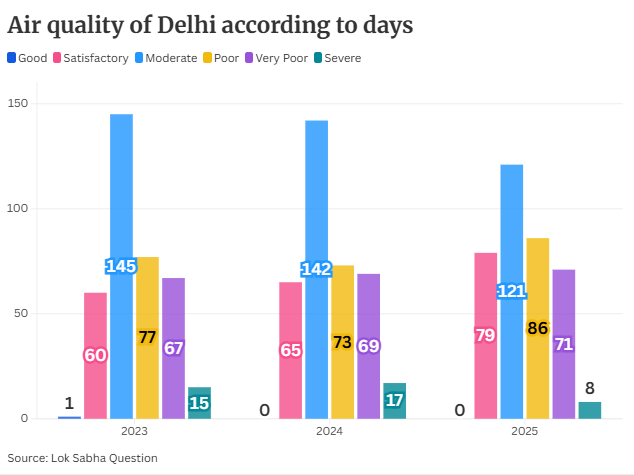
By 2024–25, total funds released for air pollution control in Delhi under the NCAP stood at Rs 81.36 crore. This amount was disbursed over several years, beginning with Rs 11.25 crore in 2021–22, followed by Rs 22.50 crore in 2022–23, Rs 8.94 crore in 2023–24, and Rs 38.67 crore in 2024–25. An additional Rs 18.41 crore has been earmarked for Delhi for 2025–26.
In terms of utilisation, Delhi has spent Rs 14.10 crore from the funds released under the NCAP. Of this, Rs 7.55 crore was utilised in 2022–23, Rs 5.20 crore in 2023–24, and Rs 1.35 crore in 2024–25. No funds have been utilised so far in 2025–26.
Sources of pollution
Scientific assessments indicate that Delhi’s air pollution stems from a mix of sources. The transport sector remains a major contributor, accounting for 19–24% of pollution during winter and 18–21% in the summer months.
Seasonal variations play a significant role. During summer, dust from roads, soil, and construction sites contributes between 25% and 31% of particulate pollution. In winter, biomass burning — including municipal solid waste, residential heating, and crop residue burning — accounts for up to 23%.
Industrial emissions add between 8% and 15%, depending on the season. Secondary particulates formed from gaseous emissions across sectors remain a persistent issue, contributing around 24–28% of pollution in winter.
Funds cut: Government response
To counter rising pollution levels, the Commission for Air Quality Management (CAQM), which coordinates mitigation efforts across state boundaries, has rolled out multiple measures. These include the Graded Response Action Plan (GRAP), an emergency framework that triggers restrictions based on the severity of the air quality index.
The government has also inducted more than 5,300 clean-fuel buses into public transport fleets, including 3,535 electric buses. Vehicle entry norms in the capital have been tightened, allowing only those meeting higher emission standards or running on compressed natural gas and electricity.
Industrial units across the region have been shifted to approved cleaner fuels, with thousands of inspections conducted to ensure compliance. These measures have resulted in the closure of 792 industrial units that failed to meet emission norms.
Enforcement in 2025
During November and December 2025, enforcement agencies issued more than 1.56 lakh challans to motorists for driving without valid Pollution Under Control (PUC) certificates, according to official data.
The data shows that action against vehicles lacking valid PUC certificates has more than tripled over the past three years. Challans rose from 2.32 lakh in 2023 to 5.98 lakh in 2024, and further increased to 8.22 lakh in 2025 up to December 15.
Of these, 1,56,993 challans — each carrying a fine of Rs 10,000 — were issued during the GRAP period between October 14 and December 15. This constituted a significant share of the total issued in 2025.
Violations related to construction and demolition waste were also targeted. During the GRAP period, 545 challans were issued for transporting debris without proper covering, an offence that attracts a fine of Rs 20,000.
Stubble burning and regional measures
Financial and technological assistance has been extended to neighbouring states to address paddy stubble burning, a key contributor to post-monsoon pollution. Since 2018, over Rs 4,000 crore has been released to Punjab, Haryana, Uttar Pradesh, and Delhi to subsidise machinery for crop residue management.
Also Read: Delhi MPs recommend works, but little gets built nearly two years into Lok Sabha term
According to official assessments, fire incidents in Punjab and Haryana together declined by around 90% in 2025 compared to 2022 levels. Alongside these measures, the government has highlighted long-term interventions such as expanding green cover, improving waste collection, and installing real-time monitoring systems in polluting industries.
Spending on other environmental schemes
The National Mission for a Green India has been allocated Rs 212.50 crore, a sharp increase from last year’s revised allocation of Rs 95.7 crore, though still below earlier targets. Funding for Project Tiger and Project Elephant remains unchanged at Rs 290 crore, while allocations for wildlife habitat initiatives show only marginal growth.
This cautious fiscal approach comes amid intensifying climate pressures. India has witnessed a rise in extreme weather events, including floods, heatwaves, and cyclones, leading to loss of life, economic damage, and increased strain on local response systems.
Experts argue that meeting India’s commitments on forest expansion, land restoration, and climate resilience will require substantially higher investment. Current budgetary increases, they say, largely compensate for earlier cuts rather than creating new momentum for environmental action.