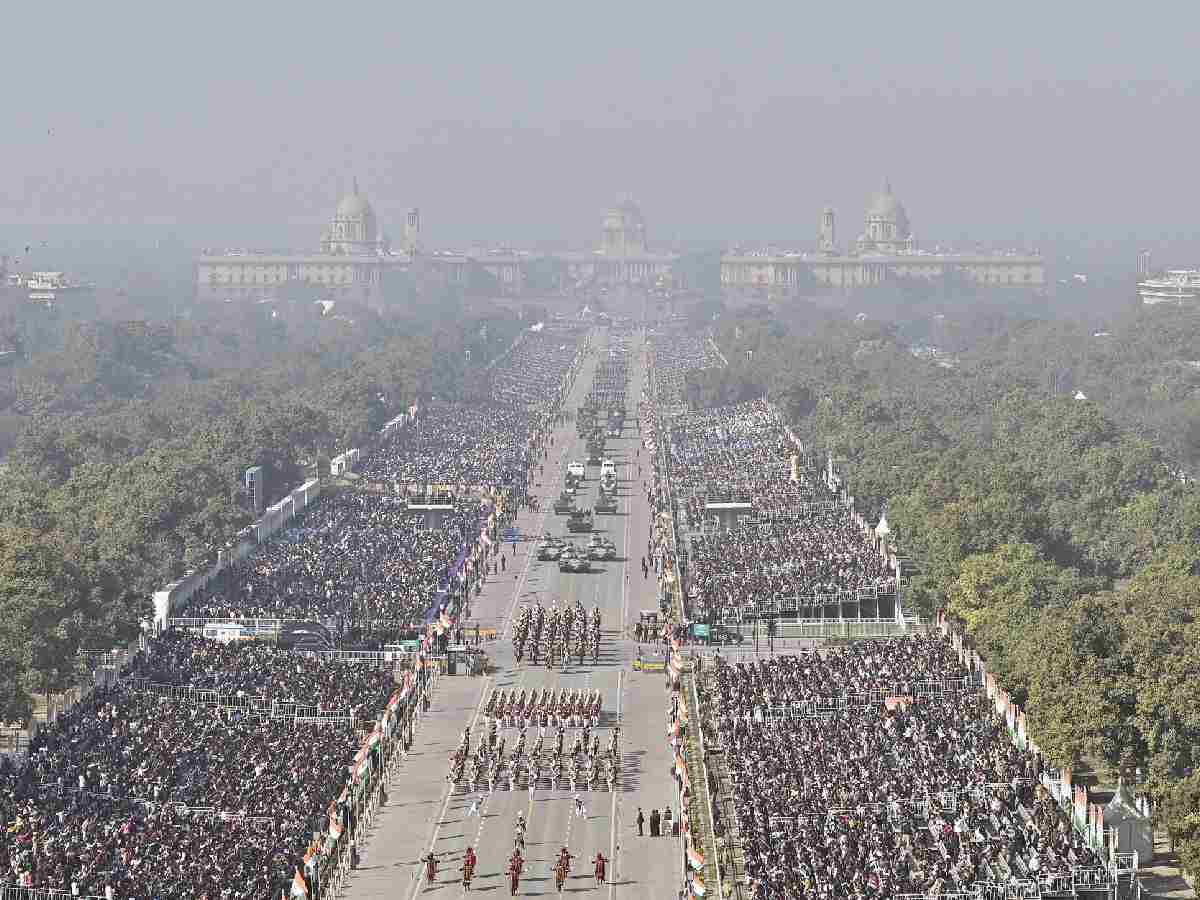
Kartavya Path
As India prepares to celebrate its 77th Republic Day, conversations naturally turn to Kartavya Path, the grand ceremonial boulevard at the very heart of the national capital. This iconic avenue is not merely a road; it is the symbolic and functional centre of India’s Republic Day celebrations. Every year on 26 January, the Republic Day Parade passes through Kartavya Path, presenting a majestic display of India’s military strength, cultural diversity, and democratic spirit to the nation.
Kartavya Path stretches from Rashtrapati Bhavan to India Gate, covering nearly 3 kilometres. Earlier known as Kingsway during British rule and later renamed Rajpath after Independence, it was renamed Kartavya Path in 2022 as part of the Central Vista Redevelopment Project. The renaming marked a shift in national thinking: from “Raj” (rule) to “Kartavya” (duty), underlining the values of responsibility, service, and collective national commitment.
At the centre of Kartavya Path lies Vijay Chowk, the most significant point of the Republic Day Parade. This is where the President of India, the Supreme Commander of the Armed Forces, takes position to receive the salute. The ceremonial importance of this space makes it the focal point of the entire parade, watched by dignitaries, foreign guests, and millions of viewers across the country.
Symbol of democracy
The history of Kartavya Path dates back to the British colonial period. In 1911, the British government decided to shift India’s capital from Kolkata to Delhi, citing Delhi’s long historical and political significance. Renowned architects such as Edwin Lutyens and Herbert Baker designed New Delhi as an imperial capital, with Kingsway as its central axis. After India gained Independence, the road was renamed Rajpath, symbolising the people’s sovereign governance.
The transformation to Kartavya Path in 2022 gave the avenue a renewed ideological meaning. It now represents the idea that power in a democracy flows from duty — duty towards the nation, the Constitution, and fellow citizens.
Architecturally, Kartavya Path is unique. Oriented east–west, it is flanked by expansive green lawns, water channels, and rows of trees that enhance its grandeur. Descending from Raisina Hill, it passes through Vijay Chowk, with the iconic North Block and South Block standing on either side, housing key government ministries. This carefully planned layout creates a visual harmony that reflects both authority and openness.
The all-important road
The importance of Kartavya Path in Republic Day celebrations is unmatched. The first Republic Day Parade on 26 January 1950 was held at the National Stadium (now the Major Dhyan Chand National Stadium). From 1951 onwards, the parade was shifted to Kartavya Path, where it has been held ever since.
What is less known, however, is the story of the man behind the construction of New Delhi’s wide and durable roads. While the architects of Delhi’s grand buildings are often remembered, few recall Sardar Narayan Singh, the contractor under whose supervision labourers from Rajasthan and Uttar Pradesh built Kartavya Path and many other broad avenues of the capital.
At the time New Delhi’s construction began, the administration faced a significant question: who would build roads capable of matching the city’s monumental scale? Sardar Narayan Singh stepped forward and proved his capability. Using the best techniques available at the time — layering heavy stones, gravel, and charcoal beneath the surface — he helped create roads that were considered unmatched in durability.
In the last decade and a half, Kartavya Path has been rebuilt using modern bituminous technology. This method is both cost-effective and highly resilient. During the Republic Day Parade, horses, elephants, motorcycles, military trucks, and even massive battle tanks roll across the road. Despite this enormous load, Kartavya Path remains largely undamaged — something that was not possible earlier. Before the adoption of bituminous technology, tank movement often caused serious damage, requiring the road to be reconstructed after each parade.
A musical farewell
Kartavya Path is not only central to the Republic Day Parade but also to its ceremonial conclusion. On January 29, the Beating Retreat ceremony is held here, marking the formal end of Republic Day celebrations. Bands from the Indian Army, Navy, and Air Force perform soul-stirring patriotic tunes, creating an atmosphere of pride and emotion.
Also Read: Jhankis of unity: how Republic Day tableaux reflect India’s soul
Kartavya Path is far more than a ceremonial boulevard. It is a living symbol of India’s journey — from colonial rule to constitutional democracy, from “Raj” to “Kartavya.” Every Republic Day, as millions gather and millions more watch from afar, Kartavya Path once again becomes the stage upon which the spirit of the Indian Republic proudly marches forward.
Elected to the Delhi Golf Club general committee, Mansher Singh says he wants to build…
A $780 million market built on pavements, where the pleasure of reading meets the price…
Supreme Court advocate Abhishek Pawar alleges women were denied washroom access for seven to eight…
Each day of closure costs shops in Khan Market and Connaught Place between Rs 60,000…
Delhi generates nearly 15,000 tonnes of waste daily, prompting the government to deploy 1,000 mechanical…
Delhi Police has issued an NOC for the Congress rally at Ramlila Maidan on November…
