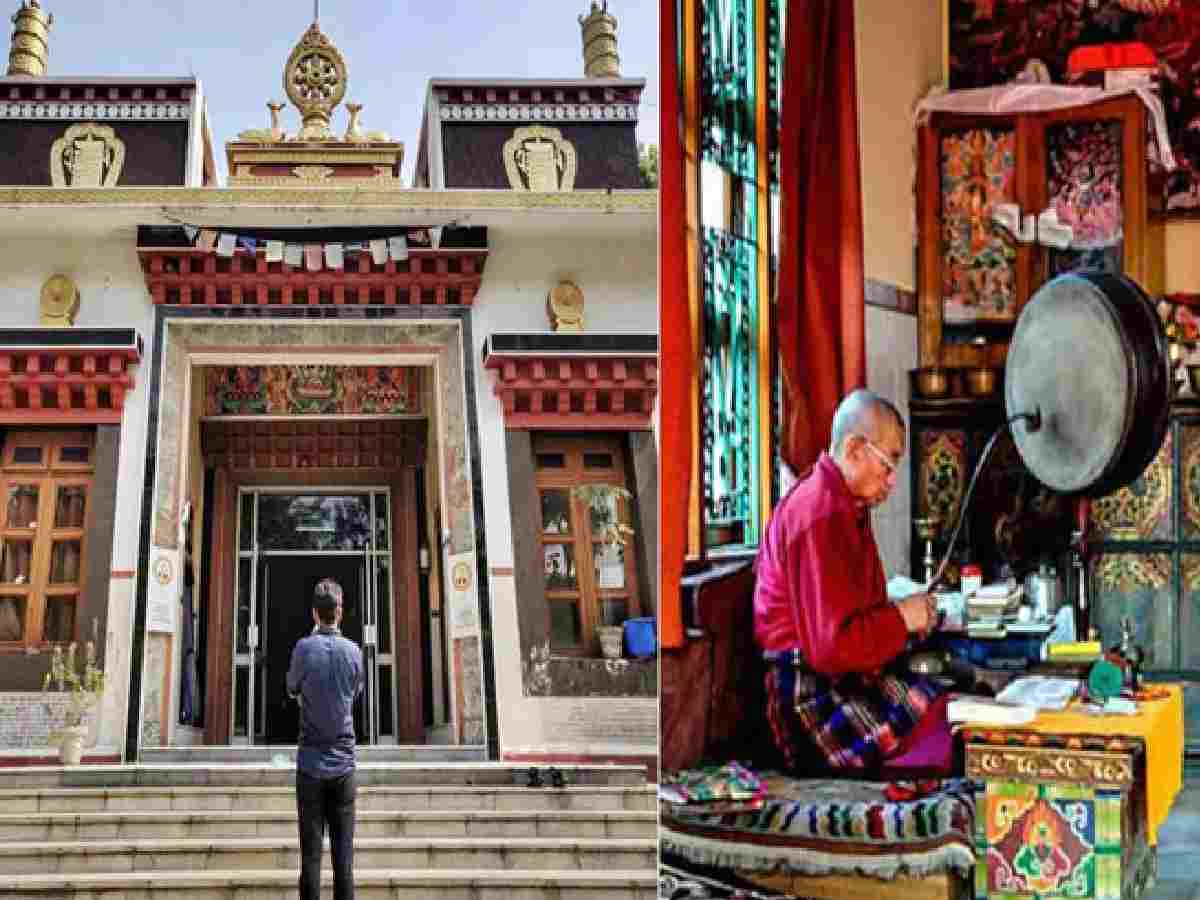
Ladakh Buddhist Vihar
Amid the violence and arson that shook Ladakh recently, a corner of the Union Territory in Delhi remains a haven of calm. Near the bustling ISBT, the Ladakh Buddhist Vihar stands as an island of peace and spirituality, where monks and devotees gather for meditation, prayer, and cultural activities.
A monastery for the community
The Ladakh Buddhist Vihar was established in 1965 by the Delhi Ladakh Association to preserve Ladakhi culture and provide a place of worship. Located close to the Kashmere Gate metro station, the monastery radiates spiritual tranquillity.
“The Yamuna River flows nearby. Amid Delhi’s fast-paced life, spending a few moments here is highly recommended. I have been visiting here for decades. It is always a joy to spend some time here,” says author and activist Aruna Mukim, who lives in Civil Lines, not far from the Vihar.
The monastery also houses a rich library of Buddhist literature. Lama Chospal, associated with its management, recalls that Ladakhis in Delhi were once often mistaken for Tibetans or Nepalis — a perception that has since changed. Two years ago, in 2023, floodwaters from the Yamuna entered the monastery, but the Vihar continues to serve as a vital centre for the community.
Ladakh Bhawan in the Capital
In August 2019, Parliament passed the Jammu and Kashmir Reorganisation Act, which came into effect on October 31, 2019, making Ladakh a Union Territory. Following this, Ladakh Bhawan was set up in Delhi.
The portion of the former Jammu and Kashmir House facing Kautilya Marg was allocated to Ladakh, and it now houses officers and staff of the Union Territory administration.
Ladakhi students in Delhi
Many people from Ladakh, including girls, pursue higher education in Delhi. Professor Prabanshu Ojha of Hansraj College’s Hindi department notes that Ladakhi students are enrolled in several Delhi University colleges, as well as institutions in Himachal Pradesh.
Lama Chospal observes that most students return to Ladakh after completing their education. Since they already learn Hindi back home, they face no language barriers in Delhi.
Distinctive architecture and features
The monastery’s architecture reflects Ladakhi and Tibetan styles, evident in its vibrant structure. The main prayer hall houses a large statue of Gautam Buddha, while the walls are adorned with paintings depicting the Buddha’s life story. Colourful prayer flags flutter in the breeze, spreading messages of peace.
Prayer wheels, or chakkars, line the premises, while intricate woodwork, a serene courtyard, and decorative motifs add to the Vihar’s charm. “The library offers Buddhist texts, while dedicated meditation rooms and study areas cater to spiritual and intellectual pursuits. An elderly monk is often seen playing traditional drums, adding to the spiritual ambience,” says Harish Khanna, a former Delhi University teacher.
Preserving Ladakh’s cultural symbols
Delhi also provides platforms for showcasing Ladakh’s culture through exhibitions and events. These highlight conservation, crafts, and ancient art, making Ladakh’s heritage accessible to urban audiences.
At Dilli Haat, the Department of Industries, Ladakh, frequently organises “Enchanting Ladakh”, where artisans display woollen robes such as goucha and kuntop, stone jewellery, and thangka paintings depicting Buddhist symbols like the Dharmachakra and snow leopards. Live demonstrations include weaving motifs inspired by black-necked cranes and juniper patterns. The December 2024 edition featured Kargil artisans focusing on GI-tagged pashmina shawls.
Also Read: Dussehra in Old Delhi: Ramlila traditions that bind generations
In Delhi’s anthropology and tribal galleries, Ladakhi artefacts include the perak headdress — a turquoise-encrusted crown worn by women, symbolising matrilineal heritage and royal lineage. Other exhibits feature masks, garments dyed with juniper patterns, and puppets used in crane dances at festivals such as Hemis Tsechu.
These venues bridge Ladakh’s culture with a national audience, showcasing its wildlife emblems, ritual artefacts, and everyday objects, while fostering cultural exchange.
Families weigh safety and accommodation, while students who left after the Satya Niketan collapse worry…
Delhi announced winter anti-pollution rules, including construction bans, BS-VI entry norms, doubled parking fees, and…
Switch Mobility secured an order for 840 e-buses to be deployed with DTC in Delhi…
Delhi Police arrested two fake bank agents for defrauding a Shahdara man of Rs 15…
A 48-year-old motorcyclist was killed and a pillion rider injured in a truck crash on…
A 2.5-year-old girl died after falling into a 200ft borewell in Faridabad. She was pulled…

