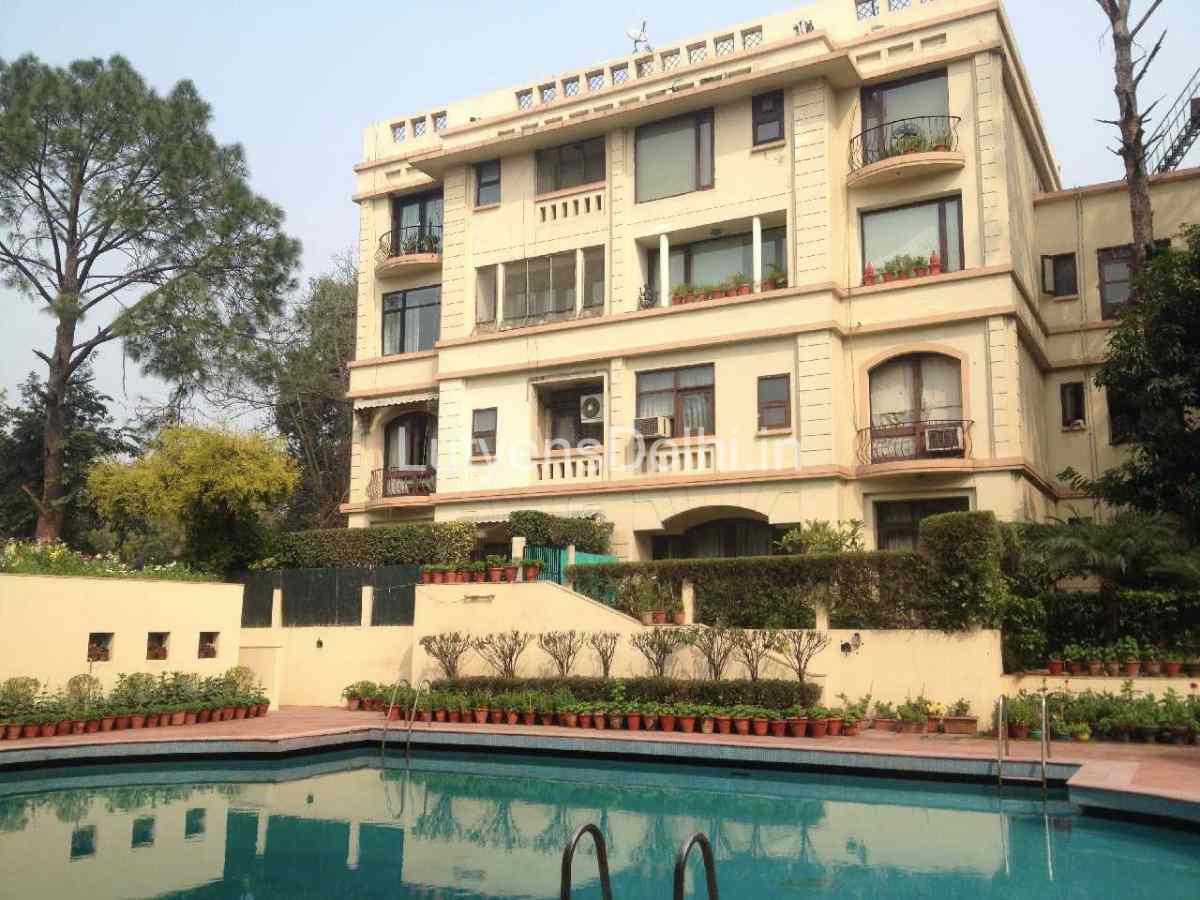
Tata House
The quiet, tree-lined stretch of Prithviraj Road in Lutyens’ Delhi has long been home to some of modern India’s most defining figures. As the Tata Group faces an internal battle for control, it’s worth revisiting the address where its patriarchs once lived and worked — a road that also housed Dr BR Ambedkar while he drafted the Constitution and poet-diplomat Octavio Paz during his creative years in India.
Where industry met simplicity
The next time you drive towards Prithviraj Road from INA Market, take a glance at A-23 on your right. The address, now home to luxury apartments, was once the site of the famous Tata House — the Delhi residence of the salt-to-steel conglomerate’s chairperson JRD Tata and later of his successor, Ratan Tata.
Ratan Tata’s father, Naval Tata, also stayed here during visits to the capital. A longtime chairman of Tata Power and former president of the Indian Hockey Federation, he was among the many Tata stalwarts who lived or worked out of this bungalow. The Delhi address hosted a long list of group executives — Ajit Kerkar (Taj Hotels), Rusy Modi (Tata Steel), F.C. Kohli (TCS), Mantosh Sondhi (Tata Steel), Darbari Seth (Tata Chemicals) and Nani Palkhivala (ACC).
Purchased in 1952, Tata House served as the group’s capital base for four decades. From the 1970s, Ratan Tata too began using the property. When he became chairman in 1992, he was greeted here by the company’s senior executives. In the early 1990s, the Tata management decided to replace the bungalow with modern flats, now occupied by senior officials of various group firms.
Inside the old house, JRD and later Ratan Tata had built a vast personal library filled with books on business, management and motivation. JRD, a keen gardener, personally supervised the upkeep of every tree and shrub. Each dawn, he would take a brisk walk along Prithviraj Road, often chatting with his driver of 45 years, Amar Singh, whose quarters stood within the compound.
Roots in Delhi
The Tatas’ association with Delhi goes back to 1949, the year the Delhi School of Economics was founded. The Ratan Tata Library at DSE — regarded as one of the country’s finest collections in Economics, Commerce and Geography — was set up with the group’s support.
“The Tata Group gave open-hearted help in establishing the library,” says DSE Director Ram Singh. “Unfortunately, in recent years, there hasn’t been any financial assistance for its expansion.” The Lady Ratan Tata section alone holds hundreds of thousands of volumes.
Where Ambedkar drafted history
Not far from the former Tata House, at 22 Prithviraj Road, Dr BR Ambedkar lived while chairing the drafting committee of India’s Constitution in 1947.
Ambedkar had first come to Delhi in 1942 to join the Viceroy’s Executive Council as a member for Works, Housing and Supply. His early days were modest — his first night was spent in a small barrack behind present-day Mavalankar Hall, followed by a brief stay at Western Court on Janpath. He inspected several government bungalows before settling on 22 Prithviraj Road, then in disrepair and rumoured to be haunted.
“Cobwebs hung everywhere, doors were broken, plaster was peeling,” says researcher Sumanji Sangh Mitra, who is writing a biography of Ambedkar. “Yet the scientific-minded Babasaheb chose to live here.”
The house became a hub of intellectual activity. Ambedkar, who often worked 17–18 hours a day, filled it with thousands of books. On April 15, 1948, he married Dr Savita, a physician from a Chitpavan Brahmin family in Maharashtra, in a simple ceremony within these walls. Today, the Turkish ambassador resides at the same address.
A poet among diplomats
At 13 Prithviraj Road, Mexican Nobel laureate Octavio Paz lived during his tenure as the Ambassador to India (1962–68). A diplomat by profession but poet at heart, Paz turned his Delhi bungalow into a literary salon that drew some of the country’s finest writers and artists.
He served under Prime Ministers Jawaharlal Nehru, Lal Bahadur Shastri and Indira Gandhi, often meeting them personally. Poets such as Shrikant Verma and painters like J Swaminathan were regular visitors, as were writers Khushwant Singh, Kuldeep Nayar and BG Verghese.
Even after leaving India, Paz continued to revisit Delhi — and the memories of his years at 13 Prithviraj Road.
Where the past still lingers
Few roads in Delhi capture such a span of India’s story — from its industrial and intellectual rise to its artistic flowering. On Prithviraj Road, the footsteps of JRD, Dr Ambedkar and Octavio Paz may have faded, but their presence continues to echo in its quiet lanes.
Elected to the Delhi Golf Club general committee, Mansher Singh says he wants to build…
A $780 million market built on pavements, where the pleasure of reading meets the price…
Supreme Court advocate Abhishek Pawar alleges women were denied washroom access for seven to eight…
Each day of closure costs shops in Khan Market and Connaught Place between Rs 60,000…
Delhi generates nearly 15,000 tonnes of waste daily, prompting the government to deploy 1,000 mechanical…
Delhi Police has issued an NOC for the Congress rally at Ramlila Maidan on November…

