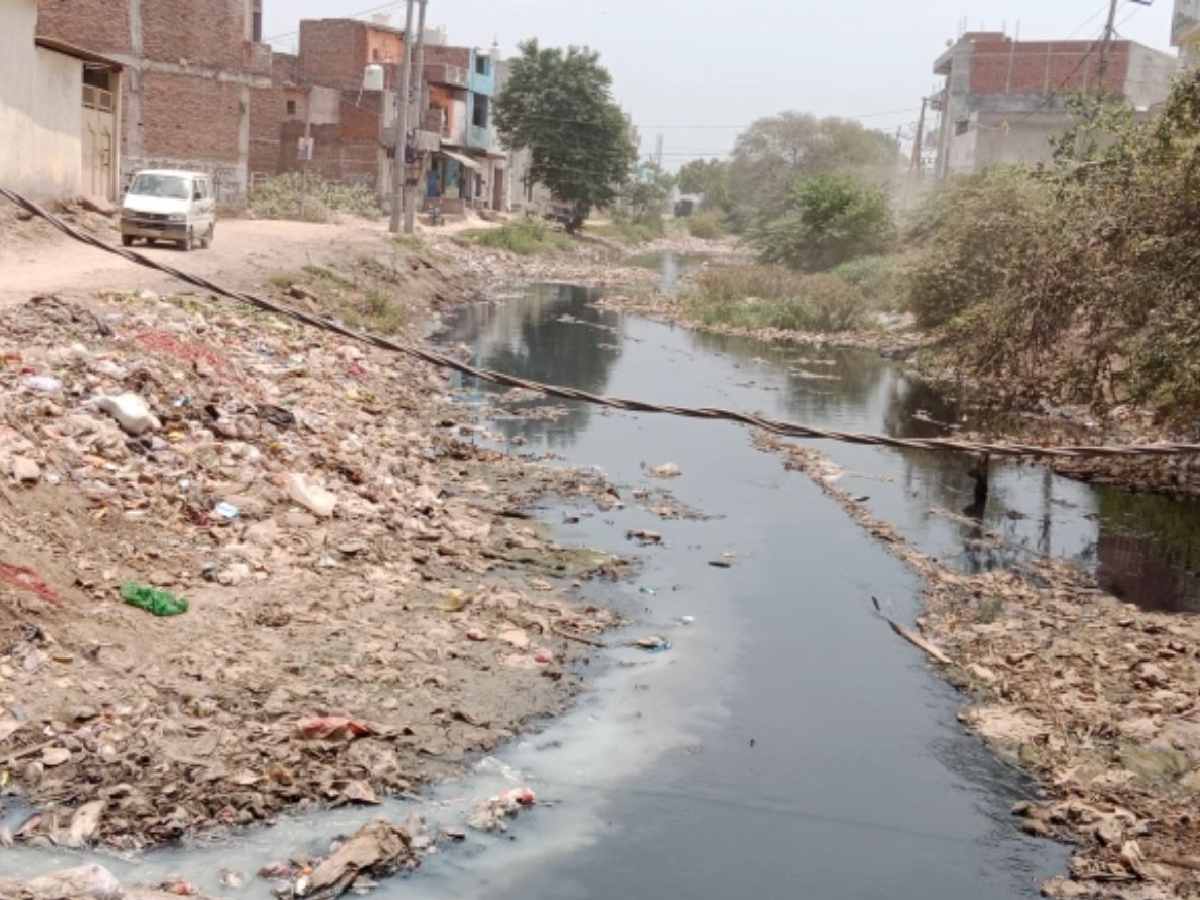
The troubling state of potable water has long been part of Delhi’s reality. Now, the issue has reached the floor of parliament.
A reply to a question from Rajya Sabha MP Swati Maliwal revealed that a recent report by the Central Ground Water Board (CGWB) had cast a spotlight on the deteriorating quality of groundwater in the national capital. From extreme electrical conductivity to high levels of contaminants such as fluoride, nitrate, arsenic and uranium, the findings show that water in parts of the city is nearly unfit for human use.
Extent of contamination
The CGWB analysed 103 groundwater samples across Delhi. About 23.3% showed electrical conductivity above the safe limit of 3,000 µS/cm, indicating dangerously high salinity.
Fluoride was found above the permissible level of 1.5 mg/L in 16.5% of samples, while nitrate contamination exceeded the 45 mg/L limit in 20.4%. Arsenic was present in 2.9% of samples above the safety threshold, and uranium contamination crossed the 0.03 mg/L limit in 10.7%.
A previous report by the Central Ground Water Authority (CGWA), submitted to the National Green Tribunal in 2023, had highlighted even starker figures. It found that over 32% of districts had groundwater exceeding the permissible salinity limit, with particularly high levels recorded in areas such as Rohini, Pitampura and Tagore Garden.
Also read: Delhi: Court order leaves stray dog programme in turmoil
Government’s response
According to Jal Shakti Minister Veeranna Somanna, the operational guidelines of the Jal Jeevan Mission (JJM) mandate that States and Union Territories take swift corrective measures when significant water quality issues arise.
“This includes notifying the Health Department to implement mitigation strategies for contaminants such as arsenic, fluoride, uranium and bacteriological pollution,” his reply stated. He added that the mission also encourages piped water supply schemes based on alternative safe sources for communities affected by contamination.
Currently, JJM allocates funds to States and Union Territories with an additional 10% weightage for populations living in chemically contaminated areas. This ensures that vulnerable communities are prioritised for sustainable water solutions.
History of contamination
Water contamination in Delhi is not a new phenomenon. A 2013 report by the Department of Geology at Delhi University revealed severe groundwater contamination near the Najafgarh drain. Toxic metals such as lead and cadmium — both carcinogens — were detected in samples. Other harmful substances, including arsenic, nitrate, manganese and iron, were also present, posing a serious threat to public health.
Also read: Bill on school fee regulation leaves parents exposed to exploitation
Why electrical conductivity matters
Electrical conductivity (EC) measures water’s ability to conduct electricity, with higher mineral content resulting in greater conductivity. According to the Bureau of Indian Standards (BIS), the ideal total dissolved solids (TDS) level for drinking water should not exceed 500 milligrams per litre (mg/L), which is roughly equivalent to an EC of 750 µS/cm. Where alternatives are unavailable, the permissible limit is extended to 2,000 mg/L, corresponding to 3,000 µS/cm.
Despite this allowance, experts warn that water with TDS levels above 2,000 mg/L can cause significant health problems, particularly kidney-related illnesses. The BIS advises that such water should be consumed only when no safer alternative exists.
An FIR over Jamia protests alleges Congress MPs Imran Pratapgarhi and Imran Masood unlawfully entered…
Delhi's 'Namo Yamuna River Safari' cruise will launch before Chhath, offering 40-minute family trips between…
Delhi's Old RTR flyover reopens for light vehicles today after repair work following road cracks,…
Visits to Govindpuri, Jangpura, Saket and Mayur Vihar show unlabelled corrosive substances sold for Rs…
Rescue teams recovered two bodies from the debris of a collapsed under-construction house in northeast…
Built on Jawaharlal Nehru’s vision, the Delhi landmark has witnessed the evolution of a young…
