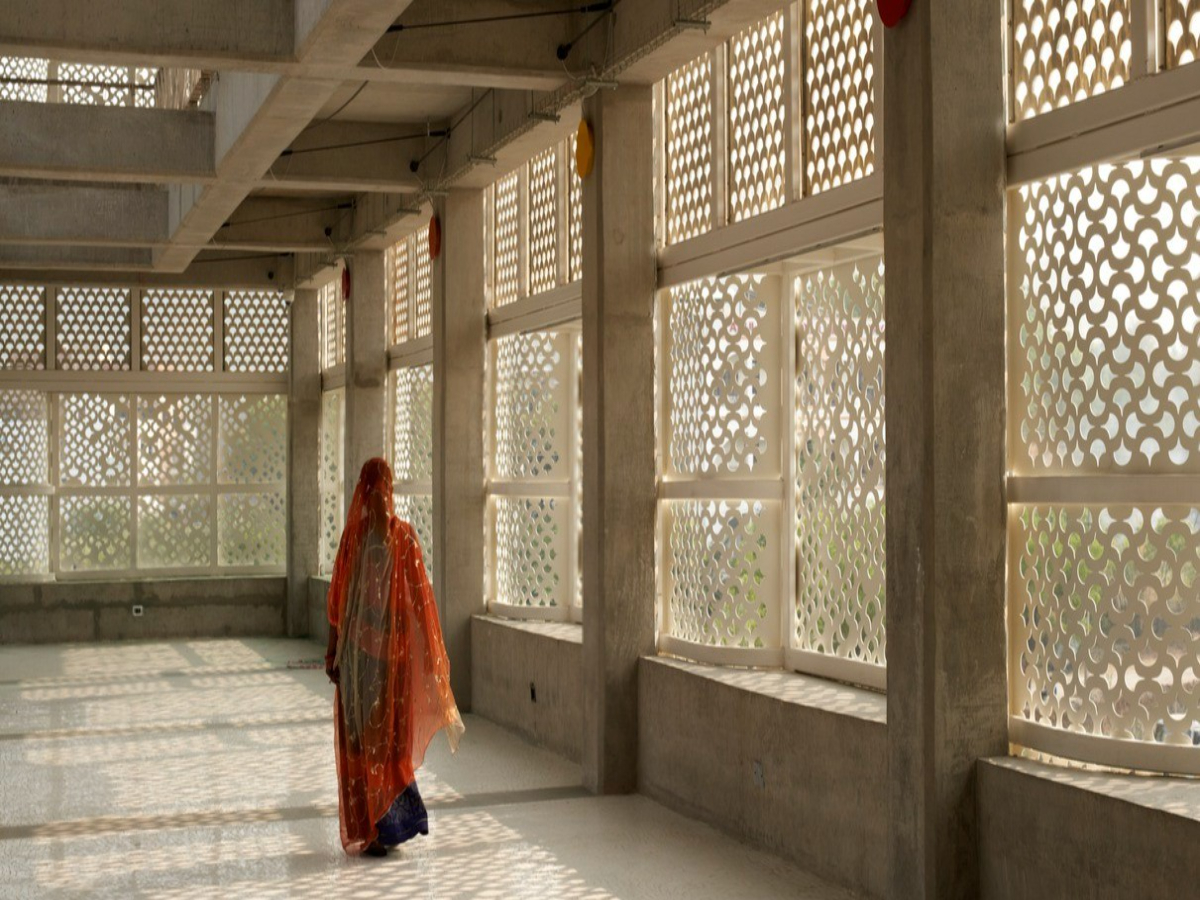
Jaali screens in colonial houses
As Delhi faces another fierce heatwave, with temperatures often crossing 45 degrees Celsius, people try and take refuge in air conditioners, coolers, and refrigerators. But until they left after India’s Independence, the British rulers had no such comforts. They lived through Delhi’s merciless summers using clever building designs, smart planning and simple lifestyle tricks. Their homes, offices, and public buildings mixed European styles with Indian ideas to fight the heat. This colonial architecture still shapes parts of Delhi today.
After 1857, the British developed Civil Lines as their principal residential and administrative enclave in Delhi, although the capital of British India remained in Calcutta until 1911. These spacious neighbourhoods had wide roads lined with trees and large bungalows set in big gardens. The design drew from local Mughal and vernacular styles that had worked for centuries in India’s hot plains.
Read More: Delhi: JJ cluster residents welcome housing push, but concerns remain
High ceilings
“Thick walls were a key feature. Builders used brick or stone walls that were often two feet or more thick. These walls acted like natural insulators. They absorbed heat slowly during the day and released it at night, keeping rooms cooler inside. High ceilings, sometimes 12 to 15 feet tall, allowed hot air to rise away from people. This created better air flow and a feeling of space,” says Ujjwal Updhay, a South Delhi-based architect.
Moreover, wide verandas surrounded many bungalows. These acted as buffers between the hot outside air and the living rooms. People sat on verandas in the shade, enjoying the evening breeze while protected from direct sunlight. “In Civil Lines and early colonial homes, verandas often had columns and were deep enough for chairs and tables. This outdoor living style made summers more bearable,” informs author Dr Aruna Mukim, who lives in one such house in Civil Lines.
Jaali screens
Jaali screens, beautifully carved with stone, were another smart touch. They let in cool winds and light but blocked harsh sunlight and dust. These screens reduced glare and heat gain while ensuring privacy. One can still see their influence in Lutyens’ Delhi. Courtyards inside or between buildings created shaded pockets where air could circulate naturally, cooling the whole house like a natural chimney.
In the 20th century, the British shifted the capital to New Delhi. Architect Edwin Lutyens and others designed a grand new city with these climate-friendly ideas. The Lutyens Bungalow Zone is famous for its hundreds of elegant white bungalows with red brick walls, lawns, and tall trees. These homes had high ceilings, deep verandas, colonnades (rows of pillars), and strategic placement for shade. Thick walls and marble or stone floors stayed cool to the touch. Gardens with neem, tamarind, and gulmohar trees provided natural shade and lowered temperatures around the houses. Bungalows in Civil Lines and New Delhi often had separate servant quarters and kitchens placed to reduce indoor heat.
Rashtrapati Bhavan
Rashtrapati Bhavan, designed by Edwin Lutyens, is a prime example. Its massive structure on Raisina Hill features wide colonnades, courtyards, and Indian elements such as chhatris and jaalis, combined with a classical European style. The building’s height, thick stone walls, and careful orientation helped manage Delhi’s extreme heat. Nearby Secretariat buildings by Herbert Baker followed similar principles. Even houses built for government employees were designed by British architects, including bungalows and flats in Gole Market and New Delhi, with climate-smart features.
“Thick brick walls insulated rooms from daytime heat. High ceilings allowed hot air to rise. Wide verandas and colonnades provided shaded outdoor spaces. Jaali screens filtered sunlight while permitting breezes. Courtyards promoted cross-ventilation. Tree-lined avenues and gardens in Lutyens’ Delhi and nearby areas added natural cooling. These simple methods kept homes comfortable without modern AC,” says noted architect Bakshish Singh.
Public spaces also helped. Tree-lined avenues in New Delhi, such as those around India Gate and Kartavya Path (earlier Rajpath), created green corridors. Large parks and compounds in areas like Lodhi Gardens and around the Gymkhana Club offered cool retreats. British officials planted thousands of trees, which remain a big part of Delhi’s green cover today.
It is also said that many British families escaped Delhi’s worst heat by moving to hill stations such as Shimla, Mussoorie and Nainital.
Many of these passive cooling techniques—deep verandas, thick masonry walls, courtyards, shaded avenues and natural ventilation—remain relevant today as Delhi confronts rising temperatures and increasing dependence on air conditioning.
Also Read: When Connaught Place followed the British to Shimla
A 30-foot cockroach effigy will be burned alongside Ravan in Pitampura's Ramlila to promote cleanliness,…
Delhi Police told a court no cognisable offence was found against CM Rekha Gupta over…
Chefs and founders of establishments in Delhi speak about sourcing, portioning, composting, surplus food and…
Delhi High Court pulled up ASI, MCD, and police over unauthorized construction near the protected…
Six men were arrested in Delhi over a September firing at a Najafgarh medical store…
The Delhi High Court refused to ban CJP's Oct 16 Connaught Place protest, as police…

