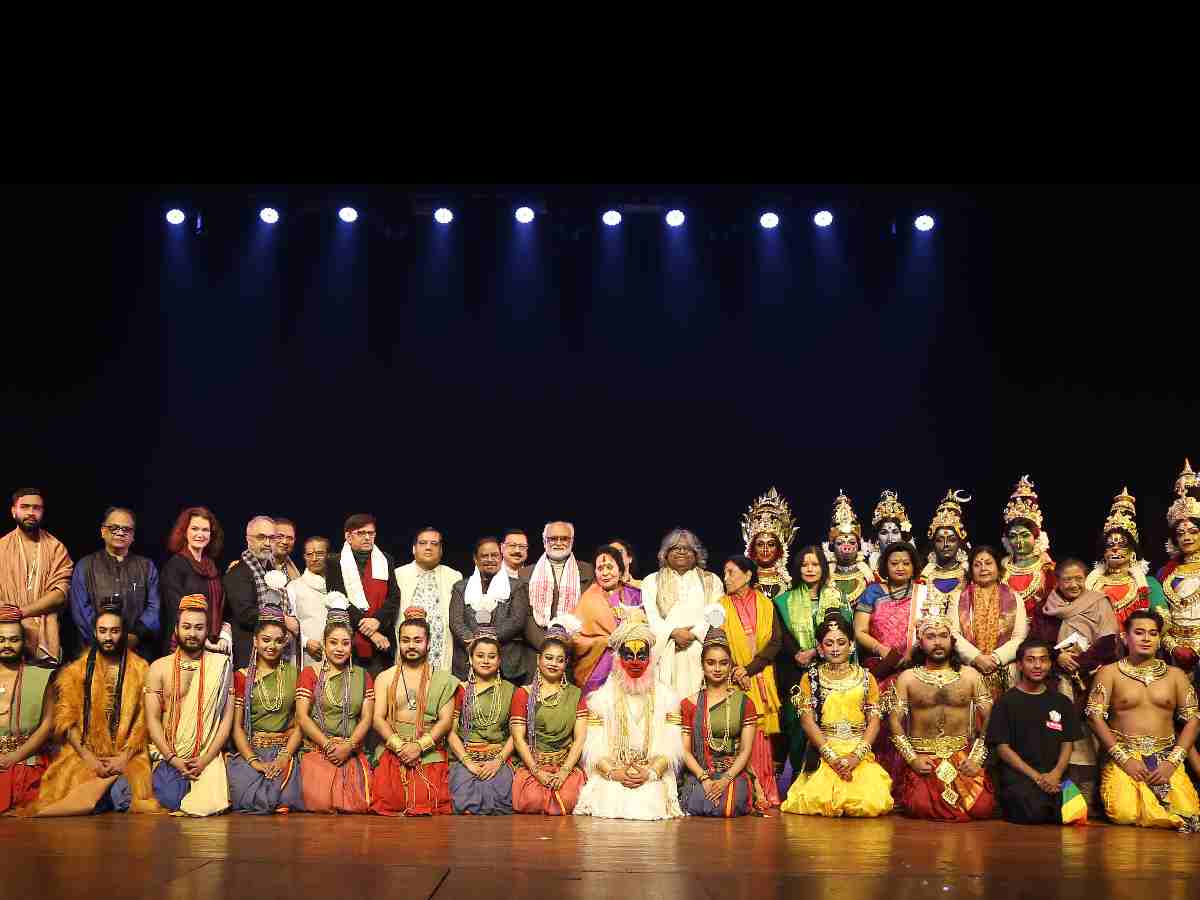
The Festival of New Choreographies – KalaYatra 2026, curated by Padma Vibhushan awardee Dr Sonal Mansingh, concluded on Wednesday at Kamani Auditorium, bringing together classical dance productions from across the country over five evenings this month.
Organised jointly by the Department of Art, Culture & Language, Government of NCT of Delhi, the Centre for Indian Classical Dances (CICD) and Dr Mansingh, the festival was held on January 13–15 and January 28–29. It featured choreographic works drawing from classical texts, regional traditions and contemporary interpretations of mythological narratives.
The final evening on January 29 presented two productions. Saugandhikaharnam, by Chidakash Kalalay Centre, Kolkata, directed by Piyal Bhattacharya, explored an episode from the Mahabharata centred on Bhima’s encounter with Hanuman. Performed in the Marga Natya tradition, the work examined themes of restraint and self-realisation.
The closing presentation, Matrika, by the Rainbow Dance Troupe from Barasat, directed by Ratri Das, drew on the mythology of the Matrikas and the slaying of Mahishasura. The production focused on the idea of collective feminine power and was performed by an all-LGBTQ+ ensemble.
On January 28, the festival staged two Mahabharata-based works. Duryodhana, choreographed by Guru Ratikant Mohapatra for Srjan – Guru Kelucharan Mohapatra Odissi Nrityabasa, Bhubaneswar, offered a character study of Duryodhana, tracing his ambition and eventual downfall. This was followed by Chakravyuha by Shriram Bharatiya Kala Kendra, New Delhi, depicting Abhimanyu’s death through a combination of Mayurbhanj Chhau and Kalaripayattu.
The earlier segment of the festival opened with Amrut-Manthan, conceptualised and choreographed by Dr Mansingh, and performed by artistes of the CICD repertory. Other works presented during January 13–15 included Athijeevanam by Guru T.B. Jagadeesan (Kathakali), Naadaswarupaam Devim Namaami by Prof Deepti Omchery Bhalla, Girija Kalyana in the Yakshagana tradition directed by Guru Keremane Shivananda Hegde, Karna – Bound by Fate by Guru Vaibhav Arekar, and Sita Bibaha Bihar by Guru Bhabananda Barbayan and group from Assam.
Several senior dancers, cultural administrators and government officials attended the performances across the five days. According to organisers, audience turnout remained steady across venues and dates.
Speaking at the closing event, K Mahesh, Secretary, Department of Art, Culture & Language, Government of NCT of Delhi, said the department had partnered with the festival as part of its broader cultural programming. Dr Mansingh said the festival was intended to provide space for new choreographic work within classical frameworks.
Also Read: Two exhibitions trace Seema Kohli’s evolving dialogue with body, memory and the sacred
An exhibition in the foyer of Kamani Auditorium traced the work of the Centre for Indian Classical Dances since its establishment in 1977, displaying archival photographs and material documenting its training and performance activities.
Police probe all angles, including a suspected breakup and CCTV footage, after a Class 12…
Two terror attacks, eight years apart, struck ordinary shoppers and changed festive celebrations in the…
NDMC to build a larger tulip garden with parking at Nehru Park, featuring seasonal blooms,…
A 17-year-old student was found burnt at an east Delhi school, with police probing a…
Delhi's temperature fell to 17°C following overnight rain and thunderstorms, with an AQI of 167…
Coforge opened its first library in Noida in February 2024; it now claims a combined…
