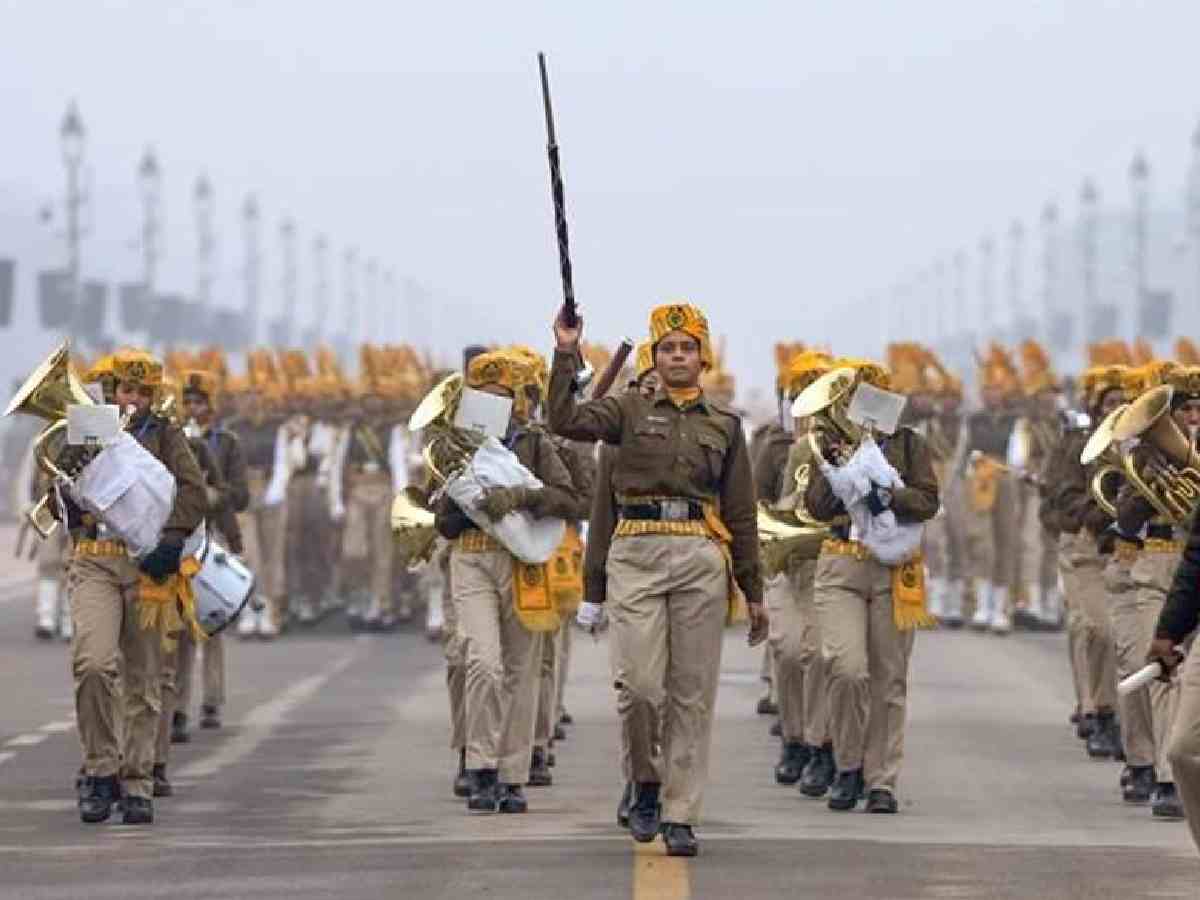
The Delhi Police has been recognized as the ‘Best Marching Contingent’ at the Republic Day Parade 2025, held at Kartavya Path on January 26, officials said.
The contingent comprised three sub-inspectors, 44 head constables, and 100 constables, all dressed in the distinctive ‘Red Safa’ attire. This achievement marks the force’s 17th win in the parade’s history, following the victory of the Delhi Police Women’s Contingent last year, the officials added.
Under the leadership of Additional DCP Rishi Kumar Singh, the team won the prestigious ‘Best Marching Contingent among CAPFs/other auxiliary forces’ award in the judges’ choice category.
Meanwhile, the newly established All-Women Delhi Police Band, making its second appearance, enthralled audiences with its harmonious performances. Led by Band Master Ruyangunuo Kense, the band featured four women sub-inspectors and 64 women constables, all meticulously trained for precise execution, they noted.
Also Read: Republic Day Parade 2025: A celebration of India’s heritage, might, and diversity
The team underwent rigorous training under Inspector Ramesh Tushir, the Chief Drill Instructor, with oversight from senior IPS officers, including Special CP Neeraj Thakur, Joint CP MN Tiwari, and Delhi Commissioner of Police Sanjay Arora.
This year, Delhi’s tableau highlighted its advancements in education and technology. It showcased children excelling in various fields, a “Tree of Knowledge” emerging from a laptop, and progress in robotics and medicine.
(With inputs from PTI)
Elected to the Delhi Golf Club general committee, Mansher Singh says he wants to build…
A $780 million market built on pavements, where the pleasure of reading meets the price…
Supreme Court advocate Abhishek Pawar alleges women were denied washroom access for seven to eight…
Each day of closure costs shops in Khan Market and Connaught Place between Rs 60,000…
Delhi generates nearly 15,000 tonnes of waste daily, prompting the government to deploy 1,000 mechanical…
Delhi Police has issued an NOC for the Congress rally at Ramlila Maidan on November…
