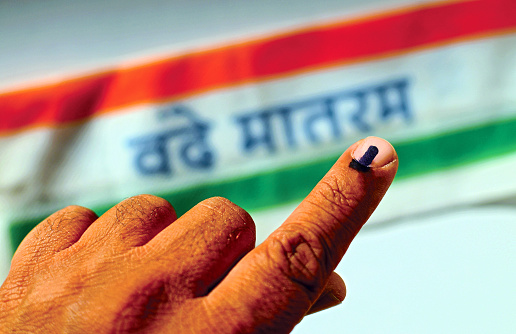
Representational photo
With battle lines drawn and voter sentiment varied, the West Delhi Lok Sabha constituency epitomizes Delhi’s diverse political landscape, where civic and infrastructure issues dominate the discourse.
Voting on May 25 will decide the fate of all seven Lok Sabha seats in the national capital.
In 2014 and 2019, the BJP secured landslide victories in West Delhi, the city’s largest parliamentary constituency. This election sees the BJP replacing its two-time MP Parvesh Verma with Kamaljeet Sehrawat, who faces a direct contest with AAP’s Mahabal Mishra.
A tour through neighborhoods like Rajouri Garden, Vikaspuri, and Sagarpur reveals persistent issues such as water shortages, traffic congestion, inadequate parking, cleanliness, road safety, unemployment, and women’s safety.
Bina, a bangle seller in Sagarpur, highlights the lack of clean public washrooms, forcing people to urinate in the open. Iqbal, a resident of Manglapuri, complains about open, overflowing drains and heaps of garbage.
West Delhi, with its mix of rural areas, slum settlements, unauthorized colonies, and posh localities, is home to 2.58 million voters, including 1.37 million men and 1.21 million women.
In upscale Vikaspuri, resident Chandu Lal voices concerns about congested roads and limited parking. “Parking problems and road safety are major issues here,” he says.
Voter sentiment varies from staunch supporters of the BJP and AAP to those disillusioned enough to choose NOTA (none of the above). Auto driver Shiv Prakash, who has voted for all parties in the past, plans to vote NOTA, feeling neglected by elected candidates.
West Delhi’s ten assembly constituencies include significant slum and unauthorized colony populations. Najafgarh and Matiala are dominated by Jat voters, while Sikh and Punjabi voters are concentrated in areas like Tilak Nagar, Rajouri Garden, Hari Nagar, and Janakpuri. Purvanchalis, natives of eastern Uttar Pradesh and Bihar, also form a substantial voter base.
The constituency’s demographic mix includes over 20% OBC voters, about 13% each of Scheduled Caste and Punjabi voters, 10% Brahmins, around 7% Muslims, and 8% Sikhs.
Sehrawat, a Jat and the Delhi BJP general secretary, prioritizes expanding Metro services, improving road infrastructure, and developing skill centers, community halls, and parks. AAP’s Mishra, a former MP and Purvanchali leader, pledges to enhance Metro connectivity and establish new schools, colleges, and a DU campus in West Delhi if elected.
(With PTI inputs)
A woman died after being stabbed while trying to save her son during a violent…
Vivek Vihar and Gurugram owners cite rashes and itching; a Noida vet warns of dermatitis,…
A 21-year-old man was critically injured after being stabbed multiple times by unidentified assailants at…
Delhi Police transfer second case against Cockroach Janta Party's Saurav Das and Ashutosh Ranka to…
At least 50 cases have already been reported this month; NCPCR guidelines mandate help desks,…
DMRC says zero reduction in train trips, attributes decline to security measures and public apprehension…
