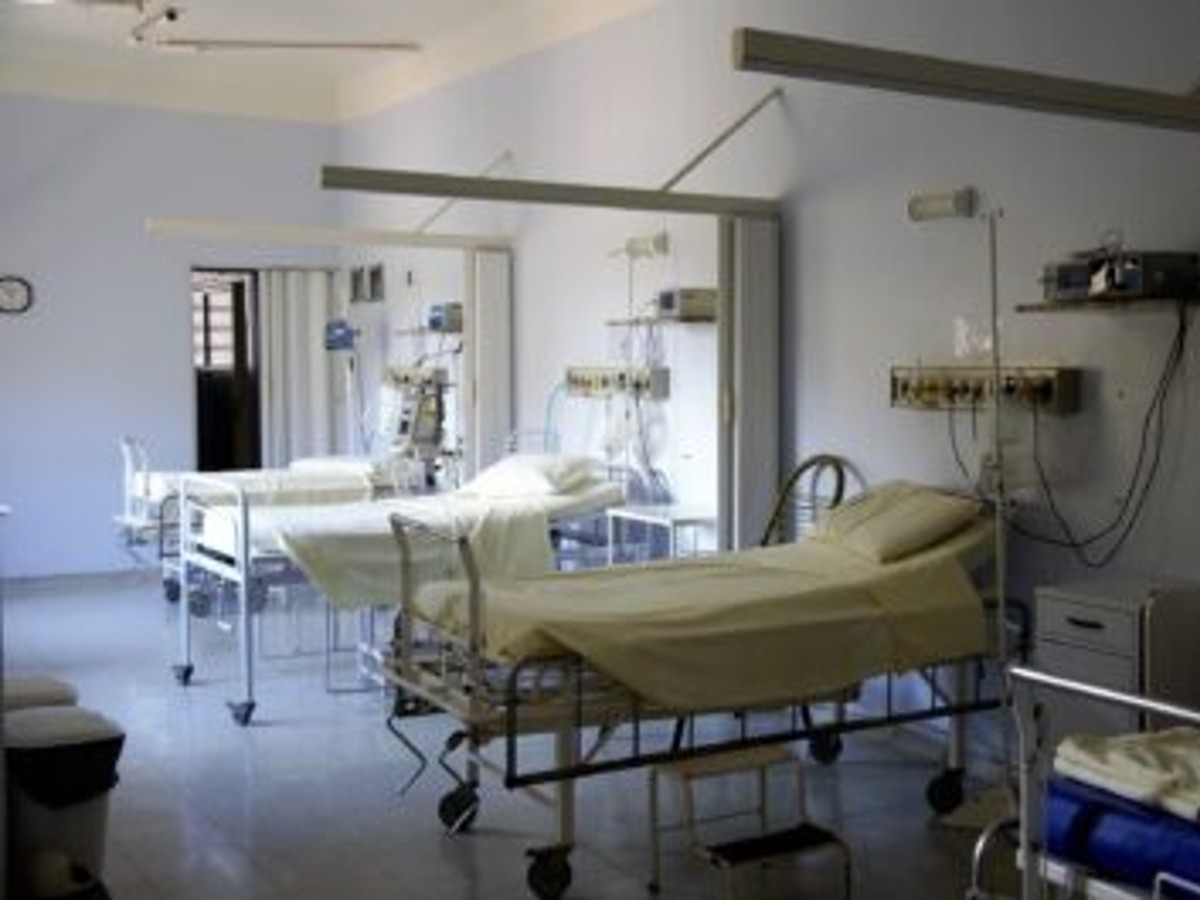
The hospital must become patient-friendly and accessible to the society at large, it said. (Representational photo)
The Delhi High Court has directed the Central government and the AAP (Aam Aadmi Party) administration to simplify the process for accessing medical facilities through various health welfare programs. The court acknowledged the challenges faced by economically disadvantaged individuals in availing such benefits.
To address the shortcomings in the existing system, the high court established a seven-member committee, led by the Delhi Chief Secretary. Chief Justice Satish Chandra Sharma and Justice Sanjeev Narula stressed the need to streamline the procedure for obtaining free medical treatment, encompassing surgeries, implants, and devices. The court proposed the establishment of a single-window mechanism with designated nodal officers in each Delhi hospital.
While recognizing the efforts of the Delhi government with schemes like Delhi Arogya Kosh and Delhi Arogya Nidhi, and similar initiatives by the central government such as Rashtriya Arogya Nidhi and the Health Minister’s Discretionary Grant, the court highlighted the obstacles faced by economically weaker sections (EWS) in benefiting from these programs.
The court-appointed amicus curiae, Advocate T Singhdev, outlined the challenges faced by indigent patients seeking financial aid under the Delhi Arogya Kosh scheme. The court noted the cumbersome process, requiring patients to obtain various certificates before submitting applications.
In response to these procedural hurdles, the court emphasized the need to significantly streamline and simplify the process for accessing medical facilities under these welfare schemes. The seven-member committee includes representatives from the Union Ministry of Health and Family Welfare, the Delhi government, the Municipal Corporation of Delhi, and the National Informatics Centre.
The committee’s terms of reference include maintaining a dynamic information list of drugs, implants, and devices on department websites, creating revolving funds at both central and state levels for patients with chronic, rare, or lethal diseases, and ensuring a quick and accessible application process. The court urged the committee to suggest methodologies to ensure continued benefits for economically weaker patients during the financial assistance process.
Furthermore, the court called for instructions to be prominently displayed in languages understandable to the public, making hospitals more patient-friendly. It emphasized the importance of expeditiously processing applications, providing forms in regional languages, and minimizing accompanying document requirements for medical emergencies.
The committee is expected to submit its report with recommendations before the next hearing scheduled for November 16. The court initially received a petition from an individual denied hip and knee replacement surgeries due to financial constraints, leading to the broader examination of accessibility issues for quality medical care among marginalized sections of society.
(With PTI inputs)
DMRC says zero reduction in train trips, attributes decline to security measures and public apprehension…
A Delhi court denied bail to a former DU professor accused of raping a student,…
Delhi Police charged seven dhaba workers in the fatal beating of a Manipuri musician who…
Seven Delhi STPs failed DPCC standards in September, dumping high levels of faecal coliform and…
AISA chief Neha Bora petitioned the Delhi HC against a police notice requiring a peace…
Average AQI of 171 in the first week of this month; falling temperatures and stubble…
