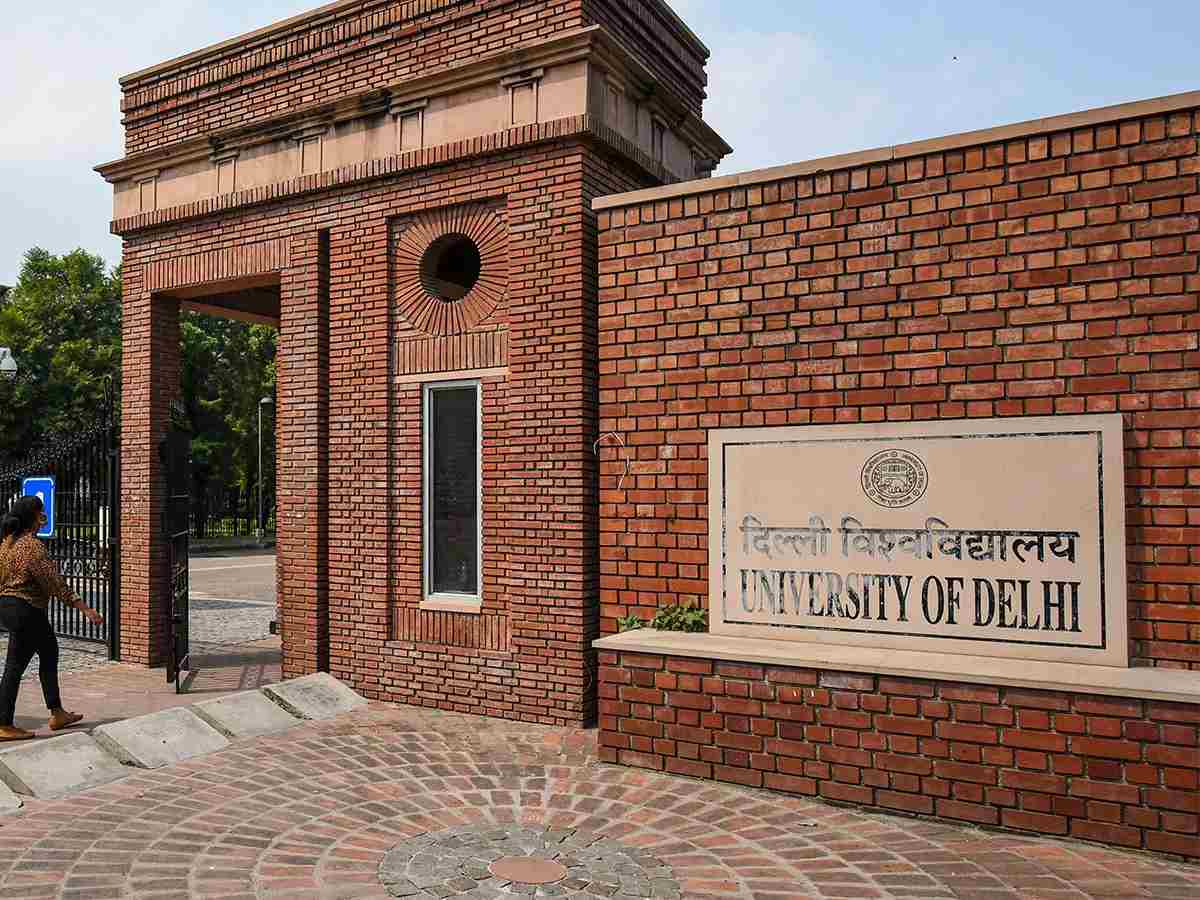
Delhi: Every year, lakhs of students take the University Grants Commission-National Eligibility Test (UGC-NET), hoping to become eligible for appointment as an Assistant Professor and secure a Junior Research Fellowship (JRF) to fund their doctoral research. Only a small proportion, however, qualify for the fellowship.
The issue of the limited number of JRFs awarded to UGC-NET qualifiers was raised in Parliament during the Monsoon Session. Congress MP Shashi Tharoor questioned the Ministry of Education about the number of fellowships available, the unchanged Non-NET Fellowship amount and whether the government planned to expand research funding.
PhD scholars at the University of Delhi and Jawaharlal Nehru University (JNU), meanwhile, told Patriot that inadequate funding had forced them to delay fieldwork, depend on their families, borrow from friends and reconsider whether doctoral research in India was financially viable.
Government reply leaves questions unanswered
Tharoor sought a year-wise breakdown of the number of candidates who had qualified in UGC-NET over the past five years, the number awarded JRF and the proportion of qualifiers who received the fellowship.
He also asked why the difference between the number of NET qualifiers and JRF recipients was growing and whether the government planned to increase the number of fellowships. He further raised the issue of the Non-NET Fellowship, intended for PhD scholars without NET-based funding, which has remained Rs 8,000 a month since 2006.
Of the 7,51,907 candidates who appeared for the June 2025 UGC-NET examination, 5,269 qualified for JRF. In the December 2025 examination, 5,108 of the 7,35,614 candidates who appeared qualified for the fellowship.
Union Minister of State for Education Sukanta Majumdar said JRFs are awarded on the basis of NET performance. He added that 6% of candidates qualified for Assistant Professor eligibility and that the UGC sanctioned 11,750 JRF slots annually from that pool.
Majumdar said other ministries and organisations also offer fellowships while referring to schemes for Scheduled Castes, Scheduled Tribes, Other Backward Classes, persons with disabilities and single girl children. Scholars could also join externally funded research projects, he said.
On the Non-NET Fellowship, Majumdar said it had been introduced to provide partial support to PhD and MPhil scholars without other fellowships, particularly at central universities in remote regions and the Northeast.
The response did not provide the requested year-wise data, explain the difference between the number of NET qualifiers and JRF recipients, or indicate whether the government planned to increase the number or value of fellowships. Calling the response “disappointing”, Tharoor said the ministry had merely described the existing framework while sidestepping the concerns raised.
Research without a fellowship
Jatin Wangde (name changed), a 33-year-old Dalit PhD scholar in JNU’s Department of Informal Sector and Labour Studies, said clearing NET no longer ensures that a student could pursue research.
“There are only seven scholars in my department, and only two of us, including me, are pursuing our research without JRF. I have been attempting to secure JRF for the last three years and have taken the exam five or six times,” he said.
Scholars without fellowships must bear the costs of fieldwork, conference participation and research-related travel themselves, Wangde said.
“Research involves expenses beyond tuition or living costs. Whether it’s dealing with a health emergency, attending academic programmes, participating in conferences or undertaking fieldwork, every stage requires financial support,” he said.
At times, Wangde added, students are forced to delay or scale down their research because they cannot afford these costs.
“The fellowship is still Rs 8,000 a month, the same amount that was fixed in 2006. Over the years, the cost of rent, food, travel and research has increased significantly, but the fellowship has not kept pace with these rising expenses,” he said.
Dependence on families
Ankit Kumar, 26, a PhD scholar at JNU’s Centre for French and Francophone Studies, said his monthly mess bill is about Rs 4,500, excluding hostel charges, books, travel and other academic expenses.
“I ask my parents for money depending on the situation. If that isn’t possible, I borrow from friends,” he said.
After a point, Kumar said, scholars begin feeling guilty about seeking financial help from their families because they are adults and expected to be financially independent.
Many PhD scholars must also teach undergraduate students without additional pay, Kumar said. “We have our own classes to attend, and at the same time we’re expected to teach undergraduate students without any extra payment. Managing research, teaching and financial uncertainty together becomes extremely difficult.”
Shiva Peelwan, 23, a PhD scholar in the University of Delhi’s Department of Political Science, spends between Rs 7,000 and Rs 8,000 a month on hostel accommodation and food. He said scholars without fellowships are often forced to fund their doctoral studies themselves.
“Many scholars are caught in a dilemma. We are unable to send money home, and at the same time, we have to depend on our families to continue our research,” he said.
Peelwan said inadequate or inaccessible fellowships have made doctoral research increasingly difficult for students from economically weaker backgrounds, raising concerns about equitable access to research.
Non-NET support reaches few scholars
Monika, a first-year PhD scholar in the University of Delhi’s Department of Political Science, has cleared UGC-NET but does not hold a JRF.
She said the university’s Non-NET Fellowship reaches only a fraction of the scholars who need it.
“Around 300 to 350 students were admitted to the PhD programme in our batch, but only about 15 to 20 students have been awarded the Non-NET Fellowship,” she said.
Monika clarified that she could speak only about what she had observed in her department.
Without a fellowship, she remains dependent on her family. “It is not a question of sending money home, but of managing my own financial needs,” she said.
Monika said completing a PhD could require a commitment of five years, during which the absence of financial support places sustained pressure on scholars and their families. Students are often forced to take jobs alongside their research, she added.
“The university has the responsibility and the capacity to provide Non-NET Fellowships,” she said.
Delays add to financial uncertainty
Scholars who receive JRF also face financial uncertainty. Monika said House Rent Allowance payments were frequently delayed by two or three months, although the full amount was eventually credited.
Students said the release of JRF payments requires approvals from supervisors, departments and university authorities, often causing delays and making it difficult to plan even basic expenses.
Nivas Prakash, 27, a PhD scholar in JNU’s Department of Political Science, said nearly Rs 4,500 of his monthly Rs 37,000 fellowship goes towards food. Hostel charges, books, conferences and other research expenses further reduce the amount available to him.
“Sometimes departments reimburse conference expenses, and sometimes they don’t. Even when support is available, it rarely covers the entire cost,” he said.
Prakash said some Non-NET scholars sought project-based fellowships or support from private foundations, but such opportunities are limited.
“Many Non-NET scholars are essentially funding their own PhDs,” he said. “Some eventually begin questioning whether continuing research is financially sustainable.”
Another scholar said students with opportunities to study overseas often chose to leave for better funding.
“If someone has the opportunity to study abroad, they often choose that option because funding opportunities are better,” the scholar said. “Here, many students spend years trying to arrange enough money simply to continue their research.”
Universities do not respond
Patriot sought comments from both universities about the payment delays and financial strain described by scholars.
At JNU, the Registrar’s office directed the newspaper to the Director of Admissions, who did not respond to a follow-up email. The University of Delhi Registrar’s office also did not respond.
The scholars said inadequate funding disproportionately affects students from modest economic backgrounds and determines who could afford to sustain a research career.
“Clearing UGC-NET proves that you are academically capable. Whether you can actually afford to become a researcher is an entirely different question,” one scholar said.
Although the shortage of fellowships has now been raised in Parliament, the government’s response has offered little clarity. For scholars struggling to meet living and research costs on uncertain incomes, fellowship policy may determine who can remain in Indian academia.
Coforge opened its first library in Noida in February 2024; it now claims a combined…
Of the 237 spa centres across 10 zones with valid MCD licences, the South East…
CTI chairman Brijesh Goyal said the Rahul Gandhi rally could affect wholesale and retail markets…
Established to mark the university’s 25 years, Jubilee Hall has witnessed generations of student life.…
Delhi inaugurates the 70th National School Games, hosting over 14,000 participants in 14 sports across…
Delhi High Court asked "Doosra" filmmakers to respond to Sourav Ganguly's plea over alleged violation…

