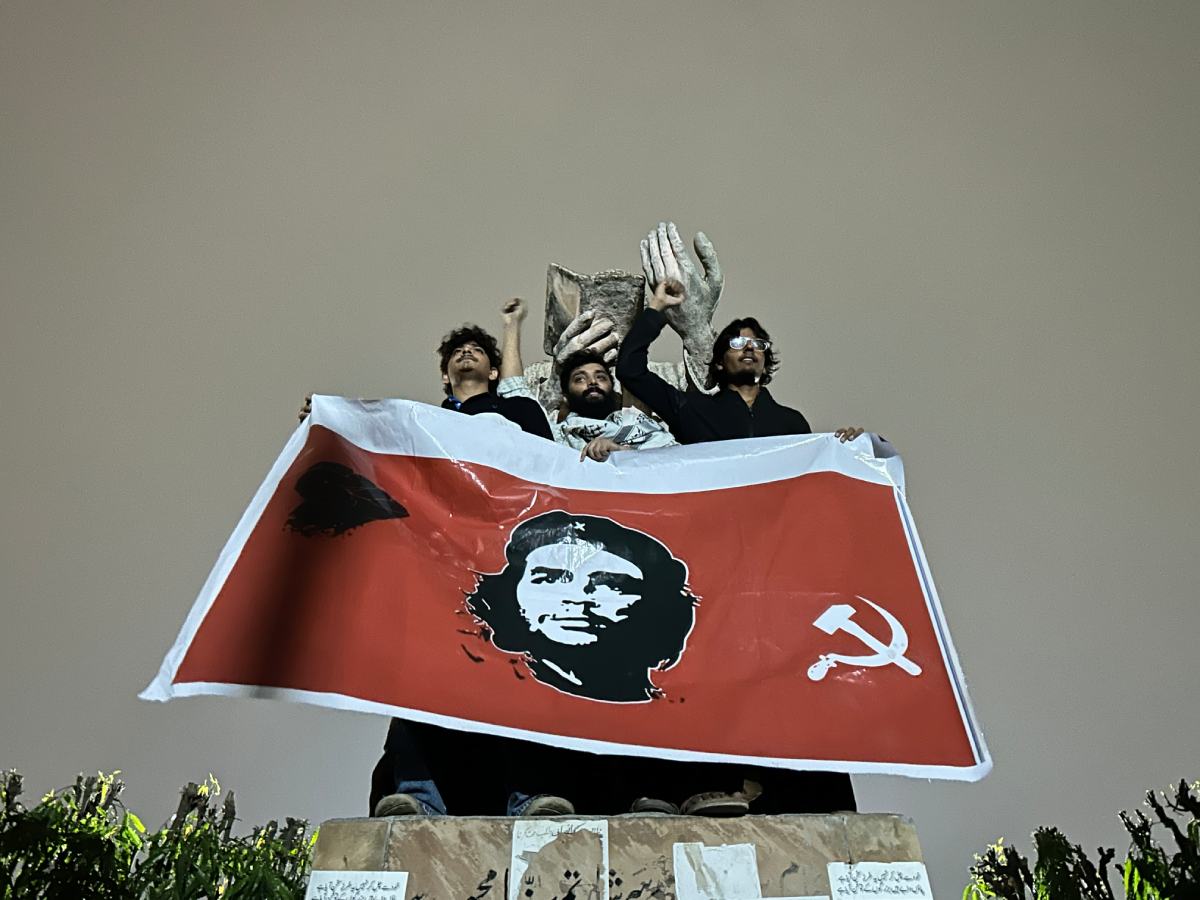
For nearly two decades, students at Jamia Millia Islamia have had no elected students’ union to represent them before the university administration. That is now set to change. After an 18-day agitation, including a prolonged hunger strike by students, the university administration last week agreed to restore the Jamia Millia Islamia Students’ Union (JMISU), setting May 15, 2027, as the deadline to approve and implement its constitution.
The administration has also committed to holding elections within six weeks of the commencement of the next academic session, scheduled to begin on July 16, 2027. The decision has brought hope to students, many of whom see it as more than the return of an elected body. For them, it means having a formal platform to question administrative decisions, raise everyday grievances and participate in matters concerning their university.
Also Read: Is the momo edging out the samosa in Delhi?
‘Need to be heard’
Saurabh, a PhD scholar at Jamia and member of the All India Students’ Association, said the absence of an elected representative body made it difficult for students to raise their concerns collectively.
“Getting the union back is important, but getting our constitution back means a lot to us. The situation inside the university has changed significantly since 2020. Until 2019, things were different. After 2020, things changed considerably, and arbitrary decisions became much more frequent. This is why a students’ union is necessary. There should be a body that listens to students, understands their problems and acts accordingly,” he said.
Saif (name changed), a visual effects and animation student, told Patriot that restoring the students’ union is only the beginning of a longer process.
“We are definitely happy to get our union back. However, a lot of work remains. This is happening after almost 20 years, so students are naturally very hopeful. A students’ union should be an essential part of a central university. Several universities have their own elected unions, but Jamia did not. That was a major concern,” he said.
Saif said the incoming union would have several student-related issues to address, particularly those concerning hostel facilities and basic amenities.
Also Read: Delhi women’s U-19 T20 team in semifinals; selection issues persist
Agenda for new body
“Every hostel has its own problems. There are concerns about food, facilities, and other basic requirements. These are everyday issues for students who live on campus. Many student-related concerns need to be discussed and addressed. The union should provide a platform where students can raise these problems and ensure that they are taken forward,” he said.
Representation beyond campus
An alumnus told Patriot on the condition of anonymity that the union’s return addresses a long-standing question about the role of student politics within a university. Having witnessed several student agitations for an elected body over the years, he said the struggle continued even as successive batches of students graduated.
“Many people came forward and fought for the union. They struggled for it, and eventually they graduated and moved on. Some students also faced difficulties earlier and may still face them now. At the same time, not everyone is interested in campus politics. Some students come to university to study and return home. They may not feel that a union or student representation makes a difference to them. But that does not mean such a body is unnecessary,” he said.
The former student emphasised the importance of women’s participation in campus politics. In his view, an elected union could give Muslim women students more opportunities to engage in political discussions, build awareness, and raise concerns specific to their experiences.
“Women’s political representation within the university campus is very important. Especially in a university like Jamia, if Muslim girls are becoming politically aware and conscious of their rights, that is a good thing. There should be space for women students to participate in politics and raise issues that concern them. Their representation matters,” he said.
Also Read: Diwali melas: full stalls, thin margins
Making representation accountable
While students have welcomed the decision, they also know restoring the union will bring responsibilities. They believe the elected body’s success will depend on whether its representatives remain committed to the demands raised during the agitation.
Rajiv (name changed), a second-year History department student, said, “Getting the union back does not mean that everything will suddenly become fine. A students’ union comes with a lot of responsibility. It is not just about getting a union and celebrating. It brings new roles and responsibilities, and those who get elected will have to understand what it means to represent students.”
The student also raised concerns about whether those actively involved in the movement may graduate before the elections.
Jasim, who is scheduled to complete his course next year, is among those who may not get the opportunity to contest.
“Some of the people who actually fought for the union may not be able to participate in the elections. Jasim, for example, who participated in the hunger strike for the restoration of the JMISU, is graduating next year. But whoever contests the elections, whether a man or a woman, must remain committed to what we demanded and what we were fighting for. They should not lose sight of those demands once they get elected,” he said.
The concern reflects students’ expectation that incoming representatives will carry forward the issues raised during the movement, rather than treating the elections as an end in themselves.
Also Read: Behind the uniform: Delhi Police’s social media push
Need for stronger voice
Yasmin (name changed), a student who participated in the protest, told Patriot that the announcement regarding the union’s restoration came after days of waiting for the administration to engage with the protesters.
“When we first got to know that we were getting our union back, we were shocked. We had been on a hunger strike for 17 days, but nobody came forward to talk to us. When they finally listened, we were happy. But now we have to make a strategy and work accordingly. There is no guarantee that this cannot be taken away from us again,” she said.
Yasmin believes disagreements between students and the administration cannot justify the absence of an elected representative body.
“Jamia has had its struggles, but there are struggles around student unions everywhere. That does not mean you remove the union. Better late than never. Now we have to work toward showing how a students’ union should function on campus and how it should represent students. Students’ issues are not always heard properly, and that is why having a union is so important,” she said.
Among the issues she expects the incoming body to address are the conditions in women’s hostels and the restrictions imposed on residents. She described the relationship between hostel authorities and students as a major concern, particularly regarding entry times and parents’ involvement in disciplinary matters.
“Warden-related issues in women’s hostels are a major concern. Sometimes parents are called even if a student is late by just one day. If you return after 10 PM, you can be removed from the hostel. But living outside Jamia is extremely expensive. This puts women students in a difficult position. These are the kinds of issues that need to be raised and addressed through the union,” she said.
Also Read: Diwali in the air, dread on the ground
Yasmin added that women’s organisations and other student groups had continued to raise concerns even when the university did not have an elected union. However, she believes a formal representative body will provide a stronger institutional platform for taking these demands to the administration.
For her, women’s representation is not limited to having women contest elections or occupy positions within the union. It also means ensuring that concerns specific to women students, particularly those living in university hostels, become part of the larger conversation on student welfare.
Students said they expect the incoming representatives to address issues such as hostel facilities and administrative decisions affecting women’s representation and student welfare.
For alumni who witnessed the prolonged absence of an elected union, the development also marks the return of a formal platform for student representation at Jamia. However, students say the real measure of the union will be whether it can regularly raise these concerns before the administration and ensure that the demands behind its restoration remain part of its agenda.
Two dead after a 3-storey building under construction collapses in Old Delhi's Chawri Bazaar; rescue…
Delhi tests high-altitude cloud seeding near IGI Airport to fight pollution. Further trials are planned…
CNG conversions in NCR rose by up to 50% after Delhi barred non-BS-VI vehicles, with…
A nine-year-old class 3 student died after suddenly collapsing inside her classroom at a Mayur…
Delhi's iconic sites, including Jantar Mantar and Purana Qila, will host the 108-day India Biennale…
Rescue shelters, community feeders and animal-welfare activists brace for the toll of a festival that…

